Exploring Linkage Women Empowerment Workforce Participation Population Dynamics Indian Context Comprehensive Macro Micro Analysis_Full Report

Exploring Linkage Women Empowerment Workforce Participation Population Dynamics Indian Context Comprehensive Macro Micro Analysis_Full Report


1 Pages 1-10

▲back to top


1.1 Page 1

▲back to top


EXPLORING LINKAGES BETWEEN WOMEN’S
EMPOWERMENT, WORKFORCE PARTICIPATION, AND
POPULATION DYNAMICS IN THE INDIAN CONTEXT
A Comprehensive Macro-Micro Analysis

1.2 Page 2

▲back to top


About Population Foundation of India
Founded in 1970 by the late J.R.D. Tata, Population Foundation of India
is a leading non-governmental organisation (NGO) working in the field of
population dynamics, gender equity, and sexual and reproductive health
(SRH). It addresses population issues within the context of empowering
women, men, and youth, enabling them to make informed decisions about
their fertility, health, and well-being.
The organisation's approaches include strategic engagement with
policymakers, media, and other key stakeholders; knowledge generation
and dissemination; leveraging technology; scaling up pilot projects; and
social and behaviour change communication. Population Foundation of India
collaborates closely with and provides technical support to national and state
governments, as well as other NGOS.
Suggested Citation
Population Foundation of India and IWWAGE - Institute for What Works to
Advance Gender Equality. (2025). “Exploring Linkages Between Women’s
Empowerment, Workforce Participation, and Population Dynamics in the
Indian Context: A Comprehensive Macro-Micro Analysis”, New Delhi. India
Contact Information
Population Foundation of India
B-28, Qutab Institutional Area,
New Delhi – 110016
info@populationfoundation.in
+91-11-4389 4100
Study Team
Population Foundation of India
Sanghamitra Singh
Alok Vajpeyi
Varun Sharma
Aishwarya Adhikari
IWWAGE-Institute for What Works to Advance Gender
Equality
Mridusmita Bordoloi
Surabhi Awasthi
Prakriti Sharma
Vidhi
Aneek Chowdhury

1.3 Page 3

▲back to top


EXPLORING LINKAGES
BETWEEN WOMEN’S
EMPOWERMENT, WORKFORCE
PARTICIPATION, AND
POPULATION DYNAMICS IN
THE INDIAN CONTEXT
A Comprehensive Macro-Micro Analysis

1.4 Page 4

▲back to top


India stands at a pivotal moment
in its demographic transition. The
country’s population landscape
captures the sweep of global
transformation—declining fertility,
widening regional disparities, and
the coexistence of both youthful
and ageing populations. In many
ways, India is a mirror of the world
itself: a country where some states
still grapple with high fertility and
constrained opportunities for
women, while others are already
navigating the complexities of sub-
replacement fertility and an ageing population. This dual reality offers
both a warning and an opportunity—an urgent call to shape policies
that harness the promise of a youthful nation even as they prepare for
the responsibilities of an ageing one.
Gender equality and reproductive autonomy lie at the heart of
India’s capacity to navigate these demographic transitions effectively.
The study, “Exploring Linkages Between Women’s Empowerment,
Workforce Participation, and Population Dynamics in the Indian
Context: A Comprehensive Macro-Micro Analysis,” a collaboration
between Population Foundation of India and the Initiative for What
Works to Advance Women and Girls in the Economy (IWWAGE) at
LEAD, Krea University, offers new evidence on these interconnections.
By combining macro-level demographic and human development data
with micro-level insights into women’s lived experiences, it provides
one of the most comprehensive analyses of its kind in India—bridging
numbers with narratives to reveal how empowerment shapes the
country’s demographic and developmental trajectory.
Yet the study underscores an essential truth: women’s empowerment
does not automatically follow or accompany economic or social
progress. Deep-seated structural inequalities, restrictive gender
norms, and the limited participation of men in caregiving and
reproductive decision-making continue to constrain women’s agency
and autonomy.
Notably, this study pioneers the development of two composite
measures—the Adjusted Human Development Index (AHDI) and the
Adjusted Women’s Empowerment Index (AWEI) — by adapting the
United Nations Development Programme’s (UNDP) global Human
Development Index (HDI) and the Women’s Empowerment Index (WEI),
developed jointly by UN Women and UNDP, to India’s socio-economic
and demographic context. The first-of-its-kind analytical framework for

1.5 Page 5

▲back to top


Population Foundation of India
iii
India captures not just income, education, and health, but also dimensions of agency, decision-
making, and reproductive autonomy that are often absent from conventional measures of
progress.
The findings reveal striking regional variations across key indicators, such as the Adjusted
Human Development Index (AHDI), the Adjusted Women’s Empowerment Index (AWEI), and
the Total Fertility Rate (TFR). While AHDI and AWEI are strongly positively correlated (r=0.8),
both show an inverse relationship with TFR (r=-0.64 and r=-0.5, respectively), underscoring
that human development and women’s empowerment advance together—and that both
are essential for achieving sustainable population outcomes. Yet no Indian state or union
territory ranks high on women’s empowerment, pointing to enduring social, cultural, and
institutional barriers. These patterns call for state-specific strategies tailored to each state’s
distinct demographic and development profile. Even states and union territories with high
HDI scores fall 0.3-0.4 points short of the aspirational target of 1.0, showing that there is still
scope to improve human development indicators, even among better-performing states/union
territories. The study highlights the need for sustained investment in evidence-based social
and behaviour change programs that challenge harmful norms and promote gender equality,
positive masculinity, male involvement, and women’s empowerment.
Importantly, the evidence shows that when women are educated, exercise reproductive
autonomy, and participate in the workforce, societies reap compounding benefits: fertility
stabilises, economic productivity rises, and social resilience deepens. Empowerment, therefore,
is not a by-product of development; it is its driving force. The study findings indicate that
women’s workforce participation has a particularly strong positive association with their
agency and intra-household bargaining power. As women attain economic independence,
they tend to prefer smaller families, balancing time and financial resources more effectively.
Yet, the relationship between women’s agency and fertility remains complex, especially in
settings defined by entrenched patriarchal norms. In contexts with strong son preference,
higher fertility can paradoxically correlate with increased maternal agency and intra-household
decision-making power. This nuanced dynamic underscores the imperative of addressing
deep-rooted social and patriarchal norms to fully realise the transformative potential of
enhanced women’s empowerment.
At the Population Foundation of India, we have long upheld the conviction that gender equality
and human development are inseparable goals. This study reaffirms that belief with robust,
data-driven evidence. It offers a clear roadmap for policymakers, researchers, and practitioners
to design interventions that are both gender-responsive and demographically informed—
ensuring that progress for women and progress for society advance in tandem.
As India stands at the crossroads of demographic opportunity and challenge, its future
trajectory will depend on how effectively women’s empowerment is placed at the core of
development policies. The demographic dividend can be fully realised only when women and
girls are enabled to participate equally—in the economy, in public life, and in shaping the
choices that define their own futures.
Poonam Muttreja,
Executive Director- Population Foundation of India

1.6 Page 6

▲back to top


1.7 Page 7

▲back to top


Population Foundation of India
v
We express our sincere appreciation to all those who
contributed to this study and its successful completion.
We extend our gratitude to our research partner, the
Institute for What Works to Advance Gender Equality
(IWWAGE)—an initiative of the Institute for Financial
Management and Research (IFMR) Society—for their
rigorous research, analysis, and continuous collaboration
throughout the study.
We gratefully acknowledge the expert guidance of Dr. A.
K. Shiva Kumar, Development Economist, whose advice
enriched the study. We also thank Dr. Priya Nanda,
Independent Consultant, and Dr. Anita Raj, Executive
Director of the Newcomb Institute at Tulane University
and Nancy Reeves Dreux Endowed Chair, for their
valuable insights and feedback that strengthened the
analytical and policy aspects of this report.
We appreciate the StratComm team for their careful
copy-editing and design support.
We also acknowledge the contributions of our
colleagues, Martand Kaushik, Tejwinder Singh Anand,
Simran Verma, Anuraag Tanwar, and Gunjan Chandhok,
for their commitment and assistance throughout the
process.
We convey our thanks to the administrative and support
teams at Population Foundation of India and IWWAGE
for their cooperation and logistical assistance, which
enabled the timely completion of this study.
Last but not least, we extend our heartfelt thanks to the
adolescent girls and young women who participated
in the study for their time, willingness, and thoughtful
responses.
Population Foundation of India

1.8 Page 8

▲back to top


vi
Population Foundation of India
Table of
Contents
Acronym
viii
Executive Summary
xii
List of tables
xxi
List of figures
xxi
Background
1
• Introduction
2
• Conceptualising Women’s Empowerment
3
• Population Dynamics and Contributing Factors
4
• Women’s Participation in Paid Work
6
• Interlinkages between Women’s Empowerment, Work Participation, and
Population Dynamics
8
• Impact of Social Norms
11
• Research Rationale and Objectives
13
Methodology and Approach
15
• Methods
16
a. Development of State-Level Indices
18
- Adaptive Human Development Index (AHDI)
20
- Adaptive Women Empowerment Index (AWEI)
22
- Methodology for Creation of Indices
25
b. Econometric Analysis Using Structural Equation Modelling (SEM)
27
c. Qualitative Research Design to Understand the Role of Social Norms
37
- Targeted Respondents
38
- Approach for conducted IDIs
38
- Qualitative Analysis: Approach
39
• Ethical Considerations
40
• Limitations and Challenges
41
Interlinkages Among Women’s Empowerment,
Human Development and Fertility Rate:
Macro Level Analysis
43
• Status of Indian states and union territories based on AHDI
45
Major States
45

1.9 Page 9

▲back to top


Population Foundation of India
vii
Northeastern States
48
Union Territories
49
• Association between Human Development and Fertility Rate
50
• Status of Indian States and Union Territories based on AWEI
54
Major States
54
Northeastern States
60
Union Territories
61
• Association between Women’s Empowerment and Fertility Rate
63
• Association between Human Development and Women’s Empowerment 67
Women’s Agency, Employment, and Fertility:
Insights from an Individual-Level
Econometric Analysis
73
• Relationship between Women’s Agency and Workforce Participation
78
• Relationship between Women’s Agency and Fertility
82
• Relationship between Workforce Participation and Fertility
86
Socio-Cultural Dynamics Shaping Reproductive
Autonomy, Workforce Participation, and Women’s
Empowerment
89
• Impact of Social Norms on Women’s Empowerment, Workforce
Participation, and Fertility
91
• Societal Pressures and Fertility Expectations in Marriage
92
• Linkages between Educational Opportunities and Women Empowerment 95
• Lack of Awareness about Reproductive Health and
Family Planning Methods
98
• Linkages between Women’s Workforce Participation, Fertility and
Empowerment
101
• Factors restricting women’s workforce participation
103
Conclusion and Recommendations
107
• Conclusion
108
Policy Recommendations
110
References
119
Annexures
129

1.10 Page 10

▲back to top


Acronyms
AHDI
Adaptive Human Development Index
AIC
Akaike Information Criterion
ANM
Auxiliary Nurse Midwife
ASHA
Accredited Social Health Activist
AWEI
Adaptive Women Empowerment Index
BIC
Bayesian Information Criterion
CDC
Centers for Disease Control and Prevention
CMRHM
Chief Minister Rural Housing Mission
DDU-GKY Deen Dayal Upadhyaya Grameen Kaushalya Yojana
DHS
Demographic and Health Survey
DIKSHA
Digital Infrastructure for Knowledge Sharing
FP
Family Planning
GDP
Gross Domestic Product
GEM
Gender Empowerment Measure
GGPI
Global Gender Parity Index

2 Pages 11-20

▲back to top


2.1 Page 11

▲back to top


Population Foundation of India
ix
GII
GSEM
HDI
HDR
ICF
IDI
IFMR
IFPRI
IIPS
ILO
IPV
IV
LARC
LEB
LFPR
LMIC
MENA
MLA
Gender Inequality Index
Generalised Structural Equation Modelling
Human Development Index
Human Development Report
ICF International Inc.
In-Depth Interviews
Institute for Financial Management and Research
International Food Policy Research Institute
International Institute for Population Sciences
International Labour Organisation
Intimate Partner Violence
Instrumental Variable
Long-Acting Reversible Contraception
Life Expectancy at Birth
Labour Force Participation Rate
Low-and-Middle Income Country
Middle East and North Africa
Member of the Legislative Assembly

2.2 Page 12

▲back to top


x
Population Foundation of India
MMR
Maternal Mortality Ratio
MoSPI
Ministry of Statistics and Programme Implementation
NCT
National Capital Territory
NEET
Not in Education, Employment or Training
NFHS
National Family Health Survey
NHDR
National Human Development Report
NSDP
Net State Domestic Product
NSO
National Statistical Office
NWCS
Nayuma Women’s Cooperative Society
OBC
Other Backward Classes
OLS
Ordinary Least Squares
OPHI
Oxford Poverty and Human Development Initiative
PCA
Principal Component Analysis
PLFS
Periodic Labour Force Survey
PMGDISHA Pradhan Mantri Gramin Digital Saksharta Abhiyan
PMKVY
Pradhan Mantri Kaushal Vikas Yojana

2.3 Page 13

▲back to top


Population Foundation of India
xi
SBC
Social Behaviour Change
SC
Scheduled Caste
SDG
Sustainable Development Goal
SEM
Structural Equation Modelling
SHG
Self Help Groups
SRH
Sexual and Reproductive Health
ST
Scheduled Tribe
SWAYAM Study Webs of Active Learning for Young Aspiring Minds
SWOP
Status of the World’s Population
TFR
Total Fertility Rate
UNDP
United Nations Development Programme
UNFPA
United Nations Population Fund
USAID
United States Agency for International Development
W2RT
Women Wizards Rule Tech Program
WEAI
Women’s Empowerment in Agriculture Index
WEI
Women’s Empowerment Index

2.4 Page 14

▲back to top


xii
Population Foundation of India
EXECUTIVE SUMMARY
BACKGROUND
Women are the architects
of a nation’s development.
Dr. Bhim Rao Ambedkar, a
social reformer and the father
of the Indian Constitution,
once stated, “I measure the
progress of a community by
the degree of progress which
women have achieved.” This
statement summarises the
pivotal role women play in
shaping and advancing a
nation—socially, culturally,
economically, technologically, and
philosophically. The idea remains
relevant today, as the World
Bank estimates that narrowing
gender disparities could yield a
$172 trillion ‘gender dividend’
globally. In the Indian context,
research suggests that women’s
economic participation could
add 35 trillion to India’s Gross
Domestic Product (GDP) by 2025.
Thus, strategic investments in
women’s health, education, and
workforce participation can
unlock the potential of an entire
generation—capable of advancing
both economic growth and social
change.
India’s demographic shifts reflect
global trends, i.e. declining fertility
rates, an ageing population, and
an expanding youth population,
with regional variations. These
shifts carry profound gendered
implications. The Total Fertility
Rate (TFR) has fallen to 2.0,
signalling a demographic
transition with opportunities and
risks. However, this statistical
achievement masks underlying
inequities (social, economic, and
regional). In a country like India,
with its significant potential for
both demographic and gender
dividend, failing to invest in women
and girls risks reinforcing vicious
cycles of poverty and inequality.
Against this backdrop, Population
Foundation of India commissioned
this research titled “Exploring
Linkages Between Women’s
Empowerment, Workforce
Participation, and Population
Dynamics in the Indian Context:
A Comprehensive Macro-
Micro Analysis” to construct
a persuasive, evidence-based
narrative advocating for increased
investment in women and girls.
The study combines macro-level
data with individual-level analysis
to examine the interlinkages
between women’s empowerment,
workforce participation, and
population dynamics, generating
critical insights to inform
and elevate the policy and
programmatic discourse and
actions.

2.5 Page 15

▲back to top


Population Foundation of India
xiii
METHODOLOGY
At the macro level (i.e., state
and union territory levels),
we developed two composite
indices to measure women’s
empowerment and human
development, drawing on globally
accepted methodologies for
human development and women’s
empowerment. The Adaptive
Human Development Index (AHDI)
builds on the global Human
Development Index (HDI) and
incorporates child underweight
and maternal mortality to better
reflect gendered health and
wellbeing outcomes in the Indian
context. Similarly, the Adaptive
Women’s Empowerment Index
(AWEI) draws from the global
Women’s Empowerment Index
by incorporating context-relevant
indicators such as paid work,
menstrual hygiene, and political
representation in state assemblies.
At the micro level, we used the
National Family Health Survey
(NFHS-5) data from 2019-21. We
used Structural Equation Modelling
(SEM) to establish a bidirectional
relationship between women’s
agency, workforce participation,
and fertility. To understand the
impact of social and cultural norms
on women’s agency, workforce
participation, and fertility, we
employed a qualitative approach.
We conducted in-depth interviews
using vignettes that involved
adolescent girls and young women
in urban, peri-urban, and rural
areas across six districts in Bihar,
Uttar Pradesh, and Delhi.
The findings are presented at
three levels: (a) macro level, (b)
micro level, and (c) qualitative
findings, which are discussed in the
subsequent section.
SALIENT FINDINGS
1. At the macro level, the study
highlighted substantial room
for improvement in the status
of women’s empowerment
across most Indian states, as
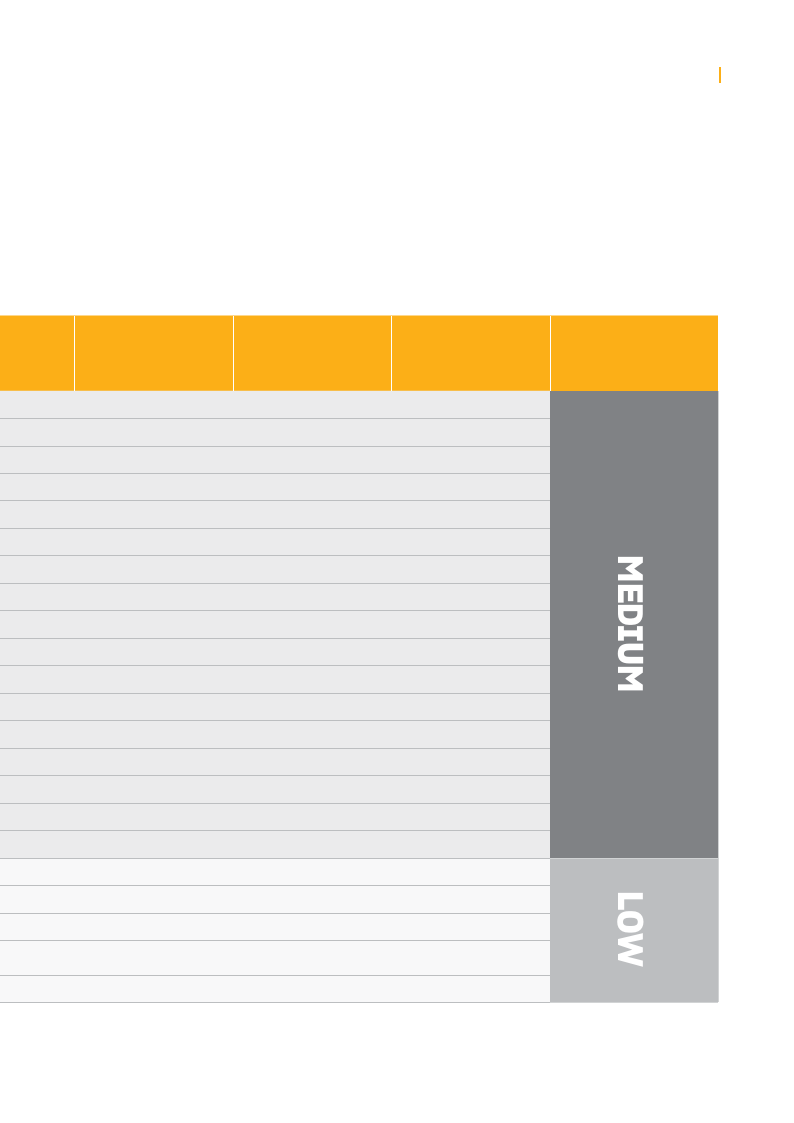
evidenced by AWEI. Of the 22
major states, 17 states fall in
the ‘Mediumi’ AWEI category,
and five states fall in the ‘Lowii
AWEI category. No Indian
state or union territory was
categorised under the ‘High’
AWEI category. While the status
of human development also
falls short of the ideal goal
post, as indicated by AHDI,
the strong positive correlation
(0.8) between the two indices
underscores the imperative for
policy prioritisation of women’s
empowerment to enhance
human development indicators.
The study further identified
moderate yet negative
i Medium category: Goa, Kerala, Tamil Nadu, Himachal Pradesh, Delhi, Chhattisgarh, Punjab, Andhra Pradesh, Telangana,
Haryana, Uttarakhand, Odisha, Maharashtra, Gujarat, Karnataka, Rajasthan, and West Bengal
ii Low category: Madhya Pradesh, Jharkhand, Uttar Pradesh, Assam, and Bihar

2.6 Page 16

▲back to top


xiv
Population Foundation of India
correlations between the AHDI
(-0.64) and AWEI (-0.50) indices
and the TFR, suggesting that
at a macro level, declining
fertility is associated with
improvements in both human
development and women’s
empowerment in India.
2. At the micro level, to
elucidate these interlinkages,
an econometric model revealed
a bidirectional relationship
between fertility and women’s
empowerment. The findings
indicate that while women
with more children tend to
have greater agency in intra-
household decision-making,
an increase in women’s agency
is associated with a decrease
in the number of children.
However, the impact of higher
fertility on women’s agency is
significantly stronger than the
reverse impact. This reflects the
complex relationship between
women’s agency and fertility.
Similarly, employed women
are significantly more likely to
have higher agency compared
to those who are not working
and tend to prioritise a smaller
number of children. While
higher workforce participation
leads to lower fertility rates,
the reverse—lower fertility
leading to more workforce
participation—is not clearly
supported. For married
women, having more children
increases their chances of
working to some extent, likely
due to financial needs. Overall,
employment and economic
independence help women opt
for smaller families, but socio-
economic pressures often push
women, especially those from
lower-income backgrounds,
into the workforce.
3. To elucidate the role of
gender norms and social
barriers, in-depth interviews
were conducted with a limited
number of adolescent girls and
young women. The interviews
provided insight into how these
norms significantly restrict
women’s agency, their bodily
autonomy, and their access
to modern family planning
methods. In most rural and
peri-urban areas, young
women face pressures to get
married at a very early age
and have children right after.
Patriarchal norms result in
disproportionate caregiving
responsibilities, restricted
mobility, and limited access to
social networks, often hindering
women’s opportunities
for higher education and
economic empowerment.
Social norms continue to
reinforce male authority over
decisions related to fertility and
economic wellbeing. Most of
the respondents acknowledged
the significance of financial
independence in enhancing
their agency and reproductive
justice. However, challenges
such as inadequate access to
skill development, limited job
opportunities near the place
of residence, safety concerns
related to travel for work, and
poor road connectivity continue
to pose obstacles to economic

2.7 Page 17

▲back to top


Population Foundation of India
xv
opportunities in rural and some
peri-urban areas. Despite these
obstacles, many interviewed
young women express a desire
for financial independence and
autonomy over reproductive
choices.
RECOMMENDATIONS
The findings call for stronger
fiscal, legislative, policy, and
programmatic measures to
advance women’s empowerment,
increase workforce participation,
reduce fertility rates, and achieve
gender equality.
1. Strengthen Gender-
Responsive Budgeting for
Inclusive Development:
Despite the introduction of
gender budgeting in 2005–06,
the 2025–26 Union Budget
reports only 8.86% of total
allocations under the gender
budget. Only 10 central
ministriesiii allocate more than
30% of their budgets to gender-
responsive programmes. These
figures signal the urgent need
for making gender-responsive
budgeting universal and
accountable by:
Mandating gender
budgeting in all states and
union territories.
Tracking and publicly
reporting performances.
Creating ‘Gender Budgeting
Cells’ in all the ministries
with dedicated staff and
training to facilitate the
process.
Addressing current gaps in
capacity, coordination, and
accountability will be crucial
to ensuring that gender
budgeting achieves its
intended results.
2. Advancing Women’s
Workforce Participation
through Skills and Supportive
Systems: The findings show
“workforce participation has
a strong positive association
with women’s agency - working
women are more than twice
as likely to report higher
levels of agency compared to
those who are not working”.
Yet, the reverse association
is weaker, with higher agency
not translating directly into
higher employment. Similarly,
the qualitative findings
indicated that women often
acquire traditional skills that
do not always translate into
meaningful employment. To
bridge persistent gender gaps
in employment, government
iii Ten ministries are: Ministry of Women & Child Development (81.79%), Department of Rural Development (65.76%),
Department of Food & Public Distribution (50.92%), Department of Health & Family Welfare (41.10%), Ministry of New
& Renewable Energy (40.89%), Department of Social Justice & Empowerment (39.01%), Department of Higher Education
(33.94%), Department of School Education & Literacy (33.67%), Ministry of Home Affairs (33.47%) and Department of
Drinking Water & Sanitation (31.50%).

2.8 Page 18

▲back to top


xvi
Population Foundation of India
and industry must collaborate
to design skilling programmes
that align with market needs
and respond to the unique
challenges faced by women,
especially in informal and rural
settings. This includes:
Providing access to bridge
courses.
public and private sectors. This
includes:
Institutionalised
capacity-building,
inclusive appointments,
strengthening mentorship
and promotion pathways,
and embedding gender
accountability mechanisms.
Digital and financial literacy
training.
Safe, flexible, conducive
work environments,
including affordable
childcare and paid
maternity leave.
Accelerating the enactment
of the Women’s Reservation
Bill.
Focusing on gender-
inclusive policies,
early mentorship, and
accountability.
Expanding and evaluating
existing schemes like
Pradhan Mantri Kaushal
Vikas Yojana (PMKVY) to
ensure they reach the most
marginalised.
3. Advancing Women’s
Leadership through
Legislative and Programmatic
Actions: The findings reflected
that most states scored below
0.5 in the ‘Participation in
Decision-Making’ dimension
of AWEI. Women hold 13.6%
of seats in the 18th Lok Sabha,
13% in the Rajya Sabha,
and 9% in state assemblies.
In the judiciary, only 9% of
Supreme Court judges and
14% of High Court judges are
women. Board representation
stands at 28% with limited
influence at executive levels.
Advancing women’s leadership
requires going beyond mere
representation to addressing
structural barriers in both the
4. Strengthening Reproductive
Autonomy through
Integrated, Gender-
Responsive Approaches:
The econometrics analysis
shows that for every one-
point increase in the agency
score, the likelihood of having
children decreases by 24%.
This suggests that empowered
women are more likely to have
control over reproductive
decisions and access to
contraceptives to delay
pregnancy, limiting the number
of children they want to have.
This suggests that advancing
reproductive autonomy must
be central to both policy and
programme design to enable
informed, voluntary choices
and realise gender equality.
This needs to include:
Ensuring the provision of a
full range of contraceptive
choices, quality postpartum
care, and safe abortion

2.9 Page 19

▲back to top


Population Foundation of India xvii
services across both public
and private health facilities.
Broadening the scope of
Mission Parivar Vikas to
include initiatives that
promote gender equality
in healthcare delivery, with
particular focus on sexual
and reproductive health
and decision-making.
Reaching excluded groups
through last-mile delivery,
mobile units.
Adopting a cross-sectoral
approach linking health with
empowerment, mobility,
and economic security, and
embedding these priorities
into health planning,
financing, and monitoring
systems.
5. Keeping Girls in School: A
Strategic Imperative for
Gender and Demographic
Justice: The study’s findings
reflected that on the AWEI
education and knowledge
dimension, Goa, Himachal
Pradesh, and Kerala performed
strongly, with higher female
secondary education
completion rates. Bihar,
Madhya Pradesh, and Odisha
lag, while high NEET rates
highlight barriers to women’s
education-to-work transition. A
key barrier to girls’ continued
education is the persistence
of regressive social norms
that devalue girls’ education,
restrict their mobility, and
prioritise early marriage. These
socio-cultural expectations,
combined with structural
barriers, directly undermine
retention and completion of
secondary schooling. Essential
steps recommended to address
the barriers are:
Amend the Right to
Education Act to extend free
and compulsory education
up to 18 years of age.
Invest in targeted Social
Behaviour Change (SBC)
campaigns that promote
the value of girls’ education
and challenge gender-
biased norms at the
community level.
Invest in removing practical
barriers—such as poor
sanitation, lack of menstrual
hygiene support, unsafe
school transport, and
distance to schools—that
disproportionately affect
girls.
6. Shift Social Norms Through
Innovative Social Behaviour
Change (SBC) Strategies:
Social norms across rural
and urban contexts place
the burden of unpaid care
on women and strongly
influence reproductive and
family planning decisions,
limiting women’s agency,
even in states with high levels
of empowerment. Unpaid
care work remains a major
barrier to women’s economic
participation, with women
performing over 75% of such
work globally. Strengthening
the care ecosystem is essential
to realising women’s economic
and reproductive potential

2.10 Page 20

▲back to top


xviii Population Foundation of India
across life stages. These need
to be addressed by:
Sustained investment in
innovative, evidence-based
SBC initiatives to address
regressive social norms
and promote messages
around gender equality,
positive masculinity, male
engagement, and women’s
empowerment.
Expanding investments
in the use of digital tools
such as AI chatbots, voice
assistants, digital learning
platforms, and interactive
formats to reach young
audiences at scale.
7. Strengthening Data
Systems and Evidence-Based
Evaluations for Advancing
Women’s Empowerment:
The study highlights the lack of
standardised, longitudinal data
on women’s empowerment.
Strengthening the availability of
comprehensive, standardised,
and disaggregated data that
captures the full spectrum of
women’s empowerment across
time, geography, and other
background characteristics
is vital for effective
policymaking and programme
implementation. Key actions
to support evidence-based
policymaking include:
Institutionalisation
of periodic data
systems, capturing its
multidimensional aspects.
Promoting third-party
evaluations of women-
centric programmes for
tracking progress, enabling
course correction, and
informing scale-up.
8. One Size Does Not Fit
All: Tailor Policies and
Programmes to State
Realities: The analysis
reveals significant sub-
national disparities in human
development (AHDI), women’s
empowerment (AWEI), and
fertility rates (TFR), along with
a strong positive correlation
between AHDI and AWEI and
moderate negative correlations
between AHDI and TFR, as
well as AWEI and TFR. These
findings underline the critical
need for tailored policy and
programmatic responses that
reflect the unique demographic
and development profiles
and imperatives of each state
and union territory. While
low-fertility states need to
prioritise maintaining quality
sexual and reproductive health
(SRH) services and improving
elderly care, high-fertility
states must focus on basic
investments in education
and family planning (FP)/SRH
services. Also, policy intent
alone is insufficient. Progress
is often constrained by weak
implementation, limited
coordination across sectors,
and inconsistent follow-through
at the state and district levels.
Translating national priorities
into sustained, context-
specific action remains the key
challenge and opportunity for
policy action.

3 Pages 21-30

▲back to top


3.1 Page 21

▲back to top


3.2 Page 22

▲back to top


3.3 Page 23

▲back to top


Population Foundation of India
xxi
List of Tables
Table 1: Indicators included in creating Adaptive Human
20
Development Index (AHDI)
Table 2: Indicators included in the creation of the AWEI
22
Table 3: Grouping categories for states and union territories
27
Table 4: Details of NFHS sample of women and sample used in the 29
analysis
Table 5: List of variables used in GSEM
30
Table 6: Indicators used to construct the Women’s Agency Index
32
from NFHS-5
Table 7: List of control variables in comparable models
35
Table 8: Goodness of fit of fitted models
36
Table 9: Study sites and sample distribution for the In-Depth
37
Interviews (IDIs)
Table 10: Vignettes for each category of respondent in a district
39
Table 11: Indicators included in creating Adaptive Human
46
Development Index (AHDI)
Table 12: Categorisation of major states based on AHDI
48
Table 13: Categorisation of union territories based on AHDI
49
Table 14: Categorisation of major states based on AWEI
55
Table 15: Categorisation of northeastern states based on AWEI
61
Table 16: Categorisation of union territories based on AWEI
63
Table 17: Characteristics of all currently married women in NFHS-5,
75
All India
Table 18: Coefficients and odds ratios for three endogenous
78
variables considering non-recursive relationships among
them in the Econometric Model (GSEM)
List of Figures
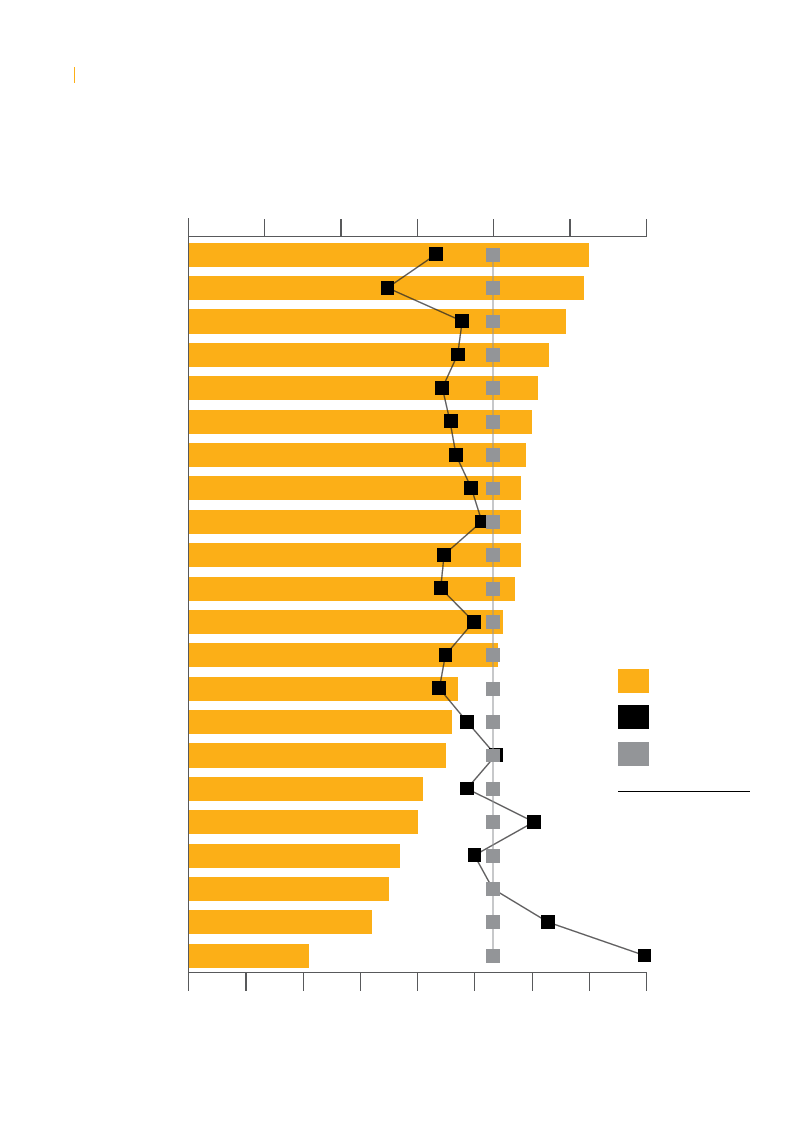
Figure 1 AHDI scores and total fertility rates across major states
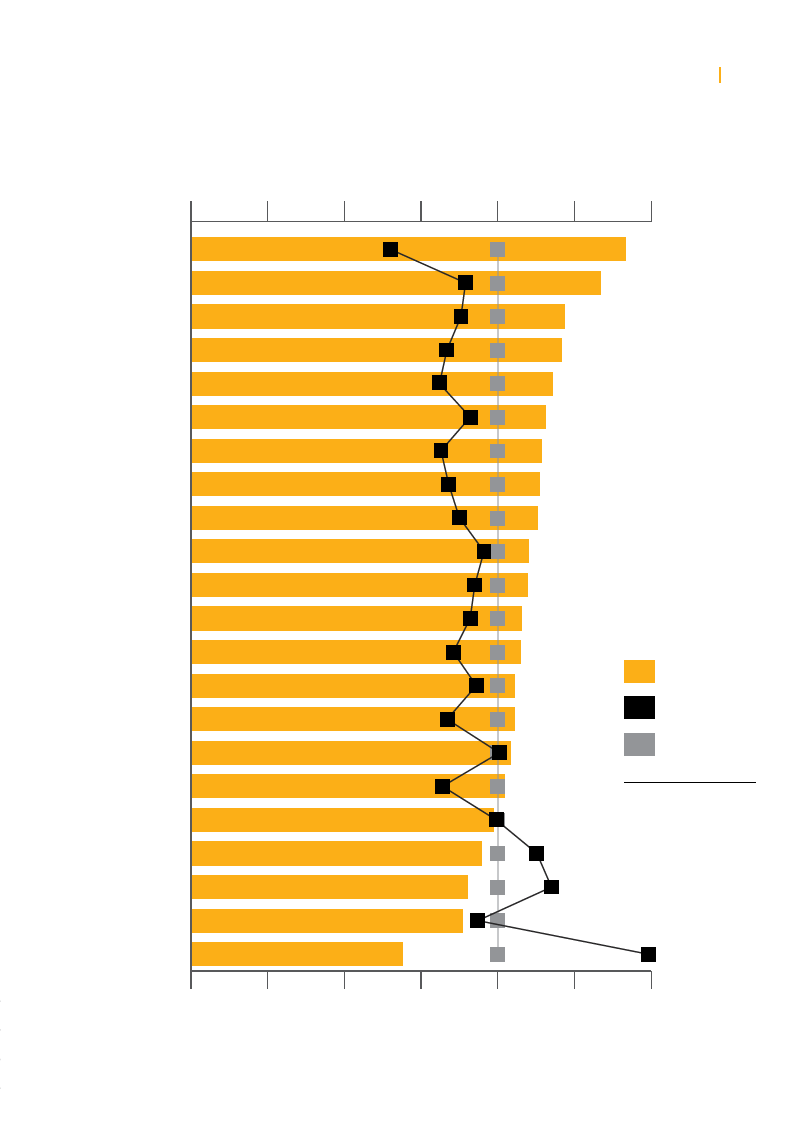
51
Figure 2 AWEI scores and total fertility rates across major states
66
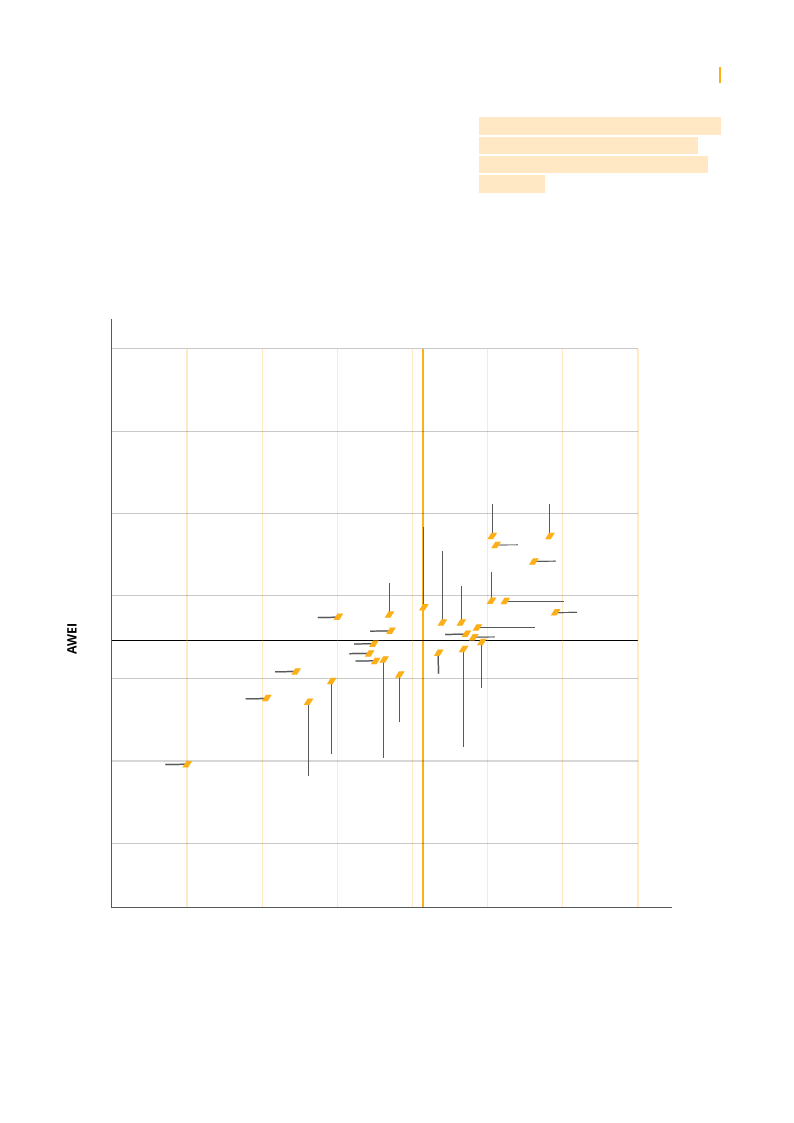
Figure 3 Indian states across AHDI and AWEI
68

3.4 Page 24

▲back to top


BACKGROUND

3.5 Page 25

▲back to top


Population Foundation of India
2
INTRODUCTION
Investing in women’s capabilities and empowering them to make
informed choices not only enhances their lives but also drives broader
economic growth and human development. While gender equality and
women’s empowerment are explicitly recognised as standalone goals
within the Sustainable Development Goals (Goal 5: Gender Equality),
they are instrumental to the achievement of practically all other SDGs,
particularly health (SDG 3: Good Health and Wellbeing), education (SDG
4: Quality Education), poverty eradication (SDG 1: No Poverty), economic
growth (SDG 8: Decent Work and Economic Growth), peace and justice
(SDG 16: Peace, Justice, and Strong Institutions), among others. A recent
World Bank Group report estimated a potential $172 trillion ‘gender
dividendiv’ by narrowing gender disparities in labour earnings [1].
Thus, prioritising women’s opportunities,
delaying marriage, and nurturing human
capital through investment in women and
girls are essential steps towards achieving
sustainable development.
However, many socio-economic and cultural factors, alongside
structural inequalities, shape women’s agency, economic potential, and
participation in the workforce, and women’s presence in the labour
market does not always reflect agency. For many in low-skilled, low-paid
work, participation is driven by economic compulsion rather than choice.
Thus, ensuring that women’s work reflects choice, dignity, and equality
remains central to inclusive and sustainable development.
iv A gender dividend is the increased economic growth that could be realised with investments in women and girls. While
the demographic dividend comes from shifting age structures toward more productive ages, gender dividends come from
taking steps that increase the volume of market (paid) work and the level of productivity of the female population.

3.6 Page 26

▲back to top


3
Population Foundation of India
Closing gender gaps is essential
not only for achieving the SDGs
but also for addressing global
socio-economic challenges. In
pursuit of building a persuasive
evidence-based narrative for
greater investments in women
and girls, this research aims to
examine the interlinkages between
women’s empowerment, workforce
participation, and population
dynamics, and to generate critical
insights that can inform and
elevate policy and programmatic
discourse.
CONCEPTUALISING
WOMEN’S EMPOWERMENT
Empowerment is described as an
expansion of one’s ability to make
choices in situations where such
ability was previously denied to
them [2]. This captures two key
characteristics of empowerment.
First, the process of change from
a condition of disempowerment,
and second, human agency and
choices. Therefore, autonomy,
agency, self-direction, liberation,
participation, mobilisation,
and self-confidence are crucial
aspects of empowerment. The
dimension of ‘agency’ separates
gender equality from women’s
empowerment. While there
could be improvements in
indicators of gender equality over
time, it will not be considered
as empowerment unless the
intervening processes, such
as collective actions, power
sharing and decision-making,
leadership roles, negotiation and
voice, control over resources,
advocacy and participation, and
challenging social norms involve
women as agents of that change
rather than just recipients [2].
Anderson unbundles women’s
empowerment across multiple
domains—household and society
as a whole—through dynamics
of norm formation [3]. Women’s
empowerment at the macro level
requires the transformation of
all social, economic, and political
institutions that function within
patriarchal systems [2, 4].
Research suggests a two-way
causal relationship between
women’s empowerment and
fertility, with evidence that lower
fertility also enhances women’s
empowerment. In particular,
studies have shown that
fertility is negatively associated
with women’s education and
employment [5]. Economic
independence gives women the
freedom to make decisions that
affect their lives, including about
contraception use and the number
of children they wish to have [6, 7].
Several studies have highlighted
that women’s empowerment is
shaped by multiple and interlinked
dimensions, including education,

3.7 Page 27

▲back to top


Population Foundation of India
4
economic autonomy, reproductive
rights, decision-making power, and
shifts in cultural and social norms
[8]. A previously published review
of 60 studies identified 19 domains
of empowerment, highlighting
household decision-making as the
most commonly applied measure.
The review further noted that,
in most studies, empowerment
was inversely associated with the
number of children. At the same
time, several studies reported no
significant association between
certain indicators of women’s
empowerment and fertility
outcomes [9].
Empowerment operates as
both a driver and an outcome
of fertility decline, mediated
by the availability of socio-
economic opportunities and
supportive institutional and policy
environments. At the same time,
evidence points to important
paradoxes: declining fertility
does not necessarily correspond
with higher levels of women’s
empowerment. Low fertility can
coexist with persistent gender
inequalities, including restricted
mobility, patriarchal control, and
high prevalence of gender-based
violence.
POPULATION DYNAMICS AND
CONTRIBUTING FACTORS
Population dynamics are key to
understanding ‘how’ and ‘why’
populations change in size and
structure over time, and how
demographic changes impact
resource use, economic growth,
and social policies. Multiple
interrelated factors shape
population dynamics. These
include fertility and mortality rates,
migration, and broader social and
cultural contexts.
Demographic shifts across
countries have the potential
to reshape gender systems,
with implications for women’s
empowerment that can be both
enabling and constraining. A
gendered understanding of
population dynamics reveals how
such shifts affect women’s ability
to make informed choices about
childbirth, contraception, and
reproductive health. There are
significant differences in fertility
patterns worldwide. Countries in
sub-Saharan Africa continue to
experience high fertility rates, while
many parts of East Asia, Europe,
and Latin America have seen
fertility decline below replacement
levels [10, 11]. India presents a
mixed picture, with TFR ranging
from below 1.5 in southern states,
such as Kerala and Tamil Nadu, to
above 3 in parts of Uttar Pradesh
and Bihar [12]. These variations are
largely influenced by differences
in women’s empowerment
indicators, including education
levels, access to reproductive

3.8 Page 28

▲back to top


5
Population Foundation of India
health services, autonomy, labour
force participation, and decision-
making power. It is therefore
essential to assess interlinkages
between women’s empowerment
and fertility within these diverse
contexts to better understand how
these factors shape outcomes.
Reproductive autonomy is
defined as the right of women to
choose whether or not to have
children, and if so, to determine
the number of children, as well
as when and with whom; and
the freedom to decide on the
means and methods of fertility
management. It plays a critical role
in shaping population trends by
determining the timing, spacing,
and number of children, ultimately
impacting population growth
and age structure. For example,
when women are denied access
to contraceptives, their ability
to exercise agency in decisions
regarding their reproductive
health is constrained. Moreover,
limited access to contraceptives
heightens the risk of unintended
pregnancies, which are associated
with increased maternal mortality
and adverse health outcomes
[13]. Apart from factors such
as healthcare, education, and
legal rights, women’s ability
to make autonomous choices
is highly influenced by socio-
cultural factors that vary across
regions [14]. These social and
cultural norms surrounding
marriage, motherhood, and
family planning often determine
the extent to which women can
make independent, informed
decisions about their reproductive
lives. These norms can influence
whether women can access
contraceptive information and
services, negotiate the timing
and spacing of pregnancies, or
seek reproductive healthcare
without restrictions. In many
contexts, expectations around
early marriage, pressure to bear
children, or stigma associated
with contraceptive use limit
women’s agency, reducing their
capacity to exercise reproductive
choices fully. Studies from
across low- and middle-income
country contexts demonstrate
that restrictive gender norms
influence preferences and
behaviours related to freedom
of movement, social interactions,
sexuality, fertility practices, family
responsibilities and roles, and
employment participation and
opportunities [15, 16].
Therefore, advancing women’s
reproductive autonomy requires
expanding access to health
services and information as well
as addressing the social and
cultural norms that shape their
agency. This will ensure that
women everywhere can exercise
their rights and contribute fully to
sustainable development [17].

3.9 Page 29

▲back to top


Population Foundation of India
6
WOMEN’S PARTICIPATION
IN PAID WORK
Women’s economic empowerment
refers to both creating market
opportunities for women at a
policy level and enhancing their
ability and capabilities to compete
in markets at an individual level
[18]. Studies show that women
who choose to participate in the
formal paid labour force face
distinct disadvantages. Even those
willing to work often struggle to
find employment. This may be
because safe and accessible job
opportunities for women are
limited and concentrated in a few
sectors, while men have access
to a broader range of options.
Women are overrepresented in
the informal sector, including
agriculture, where their work is
often undervalued and poorly
remunerated, while industries
like construction, trade, and
transport remain predominantly
male-dominated [19]. Hence,
reducing gender barriers and
creating opportunities for decent
work is fundamental to promoting
women’s economic empowerment.
Women’s economic empowerment
can be seen as a process through
which women gain greater control
over resources, opportunities,
and decision-making, not only
in relation to their livelihoods
but also in shaping broader
choices that affect their lives and
wellbeing. Upliftment of women’s
lives through gainful employment
also contributes to the overall
betterment of their households,
communities, and society as a
whole. While women’s earnings
can support families, especially for
low-income households, they do
not automatically translate into
women’s economic empowerment.
The extent to which paid work
enhances women’s agency
and decision-making varies
significantly, shaped by intersecting
factors such as the perceived value
of women’s work, socio-economic
status, class, caste, race, and
ethnicity. Thus, it is also crucial to
explore the nature of work that
women can access, especially
in developing countries where
women tend to be more engaged
in precarious work, face relatively
higher wage discrimination, and
carry a high burden of unpaid care
work [20]. Disproportionately high
burden of unpaid care work not
only limits women’s participation
in paid employment but also
perpetuates the gender pay gap. In
the absence of workplace policies
such as paid parental leave, flexible
working hours, and affordable
childcare, many women are either
compelled to leave the workforce
or accept lower-paying, part-
time jobs. These barriers further
perpetuate gender inequality in
the labour market, constraining
women’s economic empowerment
[21].

3.10 Page 30

▲back to top


7
Population Foundation of India
A significant proportion of
women in developing economies
participate in the informal sector
and often face higher levels of job
insecurity, wage discrimination,
and unpaid care burdens, which
limit their ability to fully benefit
from economic participation [20].
According to the International
Labour Organisation’s (ILO)
2021 report, 81.8% of employed
women in India work in the
informal economy [22], and the
informal sector employs a larger
proportion of women than men
[23]. Global research has revealed
that gender gaps in education
and employment incur significant
costs to society, reducing economic
growth [24]. The effects were
found to be more substantial
in regions with relatively higher
gender inequality, such as South
Asia, the Middle East, and North
Africa (MENA), compared to other
regions. Globally, it is observed
that, unlike men, a considerably
large proportion of working-age
women neither participate in
paid employment nor actively
seek employment. The unequal
distribution of household and
caregiving responsibilities remains
a significant challenge, preventing
many women from pursuing
formal employment.
The low participation of women
in the workforce has serious
macroeconomic implications.
Claudia Goldin’s research
challenges the assumption of a
linear relationship between GDP
per capita and women’s labour
force participation, highlighting a
U-shaped relationship between
economic growth and women’s
labour force participation [25]. In
poor and rich economies, women’s
workforce participation is high,
but it declines in middle-income
countries. This initial decline occurs
due to two key factors: the ‘income
effect’, where rising household
incomes reduce the necessity for
women to work, and the ‘stigma
effect’, where societal norms
discourage women from engaging
in manual labour. However,
as economies transition from
manufacturing to service sectors,
women’s participation rises again
due to increased opportunities in
white-collar jobs and weakening
social stigma. Despite this shift,
biological and social constraints,
such as career disruptions due
to childbirth, continue to hinder
women’s economic engagement.
The widespread availability of birth
control in the US allowed women
to delay childbirth, invest in higher
education, and pursue professional
careers, significantly reducing
occupational segregation and
narrowing the gender wage gap
over time.
The following section explores
the complex interlinkages
between women’s empowerment,
workforce participation, and
population dynamics, analysing
how women’s empowerment and
work participation influence the
factors contributing to population
dynamics—such as fertility rates,
bodily autonomy, and access to
reproductive health services—and
vice versa.

4 Pages 31-40

▲back to top


4.1 Page 31

▲back to top


Population Foundation of India
8
INTERLINKAGES BETWEEN
WOMEN’S EMPOWERMENT,
WORKFORCE PARTICIPATION,
AND POPULATION DYNAMICS
Women’s empowerment is closely
related to autonomy over their
bodies, access to reproductive
health services, and decision-
making power within and outside
the household, including both
the private and public spheres.
Without reproductive justice and
rights, social and economic rights
have only limited power to advance
women’s wellbeing [26]. In this
context, empowerment refers to
women’s ability to make informed
decisions about the number of
children they have, the timing and
spacing of births, and negotiating
for safer sex and contraception
usage.
Research across multiple countries
has highlighted a negative
association between fertility and
women’s empowerment over the
course of demographic transition
[9, 27, 28]. Phan highlighted four
aspects of women’s empowerment
that directly affect fertility:
women’s education, labour force
participation, contraception
usage, and participation in
household decision-making [29].
This relationship is bidirectional–
while greater empowerment can
reduce fertility, declining fertility
can also enhance women’s
empowerment by freeing up their
time and resources and expanding
opportunities for education and
employment.
Research suggests that when
there are fewer children, parents
invest in sons and daughters more
equally; daughters have equal
opportunities in education and
employment [30, 31]. Progress in
women’s education is associated
with higher employment
prospects and greater labour force
participation. These factors can
strengthen women’s economic
autonomy, which, in turn, may
improve access to health services
and increase contraceptive use [32-
35]. Evidence also highlights that
women’s greater role in household
decision-making can enhance their
ability to control fertility [36-38]. At
the same time, these relationships
are neither automatic nor linear.
Women’s labour force participation
and empowerment often evolve
in complex and context-specific
ways. Social norms around gender
roles, family responsibilities, and
acceptable forms of work shape
how education and employment
opportunities translate into

4.2 Page 32

▲back to top


9
Population Foundation of India
outcomes. In many settings,
social norms evolve gradually and
interact with economic structures,
thereby limiting the immediate
impact of rising educational or
income levels.
A few studies suggest that fertility
decline may lead to increased
women’s empowerment.
Population dynamics, particularly
fertility decline driven by
informed choices and autonomy,
transform the gender system and
empower women, resulting in
transgenerational impact. While
female education plays a key
role in reducing fertility rates, the
combination of education and
gainful employment has a more
significant and sustained impact.
Women’s education increases
the chance of employment, and
women’s employment, in turn,
encourages lower fertility [39-
41]. However, studies also reflect
that the connection between
fertility and women’s labour force
participation varies significantly
across income levels and regions;
in reality, the relationship is not
so straightforward [42]. Women’s
wage employment is associated
with lower TFRs, reduced
unmet need for family planning,
and higher use of modern
contraceptives across major world
regions. Evidence, however, also
indicates that these patterns are
largely observed in non-agricultural
employment. The type of work
matters: research suggests that
jobs in non-agricultural, salaried, or
work outside the family are more
closely linked to women’s financial
autonomy, fertility behaviour, and
reproductive health outcomes than
agricultural or family-based work
[43].
Hence, it could be argued that a
spiral relationship exists between
empowerment, workforce
participation, and fertility, as
described by Bernhardt (1993)
as ‘circular cumulative causality’,
which offers a more nuanced
perspective on their interlinkages
[44]. The inverse relationship
between fertility and women’s
labour force participation (LFP)
does not hold consistently across
regions. In sub-Saharan African
countries, having more children
can increase women’s LFP due
to financial responsibilities and
a lack of income sharing or
pooling within households [45]. In
contrast, in South Asia, restrictive
gender norms limit women’s LFP
regardless of fertility levels [46].
At the macro level, data show
that there is a positive correlation
between female illiteracy and total
fertility, with countries that have
higher rates of illiterate women
experiencing higher fertility [47,
48]. A multi-site comparative
study examining pathways from
education to fertility decline, found
that education is associated with
delayed age at first birth through
increased women’s labour-force
participation, and that local socio-
ecologies also play a significant
role in the relationship between
education and fertility decline
[49]. In the Indian context, the
National Family Health Survey
(NFHS) round 5 reveals an inverse
relationship between education,

4.3 Page 33

▲back to top


Population Foundation of India
10
wealth status (measured by wealth
quintile), and fertility, with the
TFR decreasing as the level of
education and wealth increase
[12]. Women with higher education
are also more likely to use modern
methods of contraception [48].
In developing countries, studies
have found that primary education
alone is usually not enough for
women to overcome gender
constraints—enabling further
education or finding alternative
opportunities is equally important
[50]. In this regard, the level of
education, measured by the
number of years of schooling
completed, is a significant factor.
Completion of education should be
complemented by opportunities
for skill-building, gainful and
respectful employment, and
an enabling environment that
supports a gender-equal society.
An earlier Indian study found
that women’s education and child
mortality were the strongest
factors explaining fertility
differences across the country and
over time. In contrast, broader
indicators of modernisation
and development, such as
urbanisation, poverty reduction,
and male literacy, showed no
significant association with fertility
decline [51].
At the country level, women’s
employment is found to be an
important factor at the heart
of most explanations of fertility
changes, along with the policy
environment that enables women
to participate in higher education,
sports, jobs, and politics [28,
39]. At the individual level, most
studies show that women’s
labour force participation reduces
fertility in several ways. Women’s
employment is considered a key
factor in improving women’s
status, facilitating their capacity
to make economic contributions
and making them financially
independent. Employed women
contribute significantly to the
household income, thereby
creating a substantial impact on
the family’s overall decision-making
process [52]. Women’s ability
to control their own fertility has
been identified as an important
enabler of women’s labour force
participation in various settings
[27, 53-56].
Hence, it can be argued that
as women’s access to quality
education and respectful
employment opportunities
increases, their status, decision-
making power, and autonomy
in fertility choices are improved.
Greater autonomy in fertility
choices not only opens the door to
higher educational achievement
but also improves workforce
participation, thereby elevating
women’s social and economic
status.

4.4 Page 34

▲back to top


11
Population Foundation of India
IMPACT OF SOCIAL NORMS
Gendered social and cultural
norms are among the most
significant factors hindering
women’s empowerment,
influencing personal and
collective behaviours, and shaping
institutions, policies, markets, and
resource allocation within societies
[57]. Consequently, gender norms
surrounding choice of livelihoods,
domestic responsibilities, mobility,
marriage, sexual and reproductive
health decisions, and childcare
significantly impact women’s
autonomy and decision-making
power.
Patriarchal and social norms
significantly influence fertility
behaviour and contraceptive
usage [58]. Fertility-related norms
place expectations on women
that undermine their reproductive
autonomy. Phan observed two of
the most common behavioural
traits in Asia and South Africa: a
preference for higher fertility, as
children are seen as a source of
labour supply, especially among
low-income families, and a
preference for sons [29]. Women
tend to have more children to
secure their positions in the family.
Son preference is often shaped
by cultural norms, which further
shape contraceptive usage. For
example, couples may avoid using
contraceptives until they have
achieved their desired preference
of sons. Though son preference
remains a significant factor in
fertility decisions, daughter
aversion also plays a vital role. A
qualitative study in Southern India
found that daughter aversion is
primarily driven by the perceived
economic burden associated with
daughters, particularly due to the
dowry system. The fear of having
multiple daughters frequently
outweighs the desire for a son,
shaping reproductive choices in
unexpected ways. As a result,
women employ various methods to
influence the sex of their children,
with the study highlighting female
infanticide as a particularly
alarming practice [59].
Similarly, in India, cultural
preference for male children has
influenced contraceptive choices
and contributed to skewed sex
ratios. In households with strong
son preference, women may have
little say in contraceptive use or
timing of births, as decisions are
influenced by the desire of the
husband or family elders to have
a male child. Son preference is
so deeply embedded that it often
results in gender-discriminatory
practices, such as sex-selective
abortion, infanticide, and even
unequal allocation of nutrition and
healthcare at the household level
[60, 61]. While the implementation
of the Pre-Conception and Pre-

4.5 Page 35

▲back to top


Population Foundation of India
12
Natal Diagnostic Techniques
(PCPNDT) Act 1994 has led to some
reduction in extreme forms of
sex selection, such practices have
often shifted underground, and
sex selection remains widespread
enough to shape reproductive
decisions and outcomes. The
relationship between legislation,
enforcement, and change in social
norms is complex and non-linear,
with evidence suggesting that
legal measures alone have not
been sufficient to eliminate the
practice. Despite a decline in sex
selective abortion, patriarchal
norms continue to pressure
women until a son is born [62].
Studies reveal that fertility
behaviours are both outcomes
and determinants of women’s
status within the household.
Reproductive transitions, such
as entry into motherhood
and adoption of permanent
contraception, are often associated
with changes in women’s agency,
including freedom of movement
and decision-making power [63].
Traditional fertility norms usually
result in a greater likelihood of
women getting pregnant and
a lower likelihood of delaying
pregnancy. There are gendered
pathways through which fertility
norms influence both men and
women. Women often face
intense social pressure, while
men experience pressure to
demonstrate virility. There is also
growing evidence on the role
of key family members, such as
mothers-in-law, and community
actors, including Self-Help Groups
(SHGs), in influencing women’s
behaviours and choices regarding
family planning [64].
Social norms also significantly
impact women’s economic
empowerment and decision-
making power. Patriarchal norms
have traditionally assigned care
responsibilities and household
chores to women, a task that
becomes more complex with
higher fertility rates [65]. This
“female homemaker, male
breadwinner” model is deeply
entrenched, often resulting
in women withdrawing from
employment after marriage
or childbirth. The pressures
of balancing childrearing and
employment usually confine
women to the informal sector,
where they face insecure work
arrangements and also lack
important safeguards regarding
working conditions and job
security. Employers often presume
that women’s productivity is
affected by care responsibilities,
which can limit their economic
opportunities [57].
In India, according to the Periodic
Labour Force Survey (PLFS)
2022-23, 46% of women aged
15-59 years were fully engaged
in domestic duties, with 85%
of them citing childcare and
homemaking as the primary
reasons for not seeking income-
earning opportunities. Norms
also contribute to occupational
segregation, with women
disproportionately concentrated
in low-productivity sectors such
as agriculture, informal work,
or as unpaid helpers in family

4.6 Page 36

▲back to top


13
Population Foundation of India
enterprises. In contrast, the formal
and white-collar sectors remain
male-dominated.
Additionally, restrictions on
mobility further limit women’s
ability to seek or maintain jobs, as
many have to rely on permission
from husbands or in-laws to leave
the house. Stigma surrounding
women’s paid work, particularly
outside the home, continues even
among higher-status families,
where female employment is
perceived as a sign of lower social
standing or economic distress.
Norms of daughter aversion
perpetuaate the deprioritisation
of investment in girls’ education,
focusing instead on sons, who
are viewed as a future source
of financial support. This leaves
women less prepared for the job
market.
Therefore, addressing
discriminatory gendered social
norms can positively contribute
to women’s empowerment.
Interventions aimed at changing
societal perceptions of women’s
roles need to be sustained over
the long term, as these norms are
often deeply ingrained.
RESEARCH RATIONALE
AND OBJECTIVES
Women’s empowerment is
recognised as a multidimensional
construct encompassing
social, economic, and political
dimensions. While extensive
research has examined these
aspects, integrated analysis
of the interlinkages between
empowerment, workforce
participation, and population
dynamics at both macro and micro
levels remains limited. At the core
of these interlinkages is women’s
agency (intrinsic, instrumental,
and collective), which connects
demographic change with socio-
economic development. Agency
is strengthened through diverse
levers of change, including laws,
policies, community initiatives, and
individual resources, which expand
women’s ability to make and
exercise choices. In turn, agency
shapes demographic outcomes,
such as fertility preferences, family
formation, health, and migration,
while also advancing development
outcomes, including education,
livelihoods, social protection,
and political participation. These
processes are mediated by socio-
cultural norms, institutions,
and structural conditions,
demonstrating that progress is
context-specific, uneven, and non-
linear. Given India’s vast socio-
cultural and economic diversity,
examining empowerment at the
sub-national level is critical to
understanding regional variations

4.7 Page 37

▲back to top


Population Foundation of India
14
in gender norms, employment
patterns, and reproductive
autonomy.
workforce participation, and
population dynamics at the
micro level.
As a leading Indian NGO working
on population dynamics,
gender equity, and sexual and
reproductive health, Population
Foundation of India addresses
population issues through
rights-based and empowerment
approaches, empowering women,
men, and youth to make informed
decisions about their fertility,
health, and wellbeing. To build a
robust, evidence-based rationale
for scaling up investments in
women and girls, Population
Foundation of India commissioned
this study to:
Examine the interlinkages
between women’s
empowerment, female
workforce participation,
population dynamics, and
human development at the
national and sub-national
levels.
Analyse how social and
cultural norms shape the
relationship between women’s
empowerment, female
workforce participation, and
fertility at the individual level;
and
Provide evidence-based
recommendations for
gender-responsive policy and
programmatic interventions.
The study’s findings provide
valuable insights into the
barriers and opportunities for
women’s empowerment, offering
actionable recommendations for
policymakers, researchers, and
stakeholders focused on gender
equality and economic inclusion.
These insights may contribute to
ongoing policy and programme
discussions in the country.
Explore the connections
between women’s
empowerment, female

4.8 Page 38

▲back to top


METHODOLOGY
AND APPROACH

4.9 Page 39

▲back to top


Population Foundation of India
16
METHODS
To achieve the objectives outlined in the previous section, the research
uses both primary and secondary data to examine the interlinkages
between women’s empowerment, women’s workforce participation, and
population dynamics.
Although population dynamics include various
factors, such as fertility, mortality, migration,
and urbanisation, this study focuses
specifically on the ‘fertility’ component.
Both quantitative and qualitative findings were triangulated through a
comprehensive literature review.

4.10 Page 40

▲back to top


17
Population Foundation of India
The study objectives defined the scope of the research, aligning the
research questions accordingly.
Objectives
Research Questions
i. To examine the interlinkages
between women’s
empowerment, women’s
workforce participation,
population dynamics and
human development, at the
macro level (sub-national).
ii. To examine the interlinkages
between women’s
empowerment, women’s
workforce participation, and
population dynamics at the
micro level.
iii. To analyse the role of
social and cultural norms in
influencing the interrelation
between women’s
empowerment, workforce
participation, and fertility at
the individual level.
1. How do state-level variations
in human development
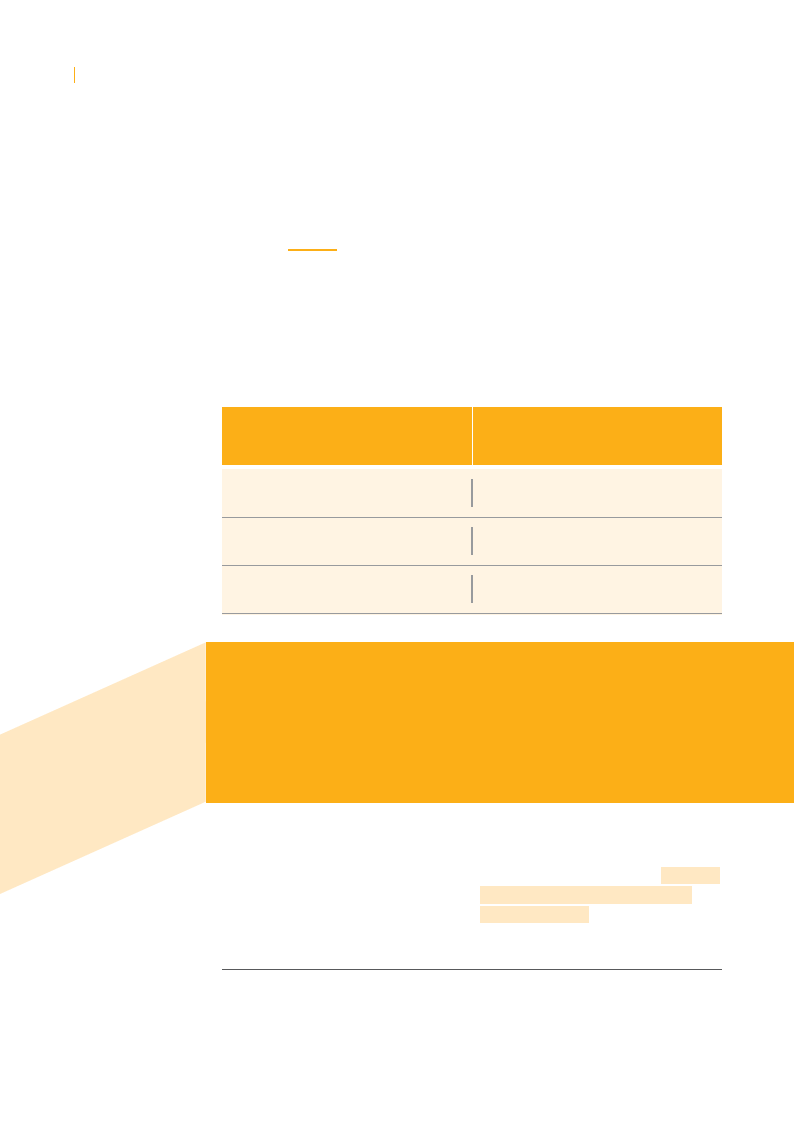
indicators correlate
with levels of women’s
empowerment, workforce
participation, and population
dynamics in Indian states?
2. How do women’s
empowerment, workforce
participation, and fertility
simultaneously impact
each other, considering the
bidirectional relationships
among these aspects?
a. Is higher women’s
empowerment associated
with lower fertility
and higher workforce
participation?
b. Is higher workforce
participation associated
with lower fertility
and higher women’s
empowerment?
c. Is lower fertility associated
with higher women’s
empowerment and higher
workforce participation?
4. What roles do social and
cultural aspects play in
influencing the interrelation
between women’s
empowerment, workforce
participation, and population
dynamics?

5 Pages 41-50

▲back to top


5.1 Page 41

▲back to top


Population Foundation of India
18
Research questions 1 and 2 were addressed using the methodology
outlined in the subsequent section.
Development of two composite state-level indices as quantitative
measures of women’s empowerment and overall human development,
and an examination of the association between these indices, fertility
rates, and women’s work participation rates at the sub-national level.
An econometric analysis using Structural Equation Modelling (SEM)
using unit-level data from the NFHS-5 (2019-21), to examine the
associations between women’s empowerment, workforce participation
and fertility at the individual level. SEM can highlight possible links
and indirect pathways between these variables; however, with cross-
sectional data, the findings only reflect associations, not proven
cause-and-effect relationships. Nonetheless, this analysis is useful for
assessing the plausibility of the theoretical framework and for guiding
further research, particularly with longitudinal or experimental designs.
For this study, women’s
empowerment has been defined
in accordance with the level
of analysis. At the macro level,
the development of a women’s
empowerment index draws on
aggregate sub-national data across
key domains of empowerment
(economic, social, and political),
consistent with established
methodologies. At the micro level,
the analysis focuses on women’s
agency within the household,
measured through relevant
indicators available in the dataset.
More details are provided in the
subsequent section.
A. DEVELOPMENT OF STATE-
LEVEL INDICES
Two state-level indices were
developed following the globally
accepted methodologies as
quantitative measures of human
development and women’s
empowerment.
MEASURE OF HUMAN
DEVELOPMENT
The Human Development
Index (HDI), published by the
United Nations Development
Programme (UNDP) as part of
the Human Development Report
(HDR), is a globally recognised
and widely accepted measure
to assess a country’s level of
human development. It was
created to emphasise that
people’s capabilities should be the
ultimate criterion for assessing
a country’s development, rather
than focusing solely on economic

5.2 Page 42

▲back to top


19
Population Foundation of India
growth. Initiated in 1990, the HDI
is a summary measure of average
achievement of a country in
three key dimensions of human
development: (a) Long and Healthy
Life, (b) Access to Knowledge, and
(c) Decent Standard of Living. The
HDR published in 2025 covered
193 countries, with Iceland ranking
first with a score of 0.972, and
South Sudan ranking 193rd with a
score of 0.388. India ranked 130th
with a score of 0.685 [66].
In 2001-02, following the UNDP’s
human development framework,
the erstwhile Planning Commission
of India published India’s first
National Human Development
Report (NHDR), which calculated
the HDI for a select number of
states. India’s second NHDR was
published in 2011. Following
this, the Social Statistics Division
of the National Statistical Office
(NSO), Ministry of Statistics and
Programme Implementation
(MoSPI), Government of India,
computed the HDI for all states/
union territories for the years
2011-12 and 2017-18. Post 2017-
18, state-level HDI has not been
published in India.
MEASURE OF WOMEN’S
EMPOWERMENT
In 1995, the UNDP introduced
two global indices—the Gender
Development Index (GDI) and the
Gender Empowerment Measure
(GEM). GEM was the first-ever
attempt to measure the extent
of gender inequalities across
the globe. In 2010, the UNDP
constructed the Gender Inequality
Index (GII) by incorporating
additional indicators of women’s
vulnerability. In 2012, Bhattacharya
and Banerjee emphasised the
latent nature of empowerment,
reflected through capability
enhancement [67]. Later,
Bhattacharya, Banerjee, and
Bose (2012) measured women’s
empowerment at the individual
level [68]. Also, in 2012, the Oxford
Poverty and Human Development
Initiative (OPHI), in collaboration
with the United States Agency
for International Development
(USAID) and the International
Food Policy Research Institute
(IFPRI), developed the Women’s
Empowerment in Agriculture
Index (WEAI). The first global
Women Empowerment Index
(WEI) comparable across countries
was published by UN Women and
UNDP as part of the report titled
“The Path to Equal: Twin Indices
on Women’s Empowerment and
Gender Equality, 2023”. The report
provides two indices: the Women’s
Empowerment Index (WEI) and
the Global Gender Parity Index
(GGPI). The WEI focuses solely on
women, measuring their power
and freedom to make choices and
seize opportunities in life. The
report grouped 114 countries out
of a total of 195 for which data on
different dimensions of women’s
empowerment are available.
Sweden achieved the highest score
of 0.826, while Yemen recorded the
lowest score of 0.14. India, with a
score of 0.52, was also categorised
in the low women’s empowerment
group.
While there is no explicit WEI
in India at the state level,
certain dimensions of women’s

5.3 Page 43

▲back to top


Population Foundation of India
20
empowerment are covered under
the GII, published alongside the
HDI in 2017-18, and as part of
NITI Aayog’s SDG India Index.
Also, though, the global HDI
and WEI are valuable indices,
their construction faces two
key constraints. First, only
indicators available for a broad
set of countries can be included
to allow global comparisons.
Second, this limits the ability to
reflect country-specific nuances
in human development and
women’s empowerment. To
address this, the HDI and WEI
have been adapted to the Indian
context by refining and expanding
the indicators, enhancing their
relevance and accuracy.
ADAPTIVE HUMAN DEVELOPMENT INDEX
(AHDI)
To address the absence of a recent
state-level HDI, the Adaptive
Human Development Index (AHDI)
has been created. It incorporates
all the indicators used in UNDP’s
HDI and adds two additional
indicators to make the index more
comprehensive in the Indian
context. The indicators included in
AHDI are presented in Table 1. The
additional indicators not part of
the UNDP’s HDI are highlighted in
the table.
Table 1:
Indicators included in creating Adaptive Human Development Index
(AHDI)
Dimensions
Indicators
Long and Healthy Life
Knowledge
Decent Standard of Living
Life expectancy at birth
Malnourished children (underweight
according to weight-for-age) under 5
years of age (%)
Maternal Mortality Ratio (MMR)
Expected years of schooling for
children (years)
Mean years of schooling for adults
aged 25 years and older
Log of per capita Net State Domestic
Product (NSDP)

5.4 Page 44

▲back to top


21
Population Foundation of India
Two additional indicators are included under the dimension of ‘Long
and Healthy Life.’
Childhood Malnourishment (% of malnourished children under 5
years of age, as determined by weight-for-age criteria): This indicator
is included in AHDI due to its strong predictive value for lifelong
health outcomes. The proportion of children under five years who are
stunted is a critical indicator of the ‘Long and Healthy Life’ dimension
of HDI due to both its origin and its long-term consequences. In India,
persistently high rates of childhood malnourishment are closely linked
to the fact that 32% of children during 2019-21 (NFHS-5) were born
with low birth weight—a direct result of maternal undernutrition.
This reflects the intergenerational transmission of poor health and
nutrition from mother to child, undermining the very foundation of a
healthy life from birth. Moreover, underweight is not merely a marker
of early-life adversity; it has effects on physical health, increasing the
risk of chronic illnesses such as diabetes and cardiovascular disease
in adulthood. It also impairs brain development, leading to cognitive
delays, reduced school performance, and lower productivity later in
life. Therefore, childhood underweight is a crucial indicator for any
index seeking to capture the capability to lead a long and healthy life.
Maternal Mortality Ratio: The inclusion of the MMR as part of the
‘Long and Healthy Life’ dimension of the global HDI is both essential
and distinctive. While life expectancy at birth (LEB) provides a broad
measure of population health, MMR draws specific attention to the
gendered dimensions of health outcomes, particularly the persistent
and preventable risks women face during pregnancy and childbirth.
Far from being a case of double counting (given life expectancy at birth
is also an indicator), MMR highlights the systemic neglect of women’s
health—an area often obscured in aggregate health statistics. It
reflects access to quality maternal healthcare, the strength of primary
health systems, and underlying social inequalities such as nutrition,
early marriage, and gender discrimination. As a sensitive barometer
of women’s wellbeing and broader health system responsiveness,
MMR enriches the index by making it more gender-aware and
representative of structural barriers to healthy living.
Overall, the addition of childhood
malnourishment and MMR to life
expectancy at birth (LEB)—the
sole indicator in the global index
as part of the ‘Long and Healthy
Life’ dimension—is particularly
appropriate for the Indian context.
These two indicators highlight
critical areas of health neglect
that limit the capability to lead
long and healthy lives. Combined
with LEB, they provide a more
comprehensive and equity-
sensitive measure of health
outcomes, capturing dimensions
that LEB alone cannot reveal.

5.5 Page 45

▲back to top


Population Foundation of India
22
ADAPTIVE WOMEN EMPOWERMENT INDEX
(AWEI)
The AWEI has been developed
to fill a critical gap in measuring
women’s empowerment at the
sub-national level in India. By
offering a more nuanced and
localised understanding, AWEI
enables policymakers to design
targeted interventions and
monitor progress more effectively.
The Index has been developed
based on the methodology and
dimensions used in the global
WEI, as part of the “The Path to
Equal: Twin Indices on Women’s
Empowerment and Gender
Equality, 2023” report published
by UN Women and UNDP. A
few additional indicators and
modifications to the existing
indicators used in the global
index have been incorporated
to enhance the sensitivity and
relevance of the AWEI for India.
Table 2 provides a snapshot of
the dimensions and additional
indicators included in the
construction of AWEI.
Table 2:
Indicators included in the creation of the AWEI
Dimensions
Indicators
Life and Good Health
Education, Skill-Building &
Knowledge
Currently married women (15-49
years) using any modern family
planning method (%)
Adolescent fertility rate (births
per 1,000 women aged 15–19
years)
Women aged 15-24 years using
a hygienic method during their
menstrual period (%)
Women (25 years and older) with
completed secondary education
or higher (%)
Female youth (15-24 years) not
in education, employment or
training (NEET) (%)

5.6 Page 46

▲back to top


23
Population Foundation of India
Dimensions
Indicators
Labour and Financial Inclusion
Participation in Decision-
Making
Freedom from Violence
Women (15-59 years) engaged
in paid work (excluding unpaid
helpers in family enterprises) (%)
Women of (15-49 years) who
have a bank or savings account
that they themselves use (%)
Share of seats held in State
Assemblies by women (%)
Share of managerial positions
held by women (%)
% Ever-married women (18-49
years) who experienced (often
or sometimes) physical or sexual
violence committed by their
husband in last 12 months
In comparison to the indicators included in the global WEI, one new
indicator has been introduced within the dimension ‘Life and Good
Health’, and a few refinements have been made to the original
indicators under the dimensions of ‘Labour and Financial Inclusion’
and ‘Participation in Decision-Making’.
Currently married women (15-49 years) using any modern family
planning method (%): This indicator provides a more objective and
actionable measure of contraceptive coverage than the proportion
of women who need contraception and are using modern methods.
It captures actual usage rather than subjective perceptions, making it
more reliable for monitoring access, identifying gaps, and informing
reproductive health policies. Use of modern contraceptive methods
is an essential aspect of women’s lives that allows them to realise
their capabilities fully. As a globally accepted metric, it also aligns
with SDG targets, enabling consistent comparisons across regions
and time.
Menstrual hygiene (% of women aged 15-24 years using a hygienic
method during their menstrual period): Menstrual hygiene is
introduced as a critical indicator under the “Life and Good Health”
dimension to better capture women’s access to health resources,
autonomy, and dignity. Menstrual health management is essential

5.7 Page 47

▲back to top


Population Foundation of India
24
not only for physical wellbeing but also for upholding gender
equity and social inclusion. According to NFHS-5, although 78%
of Indian women aged 15-24 years use a hygienic method during
menstruation, significant regional and rural-urban disparities persist.
States such as Bihar and Madhya Pradesh report usage rates of
around 60%. Again, almost half (49.6%) of the women in rural India
still rely on cloth due to affordability and accessibility barriers. Poor
menstrual hygiene is often correlated with low levels of education,
poverty, and inadequate health infrastructure, reflecting broader
systemic inequities. Including this indicator enables the index
to assess women’s control over their bodies, social status, and
access to basic health and dignity more effectively, all of which are
foundational to empowerment.
Females participating in paid work (% of females aged 15-59
years engaged in paid work, excluding unpaid helpers in family
enterprises): We have refined the indicator on women’s economic
participation by focusing on paid work rather than relying on the
broader definition of Labour Force Participation Rate (LFPR) among
women living in households with a couple and at least one child
under six years of age. This change is motivated by two key reasons:
First, the sample size for women meeting this specific household
structure in nationally representative surveys is relatively small,
leading to less reliable and skewed estimates for smaller states
and union territories. Second, a considerable share of women
reported as economically active in India are unpaid helpers in family
enterprises—roles that do not fully represent economic agency or
empowerment. By focusing on women’s engagement in paid work,
we aim to capture the true essence of economic empowerment by
focusing on remunerative work.
Women’s representation in State Assemblies (% seats held by
women in State Legislative Assemblies): This indicator reflects
the need for a more nuanced understanding of women’s political
empowerment at the regional level. The indicator on women’s
representation in Parliament from each state often suffers from
extreme variations due to the smaller number of seats allocated
to each state and union territory, making the metric less stable. In
contrast, State Assemblies, with their larger and more distributed
seat counts, offer more granularity and reduced bias. Similarly, the
indicator on women’s representation in local governments has not
been used since the existing data already reflects the mandatory
33% reservation for women. Due to this mandate, data suggests that
several states in India have achieved, or are close to, 50% women’s
representation in local governments. Thus, this indicator lacks
variation across states, rendering it unsuitable for creating an index.

5.8 Page 48

▲back to top


25
Population Foundation of India
The inclusion of menstrual
hygiene, participation in paid
work, and representation in state
assemblies makes AWEI more
context-sensitive and reflective
of ground realities. These
adjustments address existing
regional disparities, prioritise
actual economic agency over
labour force participation, and
highlight involvement in leadership
roles, thereby strengthening
the index’s ability to represent
empowerment and support
relevant policy interventions to
improve women’s empowerment.
The list of indicators under
AHDI and AWEI, with detailed
operational definitions, year,
and sources, is presented in
Annexure Table A1 and Table A3,
respectively. Data points for some
indicators were not available for all
28 states and 8 union territories of
India, necessitating adjustments.
Such data issues and adjustments
are mentioned in Annexure Table
A2 and Table A4.
METHODOLOGY FOR CREATION OF INDICES
After identifying the indicators for
each dimension of the composite
indices, the steps for calculating
the AHDI and AWEI are described
in Box 1, following a similar
methodology used for constructing
the global indices: HDI and WEI.
Box 1:
Methodology for Construction of Composite Indices of AHDI and AWEI
To create AHDI and AWEI, we followed steps similar to those outlined in the UNDP’s
“Human Development Report 2022-23” and the “The Path to Equal: Twin Indices
on Women’s Empowerment and Gender Equality, 2023”, by UNDP and UN Women,
respectively. Correlation checks were conducted for all indicators across various
dimensions of both indices to ensure no significant overlap among indicators for the
calculation of the composite indices.
A. Normalising the Indicators
The normalisation process converts indicators with varying units of measurement
into a standardised range, typically from 0 to 1. The maximum values for an
indicator (where higher values correspond to better outcomes), or goalposts, serve
as ‘aspirational targets’ against which the indicators are normalised. The minimum
value of the indicator is the lowest value it can possibly take. The minimum and
maximum values for each indicator were established to arrive at the normalised
values. Details on the selection of the specific minimum and maximum values of

5.9 Page 49

▲back to top


Population Foundation of India
26
each indicator are provided in Annexure A5. For instance, the maximum values
for some of the indicators under AHDI have been derived from the ideal or
target values set in the report “Gendering Human Development, MoSPI, 2017-
18” or UNDP’s “Human Development Report, 2022-23”. Similarly, for some of the
indicators under AWEI, references from the global index in the ‘‘Path to Equal
Report, 2023’’ are used.
Indicators can be categorised into two types: Positive and Negative.
For a positive indicator, a higher value signifies a better outcome or output.
For a negative indicator, a higher value indicates worse performance.
The following formulae were used to calculate the normalised figures:
Normalised Positive Indicator (I) =
Normalised Negative Indicator (I)=
B. Calculating the Dimension Indices
actual value-minimum value
maximum value-minimum value
maximum value-actual value
maximum value-minimum value
The dimension indices are calculated as the unweighted arithmetic mean of the
normalised indicators within each dimension. For example, the indices for the
dimensions ‘knowledge’ and ‘health’ as part of the AHDI was calculated as follows:
IKnowledge = ½ (IEYS + IMYS),
where IEYS= Normalised value for expected years of schooling
IMYS= Normalised value for mean years of schooling
IHealth = (ILEB + Iunderweight + IMMR)
where ILEB = Normalised value for life expectancy at birth
Iunderweight= Normalised value underweight children
IMMR= Normalised value for MMR
C. Aggregating the Dimension Indices to Create Composite Index
The AHDI and AWEI are the geometric means of their respective dimensional
indices:
AHDI = (IHealth * IKnowledge * IDecent ) Living 1/3
AWEI = (I I I I I ) 1/5
Health * Edu&Knowledge * Labour * Leadership * Violence

5.10 Page 50

▲back to top


27
Population Foundation of India
Once AHDI and AWEI were
developed for all Indian states
and union territories, they were
categorised into three groups
based on the values of the
composite indices: High, Medium
and Low (Table 3). Additionally, the
states and union territories have
been arranged into three sets for
comparison purposes: (a) major
statesv, (b) northeastern states
(excluding Assam), and (c) union
territories. While presenting the
findings, we have included Delhi
among the major states, given its
role as the national capital, and
Assam, due to its larger population
and geographic size compared
to other northeastern states. We
have categorised the rest in line
with union territories and the
northeastern states.
Table 3:
Grouping categories for states and union territories
Score for Composite Index
Index Group Category
0.6 and above
0.4 to 0.59
0.39 and below
High
Medium
Low
B. ECONOMETRIC ANALYSIS
USING STRUCTURAL
EQUATION MODELLING (SEM)
To examine the interlinkages
between women’s agency,
workforce participation, and
fertility at the individual level, the
study used data from the NFHS-
5 (2019-2021). Unit-level data is
accessible on the official website
of the Demographic and Health
Survey (DHS) programme (The DHS
Program - India: Standard DHS,
2019-21 Dataset). The NFHS is a
nationally representative survey of
v Major states include all Indian regions recognised as states including the National Capital Territory (NCT) of Delhi except
the northeastern states of Arunachal Pradesh, Manipur, Meghalaya, Mizoram, Nagaland, Sikkim and Tripura.

6 Pages 51-60

▲back to top


6.1 Page 51

▲back to top


Population Foundation of India
28
Indian households that provides
essential information on health,
family welfare, and demographic
indicators. Round 5 captures
several aspects related to women’s
agency and intra-household
decision-making abilities, which are
important indicators of agency and
empowerment.
Additionally, it collects data on
the total number of childbirths,
along with various child-related
indicators and a limited set
of indicators on workforce
participation. The NFHS-5 collected
information from 724,115 women
aged 15-49 years across 707
districts in India. Given that it is
the only large-scale, nationally
representative, and up-to-date
data source available from
which information on all three
domains can be extracted, the
NFHS unit-level dataset was
utilised for econometric analysis
using the SEM approach. The
SEM approach was employed
to explore the linkages between
women’s empowerment, workforce
participation, and fertility at the
individual level, as these three
aspects may simultaneously
influence each other.
A SEM helps specify a model where
variables can act as both predictors
and outcomes, allowing for testing
of theories on the associations
among these variables. In cases
of two-way causation such as this,
the model cannot be treated as a
single-equation model. Therefore,
estimation of parameters cannot
be conducted without considering
the information provided by other
equations in the system. Thus, a
non-recursive SEM was used that
allows for bidirectional effects and
any reciprocal causation between
endogenous variables. In the
system of equations, women’s
empowerment, work participation,
and population dynamics, which
are determined by fertility
outcomes, are endogenous
variables.
The three endogenous variablesvi,
used in the model are as follows:
Workforce Participation:
Whether an individual has been
in the workforce in the past 12
months.
Fertility: Total children ever
born to a woman.
Women’s Agency Index: A
range of variables used for
developing an index.
Fertility is modelled as an
endogenous variable because
it is both shaped by and shapes
women’s empowerment and
workforce participation, creating
a reciprocal relationship of
high policy relevance. There
is ample Indian and global
literature supporting the use of
children ever born as a standard
fertility indicator in analyses of
empowerment and labour force
participation. Evidence suggests
that empowered women may
have fewer children because
they can act on their aspirations,
vi Endogenous variables: Endogenous variables are determined by the system of equations. At least one path points to it.

6.2 Page 52

▲back to top


29
Population Foundation of India
but having children can also
influence empowerment through
enhanced bargaining power,
societal recognition, or access to
resources, especially among low-
income families. In its true sense,
our analysis considers fertility, i.e.,
the total number of children ever
born to a woman, as an indicator
that helps unpack the complex
pathways linking empowerment,
labour force participation, and
structural constraints that affect
women’s ability to exercise
reproductive choice.
Exogenous (independent)
variablesvii, that explain the
endogenous variables include
the age of woman, her husband’s
or partner’s age, the highest
educational attainment of both
the woman and her husband/
partner, current usage of modern
contraceptive method by the
women, total household members,
wealth quintile based on wealth
index, social group, place of
residence (Rural/Urban), religion,
and state of residence.
The analysis was restricted to
currently married women in
the 15-49 year age group. From
the total sample, data for all
variables included in the model
were available for 54,224 married
women. The sample details for the
analysis are listed in Table 4.
Table 4:
Details of NFHS sample of women and sample used in the analysis
Category
All women (15-49 years)
All married women (15-49 years)
Married women covered in empowerment section
Married women covered in the analysis
NFHS-5 Sample
7,24,115
5,12,408
77,729
54,224
SEM is designed to handle non-
recursive relationships through
the inclusion of feedback loops
and latent or unobserved
variables. Given the nature and
type of endogenous variables
(binary, count, and continuous),
Generalised Structural Equation
Modelling (GSEM) was found to
be a more suitable approach.
Our non-recursive GSEM model
is specified based on the
vii Exogenous variables: Exogenous variables are the variables not influenced by any other variable in the model. They act
as independent inputs that explain changes in other variables, called endogenous variables.

6.3 Page 53

▲back to top


Population Foundation of India
30
established theoretical frameworks
in demography and gender
economics [69]. The postulated
reciprocal relationships are:
Fertility Workforce
Participation: A higher number
of children increases domestic
workload, potentially reducing
the probability of labour force
participation (the ‘cost of time’
hypothesis).
Workforce Participation
Fertility: Participation in the
labour market increases the
opportunity cost of having
children, potentially reducing
fertility (the ‘opportunity cost’
hypothesis).
Agency (a key aspect of
empowerment): Modelled
as both an outcome and a
predictor. We hypothesise
that workforce participation
enhances empowerment
(economic agency/decision-
making power), while higher
empowerment may influence
fertility desires and labour force
decisions.
GSEM allows for the flexibility
to model different types of
endogenous variables and can
incorporate latent constructs. It
can also handle non-linear and
non-recursive relationships, unlike
traditional SEM. Apart from the
endogenous variables, a range of
exogenous variables was included
to control for socio-economic
characteristics that may influence
the endogenous variables. These
exogenous variables are grouped
into two categories: household
characteristics and individual
characteristics. A detailed list of
these variables is provided in Table
5.
Table 5:
List of variables used in GSEM
Endogenous Variables
Exogenous /Explanatory Variables
1. Women’s empowerment*
2. Women currently working or
not
3. Fertility (total children ever
born)
1. State
2. Age of woman
3. Husband’s or partner’s age
4. Total household members
5. Household quintile based on
Wealth Index
6. Highest education attainment
of woman
7. Current usage of modern
contraceptive method by
women

6.4 Page 54

▲back to top


31
Population Foundation of India
Endogenous Variables
Exogenous /Explanatory Variables
8. Husband or partner’s
education level
9. Social group/caste
10. Place of residence (rural/
urban)
11. Religion
During the construction of the
model, women’s agency was
initially planned to be used as a
latent variable, as it is not directly
observed in the NFHS dataset;
however, multiple observed
indicators represent different
aspects of empowerment.
However, when agency was
initially constructed as a latent
variable, it could not be used in
the final model, as GSEM does not
allow non-recursive relationships
among endogenous variables
when one of them is a latent
construct and the other two are
observed variables (fertility and
work participation), within a
single system of equations. As the
next best alternative, a women’s
agency index was constructed
using the Principal Component
Analysisviii (PCA) method, based
on indicators reflecting women’s
empowerment in the NFHS
dataset. PCA estimates principal
components from the observed
indicators, and the first principal
component, which represents
the largest amount of variance in
the dataset, is used as the final
index score. The indicators used
to create the Women’s Agency
Index are presented in Table 6. The
indicators selected for the index
capture a few crucial dimensions
of women’s agency: the ability to
make decisions regarding their
mobility, intra-household decision-
making power, not suffering from
any intimate partner violence
(IPV), bodily autonomy in terms of
contraception usage and choice of
physical intimacy, and the ability
to decide how to use their own
money and use mobile phones for
communication.
viii Principal Component Analysis (PCA): PCA reduces the number of dimensions in large datasets to principal components
that retain most of the original information. It achieves this by transforming potentially correlated variables into a smaller
set of variables, known as principal components.

6.5 Page 55

▲back to top


Population Foundation of India
32
Table 6:
Indicators used to construct the Women’s Agency Index from NFHS-5
Sr.
No
Indicator
1. Women use modern contraceptive method
2. Usually allowed to go alone to the market, health facility, or places
outside this village
3. Women ‘alone’ or jointly with husband/partner decide on their
healthcare
4. Women ‘alone’ or jointly with husband/partner decide on large
household purchases
5. Women ‘alone’ or jointly with husband/partner decide on visits to
family or relatives
6. Women experienced no less severe physical violence by husband/
partner
7. Women experienced no severe physical violence by husband/
partner
8. Women experienced no sexual violence by husband/partner
9. Women experienced no emotional violence by husband/partner
10. Women have their own money that they can decide to use alone
11. Women can say no to husband/partner if one does not want to
have sexual intercourse
12. Women are able to read text (SMS) messages
13. Women alone or jointly decide on usage of contraception
The Women’s Agency Index is
constructed based on multiple
observed variables in the NFHS-
5 dataset that capture key
dimensions of women’s agency
and ability to make decisions, with
a focus on outcome variables.
The outcomes for empowerment
included indicators that reflect
women’s ability to make choices
and agency. Based on the selection
of variables, multiple iterations

6.6 Page 56

▲back to top


33
Population Foundation of India
were run, and model fit was
compared across three types of
models to assess the best type.
Initially, a few input variables
were also considered. However,
the model, which consisted of
multiple input variables along with
outcome variables, was found
to be insignificant, and some of
the variables were eventually
dropped. These variables could
be adding noise rather than
improving the model’s accuracy.
Therefore, the construction of the
index was contingent not only on
the availability of data but also
on variables that facilitate the
development of a best-fit model.
We have also mentioned in the
limitations of the study that agency
is understood and conceptualised
differently across the literature; the
results of the analysis are expected
to vary accordingly.
Stata 15 was used to conduct the
econometric analysis. The SEM
builder in Stata was used to create
a path diagram illustrating the
relationship between variables,
as presented in Diagram 1 of
Annexure A.
the workforce participation
equation, on the basis that
it affects the likelihood of
having fewer children but does
not directly shape workforce
participation once other
covariates are controlled for.
Similarly, ‘husband or partner’s
education’, if measured
before the outcome variables,
was considered a suitable
instrument for workforce
participation within the fertility
equation.
2. Second, model constraints were
introduced by allowing the
error terms of the endogenous
variables, such as fertility and
workforce participation, to
covary with each other. This
is a standard and necessary
procedure for estimating
non-recursive relationships,
accounting for the possibility of
unobserved common causes.
CRITERIA FOR VARIABLE
INCLUSION AND EXCLUSION
Variables were included based on
three criteria:
VALIDATION PROCEDURES
The model was identified through
two complementary approaches.
1. First, instrumental variables
(IVs) were applied, drawing
on theoretically grounded
factors that influence one
endogenous variable without
directly affecting the other. For
example, ‘use of contraception’
was employed as an
instrument for fertility within
1. They represent key theoretical
constructs identified in the
literature, such as women’s age,
level of education, partner’s
income, place of residence, and
access to health and childcare
services.
2. They serve as statistical
controls for known
confounders. For instance, a
woman’s age and partner’s age
are well-established predictors
of both fertility and labour
force participation.

6.7 Page 57

▲back to top


Population Foundation of India
34
3. They act as valid instruments
for model identification, as
described above. For each
instrument, the rationale for
the exclusion restriction was
explicitly stated.
Variables were excluded when they
met one or more of the following
conditions:
1. They were highly collinear with
other predictors, resulting in
unstable estimates.
2. They represented post-
treatment variables, such
as current income, which
would be inappropriate in a
model where income is itself
determined by workforce
participation.
3. They demonstrated no
meaningful theoretical or
empirical association during
preliminary analyses, and
their inclusion did not improve
model fit, as assessed by the
Akaike Information Criterion/
Bayesian Information Criterion
(AIC/BIC).
STRATEGIES TO STRENGTHEN
CAUSAL INFERENCE
Several strategies were employed
to ensure robustness in estimating
causal effects using cross-sectional
data.
1. Non-recursive modelling with
instrumental variables was the
primary strategy for addressing
reciprocal causation. While
not free from limitations, the
use of instruments provides
a stronger foundation for
causal inference than recursive
models alone.
2. A comprehensive set of
observed confounders was
controlled for, including socio-
economic, demographic, and
contextual covariates such as
education, ethnicity, region,
household wealth quintile, and
partner’s education, thereby
reducing the risk of omitted
variable bias.
3. Sensitivity analyses were
conducted to assess
robustness. These included
testing alternative model
specifications, estimating
different recursive structures,
and comparing effect sizes
and directions. In addition,
sub-sample analyses were
undertaken (e.g., urban versus
rural populations) to check the
consistency of findings across
different groups.
4. Finally, limitations were
explicitly acknowledged. While
the approach improves upon
basic Ordinary Least Squares
(OLS) regression methods,
residual confounding from
unmeasured factors such
as cultural norms, individual
motivation, or genetic
predispositions cannot be fully
excluded. For this reason, the
findings are interpreted as
revealing strong associative
patterns that are consistent
with causal hypotheses, rather
than conclusive evidence of
causality.

6.8 Page 58

▲back to top


35
Population Foundation of India
MODEL FIT
AIC and BIC were used to assess
model fit. AIC and BIC were used
across three models with various
combinations of control variables
to compare model fitness (Refer to
Table 8). The differences between
Model 1, Model 2, and the final
model are due to the choice of
exogenous variables, as well as
differences in the construction of
the women’s agency index (with
and without input indicators). The
list of agency variables included
in the finalised model has already
been discussed previously. In
terms of the women’s agency
index, Model 1 does not include
any variables reflecting sources
(or inputs) of agency. Model
2 consisted of multiple input
variables, including ownership
of land and a house, frequency
of reading newspapers, listening
to the radio, watching television,
going to the cinema, and ability
to use the internet, as well as the
variables included in the final
model. The fitness of the model
was checked, and the results are
included in Table 8. Among the
three models, the final model was
selected as it had the lowest AIC
and BIC valuesix.
Table 7:
List of control variables in comparable models
Exogenous Variables
State
Age of woman
Husband’s or partner’s age
Total household members
Household quintile based on
Wealth Index
Highest educational attainment
of woman
Current usage of modern
contraceptive method by women
Model 1 Model 2 Final Model
ix AIC and BIC: Akaike’s information criterion (AIC) and the Bayesian information criterion (BIC) are commonly used for
selecting an optimal model from the alternatives. While comparing different models, the model with the lowest value of
AIC and BIC is preferred because the greater the number of unnecessary parameters, the higher the value of AIC/BIC due
to the penalty. The model with the lowest value of information criterion is considered to be a better fit for the given data.

6.9 Page 59

▲back to top


Population Foundation of India
36
Exogenous Variables
Husband’s/Partner’s educational
level
Social group/caste
Place of residence (rural/urban)
Religion
Number of children aged 5 and
under in the household
Model 1 Model 2 Final Model
Current usage of modern
contraceptive methods by women
is included both as a component of
the Women’s Agency Index and as
a covariate in the fertility equation
(see path diagram annexure).
The model also incorporates key
theoretical covariates, such as
age, education, and wealth, as
exogenous observed variables
to account for major sources of
confounding and to strengthen
the causal identification of
relationships among the primary
endogenous variables.
Table 8:
Goodness of fit of fitted models
Observations Log Likelihood
AIC
BIC
Model 1
Model 2
Final Model
57, 534
54, 224
54, 224
-225762.1
-212034.9
-211820.2
452072.3
424623.8
424014.4
454527.4
427089.4
425678.9

6.10 Page 60

▲back to top


37
Population Foundation of India
C. QUALITATIVE RESEARCH
DESIGN TO UNDERSTAND THE
ROLE OF SOCIAL NORMS
Research question 3 was
approached using a qualitative
research design and purposive
sampling. Qualitative design
enabled a deeper understanding
of how social norms influence
the pathways between women’s
empowerment, employment,
and demographic outcomes, as
drawn from the lived experiences
of respondents. While adapted
indices and econometric modelling
capture correlations and
measurable dimensions, qualitative
inquiry helped us to unpack the
mechanisms through which norms
influence behaviours, explain
unexpected or non-linear patterns
in the data, and capture local
variation. The IDIs were conducted
using a vignette approach. IDIs
were conducted in Uttar Pradesh,
Bihar, and Delhi, covering a total
of six districts. To account for
geographical differences and the
rural-urban context, the interviews
were conducted in rural, peri-
urban, and urban areas (Table 9).
Table 9:
Study sites and sample distribution for the In-Depth Interviews (IDIs)
Type of Location State
District
Urban
Peri-Urban
Rural
Total
Uttar Pradesh
Delhi
Bihar
Uttar Pradesh
Bihar
Uttar Pradesh
3
Lucknow
South Delhi
Nawada
Barabanki
Darbhanga
Bahraich
6
Number of IDIs
6
6
6
6
6
6
36

7 Pages 61-70

▲back to top


7.1 Page 61

▲back to top


Population Foundation of India
38
TARGETED RESPONDENTS
The IDIs were conducted with two
groups of respondents. Within
each group, the respondents
were further divided into three
categories.
1. Adolescent girls (18-19 years):
(a) Dropouts; (b) Currently
studying; (c) Married.
2. Young women (20-29 years):
(a) Unmarried and working;
(b) Married and working; (c)
Married and not working.
In every selected location, six IDIs
were conducted, representing
each of the six categories of
respondents mentioned above.
The respondents were selected
using a purposive sampling
approach.
APPROACH FOR CONDUCTING IDIS
The qualitative interviews with
adolescent girls focussed on their
perception of empowerment
and the impact of social norms.
The interviews elicited responses
regarding their understanding
of reproductive health choices
and the skill requirements for
workforce participation, which
aligned with their preferences,
future aspirations, and outlook.
Conversely, the interviews
with young women adopted a
retrospective approach to explore
their past experiences and the
societal contexts that shaped
their lives, focusing on their
empowerment and the impact of
social norms.
Given the distinct objectives of
the interviews with adolescent
girls and young women, different
hypothetical yet relatable stories
were constructed as vignettes
to explore how cultural norms
operate and shape the attitudes
and beliefs of participants in
specific situations. Two unique
vignettes were administered for
each category, and a common
vignette was administered to
both groups (adolescent girls and
young women). Among the unique
vignettes, the second vignette
served as an extension of the first
story, maintaining the central
character’s integrity throughout
the extended narrative. Thus, three
vignettes were administered to
each respondent during the IDIs
(Table 10).

7.2 Page 62

▲back to top


39
Population Foundation of India
Table 10:
Vignettes for each category of respondent in a district
Respondent
Group
Category
Unique
Vignette
Common
Vignette
School Dropout
2
Adolescent girls Currently
(18-19 years) studying
2
1
2
Married
Unmarried and
working
2
Young women Married and
(20-29 years) working
2
1
2
Married and
not working
Total
Vignette
3
3
3
3
3
3
QUALITATIVE ANALYSIS: APPROACH
Interviews were conducted in
Hindi and audio-taped after
obtaining informed consent from
the participants. The audio-taped
interviews were transcribed and
translated into English for analysis.
Considering the vignette inquiry,
a coding frame was developed
using both inductive and deductive
approaches. MAXQDA qualitative
software was used to organise the
emerging themes.
Qualitative findings complement
quantitative results and provide
evidence-based, actionable
recommendations to advocate for
increased investment in women
and girls, aiming to unlock the true
potential of the ‘demographic and
gender dividend’.

7.3 Page 63

▲back to top


Population Foundation of India
40
ETHICAL CONSIDERATIONS
For the econometric analysis,
unit-level data from NFHS-5 were
used, sourced from the official
website (as mentioned earlier).
Respondents in the NFHS survey
undergo informed consent
before participation, following
approval of the protocol by the
Institutional Review Board (IRB)
of the International Institute for
Population Sciences (IIPS). The
protocol for the NFHS-5 survey,
including the content of all survey
questionnaires, was approved
by both the IIPS and the ICF
International Inc. (ICF) IRB. The
protocol was also reviewed by the
U.S. Centers for Disease Control
and Prevention (CDC). Therefore,
no separate ethical approval was
required for the use of unit-level
NFHS data.
Since the IDIs with adolescent
girls and young women involved
human interaction, ethical
approval to conduct the interviews
was obtained from the Institute
for Financial Management and
Research (IFMR) IRB. An informed
consent form was administered
to each respondent before the
interview, and all participants
were thoroughly briefed about the
study. Only those who willingly and
voluntarily agreed to participate
were included in the interviews.
The vignettes used for the IDIs
were designed to be culturally
sensitive and respectful. During the
interviews, every effort was made
to create a safe and supportive
environment in which participants
could share their experiences.
Debriefing sessions were held after
the interviews to help participants
process their emotions and
clarify any questions about data
confidentiality. The interviews
primarily took place in home
settings, where extra precautions
were taken to ensure privacy.
Quantitative findings, whether
derived from indices or
econometric analysis, were
presented in aggregate. For
qualitative findings from IDIs,
considerable care was taken to
ensure the study was conducted
sensitively, acknowledging the
diverse marital, educational,
and employment backgrounds
of the participants. Adequate
care was taken to avoid biases
or generalisations that could
misrepresent their lived
experiences.

7.4 Page 64

▲back to top


41
Population Foundation of India
LIMITATIONS AND
CHALLENGES
1. While finalising the indicators
for the development of
AHDI and AWEI at the state
and union territory levels in
India, data points for some
indicators were unavailable
for all 28 states and 8 union
territories. To address these
challenges, certain adjustments
were made, such as using the
average value of neighbouring
states or the national average.
More details on these data
issues and the adjustments
made are provided in the
annexures.
2. The NFHS data has its own
inherent limitations. The
primary objective of the NFHS
survey is to provide detailed
information on health, fertility,
and family welfare rather
than workforce participation.
Consequently, the dataset
contains limited information
in this regard. Other national
representative datasets,
such as the PLFS, provide
comprehensive information
on workforce participation but
lack detailed data on fertility
and women’s empowerment
indicators.
3. Women’s empowerment, as
a complex phenomenon, is
challenging to measure and is
often subject to interpretation.
In the econometric analysis,
women’s agency is measured
using an index that reflects
intra-household agency and
decision-making power,
focusing on key outcome
variables. The approach
adopted in the study was
deemed most suitable given
the availability of data through
the NFHS dataset. However,
other research studies on this
subject may identify different
ways of conceptualising
women’s empowerment.
Upadhyay and others (2014)
identified at least 19 domains
of women’s empowerment
[9]. Some studies use socio-
demographic variables,
such as women’s education,
employment, residence,
and household economic
status, as proxy variables for
women’s empowerment. These
differences in conceptualisation
can lead to different
conclusions.
4. The econometric analysis
in the study is restricted to
currently married women aged
15-49 years; the indicators
of women’s agency and
reproductive autonomy in the
NFHS dataset are limited to this
group (mostly). Consequently,
the responses of women
outside this age bracket are not
captured. There is considerable

7.5 Page 65

▲back to top


Population Foundation of India
42
scope for future research to
explore such interlinkages
among unmarried women and
young girls.
5. The TFR is defined by
considering women’s entire
reproductive age group, rather
than at a single point in time.
Since NFHS is a cross-sectional
dataset, it is not possible to
establish cause-and-effect
relationships between TFR
and empowerment, as they
only represent a one-time
measurement of both the
alleged cause and effect.
Therefore, for the purpose of
understanding relationships
at the individual level through
econometric modelling, fertility
is indicated through the total
number of children a woman
has given birth to.
6. IDIs were conducted with a
limited number of participants
selected through purposive
sampling. Therefore, the
findings on the role of
social norms on women’s
empowerment cannot be
generalised. Also, identifying
married adolescent girls for
IDIs in urban localities such
as Lucknow and South Delhi
was quite challenging. All
participants in this category
(married adolescent girls)
could only be identified from
economically disadvantaged
backgrounds.
7. Administering vignettes
with adolescent girls was
especially challenging in
terms of ensuring free-
flowing conversations related
to knowledge regarding
reproductive health and
contraception. Since these
discussions took place in
home settings with limited
space and with adults present,
privacy could not be ensured
in all cases. Consequently,
the adolescents sometimes
felt uncomfortable discussing
topics such as contraception
and premarital sex, and some
of them chose to refuse to
answer these questions.

7.6 Page 66

▲back to top


INTERLINKAGES
AMONG WOMEN’S
EMPOWERMENT,
HUMAN DEVELOPMENT
AND FERTILITY
RATE: MACRO LEVEL
ANALYSIS

7.7 Page 67

▲back to top


Population Foundation of India
44
At the sub-national level, two composite indices (AHDI and AWEI)
were developed, based on the methodology outlined in the previous
section, to establish linkages between human development, women’s
empowerment, and a key indicator of population dynamics—the total
fertility rate (TFR).
The AHDI and AWEI provide an overview of the
status of human development and women’s
empowerment in each state and union
territory in India.
Based on the composite scores for each index, states and union
territories have been stratified into three broad categories—High,
Medium, and Low—offering an insightful appraisal of their status with
respect to women’s empowerment and human development. The
findings have been presented in three parts—major states, northeastern
states, and union territories—since the differences in governance
structures and population sizes do not make them comparable.

7.8 Page 68

▲back to top


45
Population Foundation of India
STATUS OF INDIAN STATES
AND UNION TERRITORIES
BASED ON AHDI
MAJOR STATES
The AHDI varies considerably
across major Indian states. Among
the 22 major states in India, Delhi
(0.70), Goa (0.69), and Kerala
(0.66) lead the rankings, reflecting
relatively better achievements as
compared to the others in this
group. Tamil Nadu (0.63) and
Himachal Pradesh (0.61) also
perform satisfactorily. The six
states in the ‘High’ AHDI category
still have to cover a 30% to 40%
gap to achieve the overall goal
as set by the indicators within
AHDI. Telangana, Uttarakhand,
Haryana, Karnataka, Punjab,
Gujarat, and Andhra Pradesh
score between 0.54 and 0.59
and fall into the ‘Medium’ AHDI
category, indicating moderate
progress towards the goals. While
West Bengal, Odisha, Rajasthan,
Chhattisgarh, and Jharkhand fall
in the ‘Medium’ category, their
scores lie between 0.40 and 0.47,
indicating that they still have to
cover half the distance to achieve
human development as defined
by the index. Four of the major
states—Assam, Madhya Pradesh,
Uttar Pradesh, and Bihar—fall in
the ‘Low’ AHDI category with a
composite score below 0.40. Bihar,
with the lowest score (0.21), stands
out particularly because of severe
deficits across all three dimensions
of AHDI. Overall, the AHDI
highlights significant interstate
variations in human development.
To better understand the factors
contributing to the variations
in AHDI across states, their
performances in the three
dimensions and the indicators are
further explored.
“The AHDI reveals sharp inequalities in
human development across Indian states:
while Delhi, Goa, and Kerala inch closer to
aspirational goals, states like Bihar, Uttar
Pradesh, and Madhya Pradesh still struggle
to cover even one-third of the distance.”

7.9 Page 69

▲back to top


Population Foundation of India
46
Table 11:
Categorisation of major states based on AHDI
Rank- Major States
AHDI
1
Delhi
2
Goa
3
Kerala
4
Tamil Nadu
5
Himachal Pradesh
6
Maharashtra
7
Telangana
8
Uttarakhand
9
Haryana
10
Karnataka
11
Punjab
12
Gujarat
13
Andhra Pradesh
14
West Bengal
15
Odisha
16
Rajasthan
17
Chhattisgarh
18
Jharkhand
19
Assam
20
Madhya Pradesh
21
Uttar Pradesh
22
Bihar
Long and
Healthy
Life
0.66
0.57
0.74
0.65
0.60
0.59
0.56
0.54
0.52
0.51
0.59
0.50
0.57
0.51
0.47
0.47
0.35
0.49
0.30
0.32
0.31
0.39
Knowledge
Decent
Standard
of Living
0.70
0.74
0.73
0.78
0.70
0.57
0.64
0.60
0.67
0.57
0.63
0.57
0.62
0.60
0.65
0.56
0.61
0.61
0.61
0.61
0.61
0.50
0.52
0.62
0.54
0.51
0.58
0.34
0.52
0.40
0.52
0.38
0.50
0.40
0.47
0.28
0.54
0.32
0.47
0.29
0.49
0.20
0.40
0.06
Adaptive
HDI
0.70
0.69
0.66
0.63
0.61
0.60
0.59
0.58
0.58
0.58
0.57
0.55
0.54
0.47
0.46
0.45
0.41
0.40
0.37
0.35
0.32
0.21
AHDI
category

7.10 Page 70

▲back to top


47
Population Foundation of India
LONG AND HEALTHY LIFE
KNOWLEDGE
Kerala is closest to achieving the
aspirational targets under the ‘Long
and Healthy Life’ dimension of AHDI
among the large states, followed
by Delhi, Tamil Nadu, Himachal
Pradesh, and Maharashtra. In terms
of specific indicators, Delhi and
Kerala observed the highest life
expectancy at birth (LEB) at 76 and
75 years, respectively. Similarly,
underweight among children aged
less than 5 years was lower in
Punjab at 16% and Kerala at 20%.
Kerala is closest to the globally
accepted aspirational goalpost of
10 maternal deaths per 100,000
births, with the state’s current MMR
at 19; followed by Maharashtra (33),
Telangana (43), Andhra Pradesh
(45), and Tamil Nadu (54). On the
other hand, Assam, Uttar Pradesh,
Madhya Pradesh, Chhattisgarh, and
Bihar are the bottom five states
in this dimension, covering only
about one-third of the distance
to the ideal score. Chhattisgarh
and Uttar Pradesh have the least
LEB in the country, with 65 and
66 years, respectively. Again, the
highest proportion of underweight
children as reported by NFHS-5
was found in Bihar at 41%, closely
followed by Gujarat at 40%. Assam
(195), Madhya Pradesh (173), Uttar
Pradesh (167), and Chhattisgarh
(137) also registered much
higher MMR. Lower scores in this
dimension highlight the need for
greater investment in nutrition,
healthcare infrastructure and
maternal health services in these
states. These distinctions reflect the
overall effectiveness of the health
system and the living conditions of
the regions.
Among the major states, Goa, Delhi,
and Kerala, with scores above
0.70 in the ‘Knowledge’ dimension,
indicate their progress towards
relatively better educational
outcomes. In contrast, Bihar,
Madhya Pradesh, and Jharkhand
scored below 0.50, suggesting
they remain significantly distant
from the aspirational targets for
both indicators—expected years
of schooling for children and mean
years of education completed by
adults aged 25 years or above.
These gaps reflect deep-rooted
structural challenges and emphasise
the urgency for sustained
interventions to reach the targets.
The average number of completed
years of education among the
population (25 years & above) is
highest in Kerala and Goa (10 years
each), reflecting relatively better
access to education. In contrast,
Bihar (5 years), Jharkhand (6 years),
Andhra Pradesh (7 years), and
Madhya Pradesh (7 years) highlight
significant gaps. For expected years
of schooling, Goa (15 years) and
Delhi (14 years) lead among major
states, approaching the aspirational
target of 18 years. In contrast, Bihar
records the lowest EYS at 8 years.
DECENT STANDARD OF LIVING
The dimension of ‘Decent Standard
of Living’ uses a single indicator—
the logarithm of per capita Net
State Domestic Product (NSDP)—to
reflect the economic wellbeing of
the population. Higher per capita
NSDP ideally indicates better
access to resources, incomes, and
services. Among the 22 major

8 Pages 71-80

▲back to top


8.1 Page 71

▲back to top


Population Foundation of India
48
states, Goa (5.5), Delhi (5.4), and
Gujarat (5.3) record the highest
values, reflecting relatively
better standards of living, on
average. In contrast, Bihar (4.5)
and Jharkhand (4.8) are at the
lower end, indicating substantial
differences in economic levels
compared to the better-performing
states. These figures highlight the
uneven progress across regions
in achieving a decent standard of
living.
NORTHEASTERN STATES
Among the seven northeastern
states (excluding Assam), Sikkim
(0.62) and Mizoram (0.61) record
the highest Adaptive HDI scores,
placing them in the ‘High’ AHDI
category, with relatively better
performances in the ‘Decent
Standard of Living’ and ‘Knowledge’
dimensions. The remaining five
states fall into the ‘Medium’ AHDI
category, reflecting moderate
achievements, while they still
have almost half to go to achieve
the human development targets
within AHDI. While ‘Knowledge’
outcomes are relatively better
across several states, gaps in living
standards, especially in Manipur
and Meghalaya, continue to lower
their overall scores. Notably, the
northeastern state of Meghalaya
reports one of the highest EYS at
16 years, indicating satisfactory
access to school education.
Table 12:
Categorisation of northeastern states (excluding Assam) based on AHDI
Rank- Northeastern States
AHDI (Excluding Assam)
Long and
Healthy
Life
Knowledge
Decent
Standard
of Living
Adaptive
HDI
AHDI
category
1
Sikkim
0.58
0.54
0.75
0.62
2
Mizoram
0.58
0.73
0.54
0.61
3
Arunachal Pradesh 0.56
0.56
0.45
0.52
4
Tripura
5
Meghalaya
6
Manipur
0.51
0.50
0.58
0.58
0.68
0.68
0.41
0.32
0.28
0.49
0.48
0.48
7
Nagaland
0.50
0.57
0.35
0.47

8.2 Page 72

▲back to top


49
Population Foundation of India
UNION TERRITORIES
Among the seven union territories,
Chandigarh (0.68) and Puducherry
(0.64) ranked top in AHDI scores,
and they both fall in the ‘High’
AHDI category, driven by better
performances in the dimensions
of ‘Knowledge’ and ‘Standard of
Living’. For instance, Chandigarh
(0.81) and Puducherry (0.71)
show relatively higher scores in
the ‘Knowledge’ dimension, with
Chandigarh (11 years) reporting
higher MYS. Chandigarh also
ranked highest among union
territories (0.72) in economic
wellbeing. Andaman & Nicobar
Islands (0.58) and Lakshadweep
(0.52) fall in the ‘Medium’ category
with moderate outcomes. While
Jammu & Kashmir (0.50), Dadra
& Nagar Haveli and Daman &
Diu (0.49), and Ladakh (0.49) also
remain in the ‘Medium’ category,
their per capita NSDP was
relatively lower, bringing down the
composite index scores.
Table 13:
Categorisation of union territories based on AHDI
Rank- Union Territories
AHDI
1
Chandigarh
Long and
Healthy
Life
0.53
Knowledge
Decent
Standard
of Living
0.81
0.72
Adaptive
HDI
0.68
AHDI
category
2
Puducherry
0.70
0.71
0.54
0.64
3
Andaman &
0.53
Nicobar Islands
0.61
0.61
0.58
4
Lakshadweep
0.51
0.61
0.44
0.52
5
Jammu & Kashmir
0.64
0.56
0.34
0.50
6
Dadra & Nagar
0.44
Haveli and Daman
& Diu
0.62
0.44
0.49
7
Ladakh
0.64
0.55
0.34
0.49

8.3 Page 73

▲back to top


Population Foundation of India
50
ASSOCIATION BETWEEN
HUMAN DEVELOPMENT AND
FERTILITY RATE
Across all states and union
territories, a negative correlation
(r: -0.64) is observed between AHDI
and TFR, indicating that higher
levels of human development
are generally associated with
lower fertility rates. Although this
correlation is moderately strong,
it also reflects the influence
of broader socio-cultural and
economic factors on fertility
decisions. TFR shows a weaker
correlation with the ‘Long and
Healthy Life’ dimension (r: -0.5)
and ‘Knowledge’ dimension (r:-
0.34) but a stronger correlation
with the ‘Decent Standard of Living’
dimension (r: -0.7), pointing to
the significant role of economic
conditions in influencing fertility
decisions. The findings suggest
that economic conditions exert a
more pronounced influence on
fertility than health or education
outcomes. While improvements
in health and education are
important, they appear less
decisive in shaping fertility
behaviour compared to household
income, employment security, and
material living standards.
Figure 1 illustrates the
relationship between AHDI and
TFR among major states. Among
the low AHDI states, Bihar and
Uttar Pradesh recorded TFRs
exceeding the national average of
2.0. Most other states in the ‘High’
and ‘Medium’ AHDI categories
predominantly reported TFR
below the replacement level (2.1).
This demonstrates significant
progress toward reduced fertility
rates, even in contexts of relatively
lower human development.
Such advancements can largely
be attributed to targeted policy
interventions and programmatic
efforts in the areas of health and
family planningx and changing
aspirations of women to have
smaller families, which is reflected
in the total wanted fertility rate
(1.6) as per NFHS-5.
x Family Planning under the National Health Mission: India holds the distinction of being the first country in the world
to launch a National Programme for Family Planning in 1952. This pioneering initiative has since been reinforced
through key policy frameworks, including the National Population Policy (NPP) 2000, the National Health Policy (NHP)
2017, and the National Rural Health Mission (NRHM). These policies articulate clear family welfare objectives, reflecting
India’s commitment to international mandates, including the International Conference on Population and Development
(ICPD), the Millennium Development Goals (MDGs), and the Sustainable Development Goals (SDGs). At the policy level,
the strategies emphasise a rights-based and community-centric approach, eschewing targets in favour of voluntary
adoption of family planning methods. The principles of “children by choice, not by chance” guide interventions tailored
to communities’ felt needs. Service delivery strategies focus on promoting spacing methods, ensuring quality of care, and
expanding contraceptive options to empower individuals and couples in making informed reproductive choices. Mission
Parivar Vikas, launched in 2017, initially targeted 146 high-priority districts across seven high-focus states—Bihar, Uttar
Pradesh, Assam, Chhattisgarh, Madhya Pradesh, Rajasthan, and Jharkhand. This initiative has since been scaled up to
cover all districts in these states and six northeastern states, with the aim of ensuring the availability of contraceptive
products at all levels of the health system.

8.4 Page 74

▲back to top


51
Population Foundation of India
Figure 1: AHDI scores and Total Fertility Rates across Major States
Fertility rate
0.0
0.5
1.0
1.5
2.0
2.5
3.0
Delhi
Goa
Kerala
Tamil Nadu
Himachal
Pradesh
Maharashtra
Telangana
Uttarakhand
Haryana
Karnataka
Punjab
Gujarat
Andhra
Pradesh
West
Bengal
Odisha
Rajasthan
Chhattisgarh
Jharkhand
Assam
Madhya
Pradesh
Uttar
Pradesh
Bihar
1.62 2.00
0.70
0.21
2.00
Adaptive HDI
TFR
TFR (India)
Source: (1) AHDI scores are
calculated as part of this study.
Represents the latest status
of human development as
of 2024. (2) TFR data is from
NFHS-5, 2019-21.
2.98
0.0
0.1
0.2
0.3
0.4
0.5
0.6
0.7
0.8
Adaptive HDI

8.5 Page 75

▲back to top


Population Foundation of India
52
A few states present a complex and
insightful relationship with TFR.
For example, with a comparatively
low AHDI score of 0.47, West
Bengal recorded a significantly
low TFR of 1.64, well below the
replacement level. This may be
a result of the fertility transition
in the last two decades in the
state. It could be ‘distress-driven’
or regulated by an aspiration
towards a child or by ideas/values
related to low fertility, or it can be
a culmination of various factors
that initiate a reduction in demand
for children, after which supply-
side factors come into play and
fertility reduces [70]. A primary
study conducted in rural West
Bengal argued that the presence
of high aspirations for children in
an economically insecure setting
initiates a distinctive sense of
parental responsibility, generating
a unique local socio-ecology of low
fertility not previously observed in
the context of rural fertility decline.
Responsibility-laden aspirations
towards children and reasoned-
rational deliberations about fertility
outcomes serve as subliminal
motives for having a small family,
challenging common assumptions
regarding the relationship
between economic hardship,
rurality, and fertility [71]. Thus,
West Bengal’s low TFR may be
attributed to economic constraints,
socio-cultural norms favouring
smaller families, male out-
migration, accessible reproductive
healthcare, female education,
and policy interventions, despite
persistent gender inequities and
developmental challenges.
The relationship between human
development and fertility rates is
inherently dynamic and context-
specific. Globally, research
highlights an intricate and evolving
discourse on the interplay between
TFR and the HDI. A seminal
study by Myrskylä et al. (2009)
underscores that while the inverse
correlation between fertility and
socio-economic development is
one of the most well-documented
patterns in social science research,
recent cross-sectional and
longitudinal analyses reveal a
nuanced shift. At advanced stages
of human development, further
progress may reverse the declining
fertility trend. This shift results in
a J-shaped relationship, in which
higher HDI levels are positively
correlated with fertility rates in
highly developed countries [72].
Various other studies have found
that the association between
HDI and TFR was similar to that
between GDP per capita and TFR
[72, 73]. This association between
TFR and HDI is negative at HDI
levels below 0.85–0.9. As the
HDI is close to 0.9, the HDI-TFR
association reverses to a positive
relationship [72].
Harttgen and Vollmer (2014)
challenged the robustness of the
observed reversal in the HDI-
TFR relationship, arguing that
this linkage weakens when the
HDI is disaggregated into its core
components—education, health,
and standard of living. Their
findings raise questions about the
reliability of a positive relationship
between HDI and TFR at advanced
stages of human development

8.6 Page 76

▲back to top


53
Population Foundation of India
[74]. Subsequent studies, such as
Cheng et al. (2022), have identified
inverted U-shaped relationships
between GDP per capita and TFR,
as well as between life expectancy
and TFR [75]. However, a linear
relationship was observed
between female education and
HDI. In developed regions, slight
increases in TFR were noted at
high levels of GDP, schooling, and
HDI. Conversely, Gaddy (2021)
observed a weakening of this trend
in highly developed countries after
2010, with a pronounced decline
in TFR and no clear correlation
between HDI and TFR at very high
levels of development (HDI > 0.8)
[76]. At the local level within the
U.S., Ryabov (2015) supported the
classic demographic transition
theory, identifying a negative
association between human
development and fertility [77].
These findings indicate that the
relationship between TFR and HDI
is context-specific, shaped by both
demand- and supply-side factors,
with no single pattern evident
across economies at different
stages of development.
In the Indian context, an
earlier study revealed that the
relationship between fertility and
development is strongly negative,
convex, and consistent over time.
However, the strength of this
association exhibits significant
regional variation, reflecting the
diverse socio-economic, cultural,
and policy environments across the
country [78]. While India achieved
replacement-level fertility at the
national level by 2021, following
the onset of the fertility transition
in the 1970s, this overall progress
conceals significant regional
disparities. Developed states
such as Kerala and Tamil Nadu
achieved replacement-level fertility
decades earlier, driven by higher
socio-economic development and
the implementation of effective
public health initiatives. In contrast,
states with lower levels of socio-
economic development, such as
Uttar Pradesh and Bihar, continue
to report high fertility rates, at
2.35 and 2.98 births per woman,
respectively, during 2019-21.
Within states, there are districts
with high fertility due to various
factors. An earlier study using
NFHS-5 estimated that only 326
out of 707 districts had a fertility
rate below the replacement level
of 2.1. Sixty-seven districts were
estimated to have a high fertility
rate of at least 3 births per woman
of reproductive age [79]. The
Government of India also identified
146 districts with a TFR above 3.0
across seven states under Mission
Parivar Vikas.
This uneven transition underscores
the relationship between fertility
dynamics and broader issues
of social, gender, and economic
inequalities as well as regional
development within the country.

8.7 Page 77

▲back to top


Population Foundation of India
54
STATUS OF INDIAN STATES
AND UNION TERRITORIES
BASED ON AWEI
The AWEI offers a multidimensional
view of women’s empowerment
status across Indian states and
union territories by considering
multiple dimensions such as
assessing health, education, access
to paid work, financial inclusion,
decision-making, and freedom
from domestic violence.
MAJOR STATES
Of the 22 major states, 17 states
fall in the ‘Medium’ AWEI category,
and 5 states fall in the ‘Low’ AWEI
category. This indicates that most
of the states continue to face
persistent gaps in key areas of
women’s empowerment. None
of the major states has been
able to make it to the ‘High’ AWEI
category as they are far behind
in the aspirational goalposts for
the majority of the indicators
considered to develop the index.
Excluding the top two states, the
rest have not yet reached halfway
(index value less than 0.5) in terms
of the goalposts for the various
dimensions of AWEI. Within the
major states, while states like
Goa (0.57) and Kerala (0.54)
demonstrate relatively higher
levels of women’s empowerment,
they still fall well short of ideal
benchmarks, particularly in the
dimensions ‘Labour and Financial
Inclusion’ and ‘Participation in
Decision-Making’. Goa performs
well in ‘Life and Good Health’
(0.62) and ‘Freedom from Violence’
(0.91) but shows a notable gap in
women’s participation in decision-
making (0.29). Similarly, Kerala
scores high in dimensions related
to women’s education (0.70) and
health (0.56), yet faces challenges
in labour and financial inclusion
(0.43) and decision-making (0.30).
In contrast, states such as Bihar
(0.28), Uttar Pradesh (0.36), and
Assam (0.35) show significant
deficits across multiple dimensions
of women’s empowerment. Bihar,
for instance, scores particularly
low in education (0.22), labour
and financial inclusion (0.31), and
decision-making (0.18), indicating
deep-rooted structural barriers
to women’s empowerment that
persist across these states. To
better understand the factors
contributing to variations in AWEI
across states, the following section
explores their performance in the
five dimensions and the indicators
within each dimension.

8.8 Page 78

▲back to top


55
Population Foundation of India
“No major Indian state has reached ‘High’ levels of
women’s empowerment, persistent gaps in decision-
making, economic inclusion, and education reveal how far
the country still stands from its gender equity goals.”
Table 14:
Categorisation of major states based on AWEI
Rank- Major States
AHDI
1
Goa
2
Kerala
3
Tamil Nadu
4
Himachal Pradesh
5
Delhi
6
Chhattisgarh
7
Punjab
8
Andhra Pradesh
9
Telangana
10
Haryana
11
Uttarakhand
12
Odisha
13
Maharashtra
14
Gujarat
15
Karnataka
16
Rajasthan
17
West Bengal
18
Madhya Pradesh
19
Jharkhand
20
Uttar Pradesh
21
Assam
22
Bihar
Education,
Skill-Building &
Knowledge
0.62
0.56
0.46
0.57
0.51
0.43
0.44
0.36
0.46
0.47
0.49
0.34
0.47
0.39
0.45
0.37
0.36
0.34
0.40
0.35
0.37
0.32
Life and Good
Health
0.77
0.70
0.72
0.72
0.74
0.55
0.68
0.54
0.64
0.70
0.70
0.52
0.58
0.47
0.62
0.63
0.43
0.46
0.39
0.51
0.33
0.22
Labour and
Financial
Inclusion
0.46
0.43
0.58
0.51
0.28
0.38
0.42
0.45
0.48
0.30
0.39
0.47
0.34
0.33
0.49
0.38
0.40
0.33
0.37
0.30
0.43
0.31

8.9 Page 79

▲back to top


Population Foundation of India
56
Participation in
Decision-Making
0.29
0.30
0.27
0.14
0.31
0.34
0.19
0.38
0.26
0.22
0.15
0.28
0.24
0.27
0.31
0.20
0.28
0.31
0.27
0.21
0.19
0.18
Freedom from
Violence
0.91
0.89
0.52
0.89
0.74
0.71
0.85
0.58
0.52
0.78
0.83
0.64
0.66
0.81
0.31
0.73
0.66
0.61
0.52
0.52
0.57
0.42
Adaptive AWEI
0.57
0.54
0.49
0.48
0.47
0.46
0.46
0.46
0.45
0.44
0.44
0.43
0.43
0.42
0.42
0.42
0.41
0.39
0.38
0.36
0.35
0.28
AWEI Categories

8.10 Page 80

▲back to top


57
Population Foundation of India
LIFE AND GOOD HEALTH
The ‘Life and Good Health’
dimension of AWEI reflects the
extent to which women in different
states have access to essential
health services, particularly
related to reproductive health
and menstrual hygiene. Among
major states, Goa (0.77), Delhi
(0.74), and Tamil Nadu (0.72) have
made the most progress towards
the goals envisioned under this
dimension, such as the adolescent
fertility rate being zero or access
to modern contraceptive methods
for all women of reproductive age,
or all young women being able
to maintain menstrual hygiene.
Adolescent fertility rates were
lower in Goa (14) and Delhi (19),
and near-universal access to
hygienic menstrual practices in
Tamil Nadu at 98%, and in Goa and
Delhi at 97% each. These states
also benefit from relatively better
healthcare infrastructure and
higher levels of awareness, which
contribute to better outcomes.
Meanwhile, although Andhra
Pradesh (0.46), Karnataka (0.42),
and Telangana (0.45) do not score
as high in this dimension, they
demonstrate high usage (above
65%) of modern family planning
methods, indicating specific
strengths in contraceptive access
that may not fully offset weaker
performance in other indicators.
At the other end, states like
Bihar (0.22), Assam (0.33), and
Jharkhand (0.39) score lowest in
this dimension. High adolescent
fertility rates, poor access to
modern contraception, and limited
access to menstrual hygiene tend
to adversely impact women’s
empowerment in these states.
EDUCATION, SKILL-BUILDING
& KNOWLEDGE
This dimension assesses women’s
educational attainment and
their access to opportunities for
continued learning and workforce
participation. Goa, Himachal
Pradesh, and Kerala lead in this
area, supported by a higher share
of women aged 25 and above
who have completed secondary
education or higher—Kerala
(50%), Goa (45%), and Delhi
(43%). These outcomes reflect
better foundational education
systems and a greater emphasis
on female education. In contrast,
Bihar (0.32), Madhya Pradesh
(0.34), and Odisha (0.34) were the
bottom three among the major
states, with only 18% of women in
Bihar and Madhya Pradesh having
completed secondary education,
pointing to continued challenges
in access and retention. The gap
between education and economic
engagement is further reflected in
the high NEET (Not in Education,
Employment, or Training) rates
in Uttar Pradesh (40%), Punjab
(40%), and Bihar (38%), which limit
young women’s transition into
the workforce. Goa’s relatively
low NEET rate (13%) reinforces
its stronger alignment between
education and work opportunities
for women.

9 Pages 81-90

▲back to top


9.1 Page 81

▲back to top


Population Foundation of India
58
LABOUR AND FINANCIAL
INCLUSION
PARTICIPATION IN DECISION-
MAKING
This dimension captures women’s
access to paid work and control
over financial resources. Among
major states, Tamil Nadu (0.58),
Himachal Pradesh (0.51), and
Karnataka (0.49) emerge as the
top performers in this dimensional
index. Tamil Nadu (92%) and
Karnataka (89%) report high bank
account ownership and usage
among women, while Himachal
Pradesh records the highest share
of women in paid work (43%).
Yet, these figures still point to
limited economic participation of
women overall. In contrast, states
like Delhi (0.28), Haryana (0.30),
and Uttar Pradesh (0.30) perform
poorly, reflecting both lower labour
force participation and weaker
financial inclusion. Notably, Delhi
(73%) and Gujarat (70%) fall below
the national average in women’s
bank account usage, highlighting
persistent disparities in financial
access despite broader national
coverage.
The dimension of ‘Participation
in Decision-Making’ captures
women’s representation in
decision-making roles across
political and managerial spaces.
In this dimension, most states
score on the lower side, with top-
performing states such as Andhra
Pradesh (0.38), Chhattisgarh (0.34),
and Karnataka (0.31) still reflecting
moderate levels of progress.
In terms of share of women in
State Assemblies, Chhattisgarh
(21%), West Bengal (14%), and
Jharkhand (12%) have the highest
proportions; yet these figures still
fall short of the 33% reservation
benchmark—pointing to the
ongoing need for institutional
reforms. Much lower scores are
observed in states like Himachal
Pradesh (0.14), Uttarakhand (0.15),
and Bihar (0.18).
Understanding the Higher Share of Women as Leaders in
Chhattisgarh
Chhattisgarh has emerged as a leader in women’s political
representation, consistently electing the highest proportion of
women Member of the Legislative Assembly (MLAs) among Indian
states. In the 2023 assembly elections, 19 women were elected to
the 90-member assembly (21.1%), surpassing the previous record
of 16 women MLAs (17.8%) in 2018. This upward trajectory reflects
systemic shifts in party strategies and voter behaviour. Electoral
performance in the state has been strong, with all women MLAs in
2018 winning over 30% of the vote share. Factors such as women
outnumbering men voters in 50 constituencies during the 2023 polls
and parties allocating about 15% of phase-one tickets to women
have further supported this trend.

9.2 Page 82

▲back to top


59
Population Foundation of India
FREEDOM FROM VIOLENCE
The dimension ‘Freedom from
Violence’ as part of AWEI, is
defined based on a single indicator
‘Percentage of ever-married
women (18-49 years) who have
experienced (often or sometimes)
physical or sexual violence
committed by their husband
in the last 12 months’. It helps
capture intimate partner violence
(IPV) across states that can vary
based on socio-cultural norms,
enforcement of legal provisions,
and availability of formal support
systems. The scores for this
dimensional index indicate
significant disparities across Indian
states, with Karnataka scoring the
lowest at 0.31, followed by Bihar at
0.42. On the contrary, Goa (0.91),
Himachal Pradesh (0.89), and
Kerala (0.89) perform considerably
better. The proportion of women
facing IPV is highest in the country
in Karnataka at 41% as per NFHS-
5 estimates, followed by Bihar
at 35%. On the other hand, Goa,
Himachal Pradesh, and Kerala
report the lowest IPV rates among
the large states.
Understanding Karnataka’s High Spousal Violence Rates
Karnataka’s notably high spousal violence rates compared to other
states, are influenced by a mix of improved reporting mechanisms
and unique regional dynamics. The state’s sharp rise in reported
cases—from 20.6% (NFHS-4) to 44.4% (NFHS-5)—partly reflects
increased awareness and willingness to report abuse, particularly in
urban areas, where women are more vocal about violence. However,
underlying factors such as rapid urbanisation, economic disparities
between urban and rural areas, and persistent patriarchal norms
exacerbate domestic tensions. Rural regions, where traditional
gender roles remain entrenched, continue to normalise abuse, while
urban stressors like financial insecurity and migration further strain
relationships.

9.3 Page 83

▲back to top


Population Foundation of India
60
NORTHEASTERN STATES
Among the seven northeastern
states (excluding Assam), Mizoram
and Sikkim performed relatively
better in terms of AWEI, with
composite scores of 0.57 and 0.56,
respectively. Mizoram stands out
with a high score in the ‘Freedom
from Violence’ dimension at 0.88,
reflecting low levels of violence
against women. Both Mizoram
and Sikkim show relatively higher
participation in decision-making
(Mizoram at 0.48 and Sikkim at
0.42) as compared to the rest, and
have notable shares of women
in managerial positions, with
Mizoram at 41% and Sikkim at
33%. Additionally, the percentage
of young women in NEET is low,
indicating strong engagement in
these areas.
For example, the uptake of modern
family planning methods is much
lower in Manipur (18%) and
Mizoram (31%). Again, Nagaland
reported that only 64% of women
aged 15-49 years owned and used
bank accounts, which is below
the national average. While states
like Meghalaya, Nagaland, and
Arunachal Pradesh have relatively
higher participation of women in
paid work, overall levels remain
modest. Tripura, with the lowest
AWEI score in the northeast at
0.39, struggles particularly in the
dimensions of ‘Life and Good
Health’ (0.25) and ‘Participation
in Decision-Making’ (0.31), even
though its score in the ‘Freedom
from Violence’ dimension is
relatively better at 0.82.
Despite these strengths, challenges
remain in the northeastern states.

9.4 Page 84

▲back to top


61
Population Foundation of India
Table 15:
Categorisation of northeastern states based on AWEI
Rank Northeastern states
-AWEI (Excluding Assam)
Education,
Skill-Building &
Knowledge
Life and Good
Health
1
Mizoram
0.57
0.58
2
Sikkim
0.52
0.64
3
Arunachal Pradesh
0.47
0.59
4
Manipur
0.58
0.40
5
Meghalaya
0.49
0.27
6
Nagaland
0.51
0.58
7
Tripura
0.33
0.25
Labour and
Financial
Inclusion
0.43
0.44
0.47
0.40
0.47
0.35
0.41
UNION TERRITORIES
The top two union territories
in terms of AWEI score are
Chandigarh (0.56) and Puducherry
(0.54). Chandigarh stands out
among the union territories with
strong performance in ‘Life and
Good Health’ (0.75) and ‘Education,
Skill-Building & Knowledge’
(0.70), reflecting better access
to healthcare and education
for women. However, women’s
participation in decision-making
remains low, with a score of just
0.26, indicating substantial room
for improvement. The Andaman
& Nicobar Islands (0.47) and
Lakshadweep (0.42) have been
successful in ensuring women’s
safety, scoring high on freedom
from violence, but face challenges
in women’s workforce participation
and basic financial inclusion.
The bottom two union territories in
terms of AWEI—Jammu & Kashmir
and Ladakh—fall in the ‘Low’
AWEI category, with composite
scores of 0.39 each. Compared
to health and education, these
two union territories struggle
more with very low women’s
participation in decision-making,

9.5 Page 85

▲back to top


Population Foundation of India
62
Participation in
Decision-Making
0.48
0.42
0.28
0.37
0.36
0.12
0.31
Freedom from
Violence
0.88
0.86
0.68
0.64
0.79
0.93
0.82
Adaptive AWEI
0.57
0.56
0.48
0.47
0.45
0.41
0.39
AWEI Categories
MEDIUM
LOW
with scores as low as 0.07 in both.
Some of the positive aspects of
women’s empowerment among
the union territories include low
adolescent fertility rates in Ladakh
(2) and Chandigarh (9), and nearly
universal access to hygienic
menstrual products in Puducherry
and the Andaman & Nicobar
Islands (99%).

9.6 Page 86

▲back to top


63
Population Foundation of India
Table 16:
Categorisation of northeastern states based on AWEI
Rank Union Territories
-AWEI
Education,
Skill-Building &
Knowledge
Life and Good
Health
1
Chandigarh
0.70
0.75
2
Puducherry
0.53
0.75
3
Andaman & Nicobar
Islands
0.47
0.74
4
Lakshadweep
0.40
0.70
5
Dadra & Nagar Haveli
and Daman & Diu
0.48
0.65
6
Jammu & Kashmir
0.50
0.60
7
Ladakh
0.49
0.64
Labour and
Financial Inclusion
0.48
0.56
0.48
0.18
0.46
0.49
0.56
ASSOCIATION BETWEEN
WOMEN’S EMPOWERMENT
AND FERTILITY RATE
Similar to the AHDI, the AWEI
exhibited a negative correlation
(-0.5) with TFR. This suggests
that improvements in women’s
empowerment are only moderately
associated with a decline in
fertility rates, highlighting the
modest influence of enhanced
education, work participation,
and participation in decision-
making roles on reproductive
behaviour. Especially, the ‘Life and
Good Health’ dimension of the
AWEI demonstrated a stronger
negative correlation with TFR
(-0.7), emphasising the direct

9.7 Page 87

▲back to top


Population Foundation of India
64
Participation in
Decision-Making
0.26
0.29
0.16
0.27
0.11
0.07
0.07
Freedom from
Violence
0.84
0.68
0.87
0.99
0.79
0.86
0.71
Adaptive AWEI
0.56
0.54
0.47
0.42
0.42
0.39
0.39
AWEI Categories
MEDIUM
LOW
link between improved health
outcomes for women and lower
fertility rates. This highlights the
critical role of health interventions
in shaping fertility patterns. The
findings show that fertility rates
are more strongly associated
with life and good health (r: -0.69)
than with education (r: -0.38),
labour participation (r: -0.29),
or participation in decision-
making (r: 0.08). Moderate links
also appear with freedom from
violence (r: -0.44). This suggests
that while education and economic
conditions matter, the most
consistent associations lie with
health outcomes and freedom
from violence. Therefore, policy
responses should prioritise
investments in health systems and
rights-based approaches, while
continuing to strengthen education
and labour opportunities.
Economic policies alone may
not shift fertility patterns, but
integrated approaches that
combine health, education, and
decent work are likely to be
more effective. However, further
research is needed to understand
causal pathways and inform
targeted interventions.

9.8 Page 88

▲back to top


65
Population Foundation of India
“Improved health outcomes for women,
not just broader empowerment, are most
closely linked to lower fertility, underscoring
the decisive role of reproductive health
access in shaping demographic change.”
Figure 2 illustrates the
relationship between AWDI
and TFR among the 22 major
states. Goa, which tops the AWEI
ranking, has the lowest TFR.
However, the second state in
terms of AWEI, Kerala, registered
relatively higher TFR than many
states. Earlier studies have
highlighted that despite Kerala’s
widely recognised developmental
achievements, the state lags
in several key indicators of
women’s empowerment [80-82].
Conversely, of the four states at
the bottom of the AWEI ranking—
Jharkhand, Uttar Pradesh, Assam,
and Bihar—three (excluding
Assam) had TFRs greater than
2.25. Literature emphasises the
critical role of accessible, high-
quality reproductive health
services in advancing women’s
empowerment, enabling them to
exercise agency over their fertility,
and enhancing their economic
opportunities [83]. In the realm
of social development, both
media and academic research
have extensively highlighted
the achievements in women’s
empowerment within these
states. For instance, in Sikkim,
a range of policy interventions
have contributed to enhancing
the social and economic status
of women. Notable among
these are the Sikkim Panchayat
(Amendment) Bill, 2011, the
Chief Minister Rural Housing
Mission (CMRHM), and the Sikkim
Succession Bill, 2008, all of which
introduced critical changes
to promote gender equity. In
addition, various programmatic
initiatives in the state, such
as the establishment of the
Nayuma Women’s Cooperative
Society (NWCS) in 2001, have
further strengthened women’s
empowerment, fostering greater
socio-economic inclusion and
participation [84].

9.9 Page 89

▲back to top


Figure 2: AWEI scores and total fertility rates across major states
Fertility rate
0.0
0.5
1.0
1.5
2.0
Population Foundation of India
66
2.5
3.0
Goa
Kerala
Tamil Nadu
Himachal
Pradesh
Delhi
Chhattisgarh
Punjab
Andhra
Pradesh
Telangana
Haryana
Uttarakhand
Odisha
Maharashtra
Gujarat
Karnataka
Rajasthan
West
Bengal
Madhya
Pradesh
Jharkhand
Uttar
Pradesh
Assam
Bihar
1.30
2.00
0.567
0.277
2.00
Adaptive HDI
TFR
TFR (India)
Source: (1) AWEI scores are
calculated as part of this study.
Represents the latest status
of women’s empowerment as
of 2024. (2) TFR data is from
NFHS-5, 2019-21.
2.98
0.0
0.1
0.2
0.3
0.4
0.5
0.6
Adaptive HDI

9.10 Page 90

▲back to top


67
Population Foundation of India
ASSOCIATION BETWEEN
HUMAN DEVELOPMENT AND
WOMEN’S EMPOWERMENT
A strong positive correlation
(0.8) is observed between AHDI
and AWEI. This highlights the
interlinkages between human
development and women’s
empowerment, underscoring their
mutual reinforcement. The findings
suggest that advancing women’s
empowerment—through improved
access to education, economic
opportunities, reproductive
health services, and financial
inclusion—plays a pivotal role in
driving overall improvements in
human development outcomes.
Improvement in women’s
empowerment can positively
impact all three dimensions of
human development: ‘Long and
Healthy Life’, ‘Knowledge’, and
‘Decent Standard of Living’. For
instance, women’s empowerment
through better access to education
and quality healthcare not only
enhances their own lives but also
creates a multiplier effect. Better-
educated women tend to raise
healthier, better-educated children
and make informed decisions
about their own bodies, leading
to improved maternal and child
health outcomes, reduced child
mortality, and eventually improved
human development [85]. In
addition, expanding economic
opportunities for women —such
as access to formal remunerative
employment, entrepreneurship,
and financial services —has a
profound impact on household
and national economies. A study
estimates that closing gender gaps
in labour-force participation, work
hours, and employment sectors
could increase global GDP by up
to 26% by 2025 [86]. When women
are active participants in the labour
market, they not only contribute
to economic growth but also help
to reduce household poverty. A
2018 study by the McKinsey Global
Institute highlighted that India has
one of the most significant global
opportunities to enhance GDP by
advancing gender equality, with
the potential to add $770 billion
to its GDP by 2025 [87]. Studies
have shown that women tend
to reinvest a significant portion
of their earnings back into their
families, prioritising their children’s
health, nutrition, and education,
which further strengthens
human development outcomes.
Therefore, while it is reported that
gender equality increases when
conditions for humans to thrive are
facilitated, it is also believed that
gender equality through women’s
empowerment is essential to
enhance, accelerate, and achieve
human development [88].

10 Pages 91-100

▲back to top


10.1 Page 91

▲back to top


Population Foundation of India
68
To gain a more nuanced
understanding of the association,
all states in India (including
Delhi) have been grouped into
four quadrants, using the state
averages for the AHDI (0.52) and
AWEI (0.44) as reference points.
Figure 3: Indian states across AHDI and AWEI
Figure 3 illustrates the positioning
of Indian states based on their
AHDI and AWEI scores along the
two axes.
State Average
AHDI: 0.52
0.80
Quadrant II: Low AHDI & High AWEI
0.70
Quadrant I: High AHDI & AWEI
0.60
0.50
0.40
0.30
Bihar
Mizoram
Goa
Arunachal
Pradesh
Manipur
Andhra
Pradesh
Himachal
Pradesh
Punjab
Sikkim
Kerala
Chattisgarh
Meghalaya
Madhya Pradesh
Odisha
Rajasthan
Nagaland
Uttar Pradesh
Uttarakhand
Tamil Nadu
Delhi
Telangana
Haryana
Gujarat
Maharashtra
Tripura
Jharkhand
Assam
West
Bengal
Karnataka
State Average
AHDI: 0.52
0.20
Quadrant III: Low AHDI & AWEI
0.10
0.10
0.20
0.30
0.40
Quadrant IV: High AHDI & Low AWEI
0.50
0.60
0.70
0.80
AHDI

10.2 Page 92

▲back to top


69
Population Foundation of India
While several states may
appear to demonstrate better
performance by falling in
Quadrant I, it is important to
note that the absolute scores
of state averages of AWEI and
AHDI remain significantly below
the ideal benchmark of 1. This is
particularly evident in the case of
the AWEI, where all states report
scores below 0.6, highlighting
substantial gaps in achieving
desirable levels of women’s
empowerment. Also, given that
the state figures are themselves
relatively low, the concentration
of states in Quadrant I should
not be interpreted as indicative
of strong performance across
the majority of Indian states.
Instead, it underscores the need
for continued efforts to improve
outcomes on both indices
nationwide.
“Women’s empowerment and human
development reinforce each other, as
expanding women’s access to education,
health, and economic opportunities
advances gender equality and drives wider
development outcomes, while progress in
human development indicators such as life
expectancy, healthcare, education, and
income creates the conditions for women
to live healthier lives, learn, work, and
participate in decision-making.”
Ten states—Bihar, Uttar Pradesh,
Rajasthan, Madhya Pradesh,
Assam, Odisha, Jharkhand, Tripura,
West Bengal, and Nagaland—fall
within Quadrant III, characterised
by low scores on both the AHDI
and the AWEI. Among these, four
states exhibit relatively higher
TFR—Bihar (2.98), Uttar Pradesh
(2.35), Jharkhand (2.26) and
Rajasthan (2.01). This highlights
the need for specific measures
to improve the performance
of indicators pertaining to
both human development
and women’s empowerment,
including education, health,
representation in leadership
positions, and safety measures
for women. The high TFR in Bihar,
Uttar Pradesh, and Rajasthan is
primarily driven by a combination
of socio-cultural factors and
economic underdevelopment.
Cultural preferences for larger
families, particularly the desire
for male children, persist in these
states, while traditional social
norms favour early marriage
and childbearing. Limited access
to family planning services,
compounded by misconceptions

10.3 Page 93

▲back to top


Population Foundation of India
70
about contraception, further
aggravates the issue. Moreover,
low levels of female education and
empowerment restrict women’s
autonomy in reproductive
decisions, and early marriage
contributes to early pregnancies.
Social and religious norms
that emphasise reproduction,
alongside inadequate healthcare
infrastructure, especially in
rural areas, perpetuate high
fertility rates in these states.
Economically, these states remain
underdeveloped. Among all Indian
states and union territories, Bihar
reported the lowest per capita Net
State Domestic Product (NSDP)
at ₹32,174 (constant prices base
year 2011-12, 2023-24), while
Uttar Pradesh recorded a per
capita NSDP of ₹50,875 during the
same period. In 2017, the ease of
doing business scores for Bihar
(81.91) and Uttar Pradesh (92.89)
were relatively low compared to
other states and union territories,
ranking them 18th and 12th,
respectively [89].
Conversely, within Quadrant I,
which represents high AHDI and
AWEI scores, the majority of states
demonstrate low TFRs, falling
below the national average. The
states with the lowest TFR include
Sikkim, Goa, Delhi, Punjab, and
Himachal Pradesh. Among these,
Sikkim and Goa exhibit relatively
higher AWEI scores, with Goa
leading the group at 0.57. In
Quadrant II, Meghalaya (2.91) and
Manipur (2.17) report relatively
higher TFRs. These states, despite
relatively higher AWEI but lower
AHDI scores, exhibit elevated
TFR due to deep-rooted socio-
religious and cultural factors.
In Meghalaya, local leaders in
districts like Khasi promote larger
families to strengthen community
identity, expand land cultivation,
and enhance regional significance.
The matrilineal inheritance system
encourages men to prove their
worth by having larger families,
linking children to claims to shared
property [90]. Christian institutions
dominate societal norms [91, 92],
discouraging open discussion
on sexuality, contraception, or
abortion, with contraception
uptake remaining taboo even
for health workers. NHFS-5 data
show modern contraceptive
usage is low (22.5%) in Meghalaya,
with the lowest adoption in the
Khasi and Jaintia regions. The
case of Meghalaya underscores
the pivotal role of socio-cultural
norms in shaping fertility patterns
and highlights the necessity of
addressing them comprehensively.
It illustrates that the dividends
of economic development or
women’s empowerment may
not translate into desired
demographic or social outcomes
unless embedded socio-cultural
practices are addressed diligently.
Previous studies focusing on the
northeastern states have revealed
that despite widespread awareness
of contraceptive methods, the
adoption of modern contraceptives
remains limited, especially among
tribal women [93]. This low
utilisation is primarily attributed to
deep-rooted socio-cultural barriers,
particularly prevalent within tribal
communities [92-94].

10.4 Page 94

▲back to top


71
Population Foundation of India
This emphasises the need for an
integrated approach combining
economic initiatives with targeted
social and behavioural change
communication interventions to
address social and cultural barriers
and improve the accessibility of
modern contraceptives.
“States with both low human development
and low women’s empowerment continue
to report high fertility, reinforcing how
underinvestment in education, health,
and gender equality fuels persistent
demographic and economic challenges.”
Relatively newly formed states—
Chhattisgarh (2000), Uttarakhand
(2000), and Telangana (2014)—
appear to perform better than
their parent states—Madhya
Pradesh, Bihar, Uttar Pradesh, and
Andhra Pradesh. Among the parent
states, three—Madhya Pradesh,
Bihar, and Uttar Pradesh—are
grouped in Quadrant III (low AHDI
and AWEI), while Andhra Pradesh
falls in Quadrant IV (high AHDI and
low AWEI). The newly formed states
show varied progress: Telangana
and Uttarakhand are grouped in
Quadrant I (high AHDI and AWEI),
while Chhattisgarh is placed in
Quadrant II (low AHDI and high
AWEI). This indicates differentiated
developmental trajectories for
the newly created states relative
to their parent states. Moreover,
the newly formed states, except
Telangana, reported lower TFRs
than their respective parent
states. For instance, Uttarakhand
(1.85) fares better than Uttar
Pradesh (2.35), Chhattisgarh (1.40)
outperforms Madhya Pradesh
(1.99), and Jharkhand (2.26) shows
improvement over Bihar (2.98).
However, Telangana (1.75) has a
slightly higher TFR than Andhra
Pradesh (1.68). A recent study,
using over three decades of macro-
panel data, found that while the
state of Uttarakhand exhibited
significantly higher growth

10.5 Page 95

▲back to top


Population Foundation of India
72
compared to its counterfactual in
the post-reorganisation period, the
other two smaller states, Bihar and
Chhattisgarh, experienced faster
growth than their counterfactuals
but did not meet the threshold for
statistical significance. The study
concluded that creating smaller
states may not be a universal
solution to their economic
challenges [95].
Overall, a strong positive
correlation (0.8) between the AWEI
and AHDI at the sub-national
level indicates the importance
of women’s empowerment to
achieve human development and
vice versa. However, the absolute
values of the index scores paint a
somewhat dismal picture of the
status of human development and
women’s empowerment in India.
The correlation of TFR with AWEI
and AHDI in India suggests that
achieving replacement-level fertility
nationwide could bring significant
benefits, such as alleviating
pressure on resources and
enabling greater investments in
human development. However, the
sustenance of below-replacement-
level fertility for longer periods
may also pose future challenges
in managing an increasingly
ageing population and ensuring
a continuous labour supply for
macro-economic growth. India’s
demographic dividend, driven by
a large and youthful working-age
population, is not a permanent
advantage, and the country is
predicted to undergo a significant
demographic shift in the coming
decades, with its national TFR
projected to fall to 1.29 by 2050
[96]. This predicted drop in fertility
levels could lead to a rapidly ageing
population, with one in five Indians
expected to be over the age of
60 by mid-century. This is also
witnessed in some high-income
countries, such as Japan and Italy,
where fertility has remained below
replacement level for decades,
and declining birth rates pose
challenges to labour markets and
social security systems.
Thus, achieving balanced fertility
levels across states, while
advancing women’s empowerment
and human development, will
be critical for India to sustain
its demographic dividend,
address persistent inequalities,
and prepare for the long-term
challenges of population ageing.

10.6 Page 96

▲back to top


WOMEN’S AGENCY,
EMPLOYMENT,
AND FERTILITY:
INSIGHTS FROM
AN INDIVIDUAL-
LEVEL ECONOMETRIC
ANALYSIS

10.7 Page 97

▲back to top


Population Foundation of India
74
This section presents an econometric analysis using structural equation
modelling (SEM) with NFHS-5 unit-level data on currently married women
aged 15-49 years. The analysis provides insights into the association
between women’s agency, workforce participation, and fertility. Table
17 presents the background characteristics of currently married women
aged 15-49 years included in the overall sample of NFHS-5. The SEM
used a sample of 54,224 currently married women, for whom data on all
endogenous and exogenous variables were available.
The NFHS sample comprises 724,115 women, of whom 512,408 are
currently married. Among the currently married women aged 15-49
years, the mean age was 38.5 years.
Exogenous variables used in the econometric
model were categorised as per (a) household
characteristics, including household size
and socio-economic status (wealth index
categories), and (b) individual characteristics,
such as the respondent’s age, social class,
religion, educational status, place of residence,
and use of modern contraceptive methods.

10.8 Page 98

▲back to top


75
Population Foundation of India
A large proportion of women
(44.3%) live in households with 4
to 5 members, which is also the
average household size in the
Indian context (4.9, according to
the 2011 Census). Thirty-eight
percent of women belonged
to households larger than the
average Indian household. In
addition, 18.8% belonged to the
lowest economic strata.
An analysis of the individual
background characteristics of
currently married women aged
15-49 years reveals that 27.4%
had no formal education, while
12.9% had attained higher
education. A substantial majority
(68.7%) resided in rural areas.
Regarding social categories, 43.1%
were from the Other Backward
Classes (OBC), followed by 21.6%
from the Scheduled Castes (SC).
In terms of religious affiliation,
81.9% were identified as Hindu,
while 13.2% were Muslim. Modern
contraceptive methods were
reported to be used by 56.4% of
currently married women. Age
distribution patterns show that the
largest proportions were in the 26-
35 (38.2%) and 36-49 (40.7%) age
groups, while 21.1% were in the
15-25 age group.
Table 17:
Categorisation of major states based on AHDI
Background Characteristics
Household characteristics
Members in a household
1 to 3
4 to 5
6 to7
Greater than 7
Wealth Index categories
Poorest
Poorer
Middle
Richer
Richest
Estimated
Distribution (%)
Sample Size
17.1
44.3
23
15
18.8
20
20.4
20.8
20.1
87,377
2,28,060
1,20,663
76,308
1,07,924
1,12,848
106,285
98,260
87,091

10.9 Page 99

▲back to top


Population Foundation of India
76
Background Characteristics
Estimated
Distribution (%)
Individual characteristics
Usage of modern contraceptive method
No
43.6
Yes
56.5
Social caste category
Scheduled Caste
21.6
Scheduled Tribe
9.2
Other Backward Class
43.1
None of them
20.4
Do not know
0.8
Missing
4.9
Highest educational level
No education
27.4
Primary
13.8
Secondary
45.9
Higher
12.9
Religious composition
Hindu
81.9
Muslim
13.2
Christian
2.2
Religious composition
Sikh
1.6
Others
1.2
Sample Size
232,437
279,971
98,743
91,976
199,267
94,500
3,176
24,746
146,923
71,907
236,574
57,004
393,073
61,829
33,227
11,446
12,833

10.10 Page 100

▲back to top


77
Population Foundation of India
Background Characteristics
Estimated
Distribution (%)
Sample Size
Place of residence
Urban
31.3
122,046
Rural
68.7
390,362
Age groups
15-25 years
21.1
1,04,03
26-35 years
38.2
1,97,33
36-49 years
40.7
2,11,04
Total
100
5,12,408
Source: NFHS-5 unit level data, 2019-2021. Note: Percentage distribution presented in the table is a
weighted estimate
ASSOCIATION BETWEEN WOMEN’S
AGENCY, WORKFORCE PARTICIPATION,
AND FERTILITY
The results of the SEM indicate a
statistically significant association
between women’s agency,
workforce participation, and
fertility, even after accounting
for the influence of various
exogenous factors on these
endogenous variables. A significant
non-recursive or bidirectional
association among these three
variables suggests that any two
of them can act as determinants
of the third. For analysis and
interpretation purposes, Table
18 presents the key findings of
the model, specifically focusing
on the relationships among
the endogenous variables.
Comprehensive model results are
detailed in Annexure Table A9,
while Annexure Table A10 provides
the correlation matrix of the
variables along with their standard
deviations.

11 Pages 101-110

▲back to top


11.1 Page 101

▲back to top


Population Foundation of India
78
Table 18:
Coefficients and odds ratios for three endogenous variables
considering non-recursive relationships among them in the
Econometric Model (GSEM)#
Dependent
Independent
Coefficient
Odds Ratio
Women’s
Workforce
1.03***
2.80
Agency
Participation
Workforce
Women’s
-0.04***
0.96
Participation
Agency
Women’s
Fertility
0.47***
1.59
Agency
Fertility
Women’s
-0.26***
0.76
Agency
Workforce
Fertility
0.13***
1.15
Participation
Fertility
Workforce
-0.67***
0.50
Participation
# Complete results of the model, including all endogenous and exogenous variables, are provided in
Appendix Table A6.
RELATIONSHIP BETWEEN
WOMEN’S AGENCY AND
WORKFORCE PARTICIPATION
The results of the econometric model reveal that, as
per the initial hypothesis, there exists a significant
non-recursive association between women’s workforce
participation and agency in India. Workforce participation
shows a strong positive association with women’s
agency after controlling for individual and household
characteristics. The analysis further suggests that, holding
these characteristics constant, working women are more
than twice as likely to report higher levels of agency than
those who are not working (Table 18).

11.2 Page 102

▲back to top


79
Population Foundation of India
This aligns with findings from
multiple studies across countries,
which highlight that increased
women’s participation in paid work
plays a crucial role in enhancing
their agency and intra-household
bargaining power. When women
work, they have greater control
over their lives, increased
bargaining power, and contribute
to improved educational outcomes
for children [88, 97, 98]. Another
study by the ILO found that access
to paid employment in rural India
has a positive and significant
effect on women’s control over
household decisions [99].
At the same time, the negative coefficient in the reverse
relationship, i.e., the effect of women’s agency on
workforce participation, indicates that as women’s agency
increases, the likelihood of participating in the workforce
decreases slightly. For every unit increase in the women’s
agency index, the likelihood of employment decreases by
5%. However, the impact is minimal (-0.04).
Thus, the effect of agency on
workforce participation is less
pronounced. Overall, it is found
that while workforce participation
increases women’s agency,
higher levels of agency do not
necessarily lead to increased work
participation. In this context, it is
important to note that agency is
conceptualised using indicators
that determine agency within the
household, including decision-
making, mobility, use of a
contraceptive method, experience
of violence, and having one’s own
money. However, the presence
of these factors cannot solely
lead to gainful employment or
participation in the labour force.
The literature suggests that
women’s workforce participation
is influenced by a range of
interrelated factors, including
socio-cultural norms, economic
structures, environment and policy
frameworks [46, 100-102]. Key
determinants include access to
education and skill development
opportunities, which equip women
with essential skills for workforce
participation and make them
market-ready [101]. The presence
of gender-responsive policies, such
as paid maternity leave, childcare
facilities, flexible work options
and anti-discrimination laws, is
vital in fostering an inclusive and
supportive work environment
[103, 104]. Additionally, the
accessibility of respectful, stable
employment opportunities,
along with a conducive economic
environment that offers fair wages
and career growth prospects, plays
a significant role [105]. Societal
expectations surrounding gender
roles and women’s domestic
responsibilities, gendered
occupational segregation, and
unequal access to resources can
impact their participation [106,
107].

11.3 Page 103

▲back to top


Population Foundation of India
80
“Employment drives women’s agency
in India, but higher agency alone does
not guarantee workforce participation,
underlining the structural barriers that
persist beyond individual control.”
In the context of women’s agency,
education is often regarded as a
critical proxy indicator. Previous
studies suggest that women with
higher levels of education may
decline employment opportunities
that do not align with their
aspirations. At the same time,
the labour market lacks sufficient
salaried opportunities, such as
clerical and sales roles, for women
with moderate levels of education
[108]. Furthermore, jobs perceived
as low-skilled are often considered
unaspirational by women with
medium to high educational
attainment. Addressing this
challenge requires concerted
efforts to dismantle stigmas
associated with certain job roles,
particularly those categorised
as menial, such as positions in
manufacturing, construction, or
domestic services [109].
In her pioneering research, Nobel
Laureate Claudia Goldin challenged
previous economic assumptions
by demonstrating that economic
growth, in isolation, does not
necessarily drive increased female
workforce participation. She
highlighted the historical example
of industrialisation, during which
women’s participation in the
labour market actually declined as
new industrial jobs became less
accessible to them. However, with
the expansion of clerical work in
the 20th century, the acceptance
of women’s participation in the
workforce grew, facilitated by
the dismantling of social barriers
such as discriminatory legislation
against married women’s
employment. Goldin further
emphasised that significant
advancements, such as the advent
of the birth control pill, contributed
to a rapid rise in female workforce
participation. She also identified
the work culture, characterised by
long hours and inflexibility, as a
critical factor in perpetuating the
gender pay gap [110].
In the Indian context, women’s
workforce participation is
explained by many other
factors outside the purview
of empowerment, such as the
‘income effect’ (increase in
household income) and ‘education
effect’ (women staying longer
in educational institutions). The
existing literature indicates that
a household income effect may
contribute to women’s withdrawal
from the labour force, driven
by factors such as husbands’
income and education levels.
Studies suggest that higher
household income, apart from
women’s individual earnings,
reduces the likelihood of women
participating in the labour force

11.4 Page 104

▲back to top


81
Population Foundation of India
[111-113]. Similarly, if women
perceive their productivity in
domestic activities to exceed their
potential returns in the labour
market, they may opt to prioritise
unpaid household responsibilities
over formal employment
[114]. However, a significant
limitation in understanding
this dynamic is the lack of
comprehensive data in national
surveys distinguishing family
income from women’s personal
earnings. Afridi, Dinkelman, and
Mahajan (2018) identified both
income and education effects
as significant factors influencing
married women’s labour force
participation in rural India. Their
study highlighted that rising
education levels among rural
married women, as well as among
men in their households, were
key contributors to the decline in
female labour force participation
[115]. Apart from these effects,
sexual violence or fears for
personal safety, as well as a
rise in conservative sentiments,
stigmatise women’s work outside
the home, also impacting women’s
workforce participation [116].
The lack of participation could
result from the unavailability of
adequate work compatible with
household duties, family structure,
education level, and employment
preference [117]. On the other
hand, empowered women might
choose not to work outside the
home due to many socio-cultural
norms or because they have access
to other sources of income [118].
We recognise that although the
GSEM model controls for several
observed confounders such as
education, age, wealth, residence,
social group, and religious
affiliation, unobserved factors,
including individual motivation,
localised socio-cultural norms,
and unmeasured family support,
may also shape both workforce
participation and agency, and
could therefore contribute to
estimates.
The above discussion highlights the complex and
nuanced relationship between women’s agency and
workforce participation, shaped by an interplay of
individual, household, community, and systemic
factors. While workforce participation can undoubtedly
advance women’s agency by enhancing their economic
independence and social visibility, women’s agency
does not always translate into increased workforce
participation due to the multifaceted factors outlined in
the above literature review.

11.5 Page 105

▲back to top


Population Foundation of India
82
RELATIONSHIP BETWEEN
WOMEN’S AGENCY AND
FERTILITY
Within the framework of association between fertility
and women’s agency, the findings present a nuanced
contradiction. Women’s agency is negatively associated
with fertility, indicating that empowered women tend to
have fewer children, while fertility is at the same time
positively associated with women’s agency. This dual
association highlights the complexity of the interplay
between the two variables.
The econometrics analysis shows
that for every one-point increase
in the agency score, the likelihood
of having children decreases by
24%. This suggests that women
with higher agency are more likely
to have control over reproductive
decisions and access to
contraceptives to delay pregnancy,
limiting the number of children
they want to have or opting out of
motherhood.
In an earlier study of 53 low-
and middle-income countries
(LMIC), using data from 2006 to
2018, it was found that familial
empowerment, as measured
by household decision-making,
enhances women’s ability to
achieve their desired fertility.
Such indicators are also
associated with a low ideal
number of children [119]. The
negative association between
empowerment and fertility in the
context of developing countries is
primarily shaped by the viewpoint
that with reproductive agency,
women tend to prefer fewer
children to align with their social
and economic aspirations. In
a comprehensive review of 60
studies, predominantly from South
Asia (35 studies), Upadhyay UD. Et
al. (2014) identified a general trend
indicating positive associations
between women’s empowerment
and outcomes such as reduced
fertility, longer birth intervals,
and lower rates of unintended
pregnancies [9]. However, the
findings also showed variability,
influenced by differences in
empowerment measures and the
socio-political or gender context.
In a more recent review of 80
studies, Shireen J. Jejeebhoy and
Zeba Sathar (2024) emphasised
that, even after controlling for

11.6 Page 106

▲back to top


83
Population Foundation of India
other variables, women’s agency
continues to have a significant
impact on contraceptive outcomes
[120]. Similarly, a systematic review
by Chowdhury S. et al. (2023) on
the role of women’s empowerment
in shaping fertility and
reproductive health in Bangladesh
found an inverse relationship
between women’s empowerment
and fertility, alongside a positive
correlation with improved
reproductive health outcomes for
women [121].
Contrary to the hypothesised negative association between
women’s agency and fertility, the analysis reflected that
fertility has a positive association with women’s agency. In
other words, each additional child increases the likelihood
of increased agency by 59%.
The positive association between
fertility and women’s agency
can be understood through the
interplay of various socio-economic
and cultural factors. Empowered
women, particularly those with
access to education, healthcare,
and economic resources, may
choose to have more children as
a demonstration of agency and
reproductive autonomy, especially
in contexts where childbearing
is closely tied to social status or
economic security [38]. Upadhyay
and Karasek’s 2012 study further
highlights that women with greater
decision-making authority and
more equitable gender attitudes
have the agency and resources to
act on their reproductive decisions.
In some contexts, empowered
women may align with societal
expectations of high fertility, even
if they personally prefer smaller
families. However, these findings
must be interpreted within the
specific national and cultural
context, as in some settings,
women with larger families may
gain greater social recognition
and household influence [38].
A significant segment of Indian
society exhibits similar socio-
cultural dynamics, wherein deeply
embedded factors—including
patriarchal structures, son
preference, the prioritisation of
family lineage, religious influences,
and the perception of children
as a source of social security
in old age—collectively shape
fertility choices and family size.
Societal norms that support the
preference for sons in families
and view children as economic
assets, particularly in low-income
families, perpetuate fertility rates.
Additionally, low-income families in
most states place significant value
on having more children, especially
sons for labour support in agrarian
contexts [29]. Caldwell’s (1982)
theory holds that in less developed
rural economies, children are seen
as social and economic resources
[122].

11.7 Page 107

▲back to top


Population Foundation of India
84
This is complemented by the idea
that women are seen as fulfilling
their gender roles by giving birth
to more children, especially sons.
Bose & Das (2024) also find that
the relationship between women’s
empowerment and their fertility
decisions cannot be generalised
and depends on the study’s setting
[123].
A previous Indian study using
NFHS data highlighted a gradual
shift in the India Patriarchy Index
over time, revealing significant
variations in patriarchal practices
and index scores across caste,
religion, and residential settings
[124]. In patriarchal settings,
empowerment initiatives
may inadvertently strengthen
women’s bargaining power within
households, allowing them to
negotiate for desired family sizes,
which may sometimes align with
higher fertility [2]. Similarly, women
with son(s) are more likely to have
a significant say in household
decisions on daily expenditures, go
on outings, shop more frequently,
and have more cash in hand
to spend than women with no
sons [125]. On the contrary, in
a panel-based study conducted
in Uttar Pradesh and Bihar, the
authors found no statistically
significant impact of having at
least one son compared to having
daughters on empowerment in
terms of freedom of movement,
intrahousehold decision-making,
and access to economic resources
[126]. Despite prevalent norms
favouring sons in the country,
there is mixed evidence on
whether this preference leads
to greater bargaining power for
women within the household,
which explains the complex nature
of these relationships.
“While women with higher agency tend to
have fewer children, having more children—
paradoxically—appears to increase women’s
agency and status, revealing the complex
social value and identity tied to motherhood
in the Indian context.”
Studies have also shown that
empowerment can increase
women’s confidence in accessing
maternal health services,
reduce infant mortality rates,
and encourage subsequent
childbearing [127]. Furthermore,
in cultural contexts where larger
families are valued, empowered
women may opt for higher fertility
to balance personal agency with
socio-cultural expectations [38].
Earlier research on the relationship
between economic empowerment
and fertility decisions has
highlighted that, from both
theoretical and empirical
perspectives, women may choose
to have more children as a strategy
to secure economic support

11.8 Page 108

▲back to top


85
Population Foundation of India
in old age. [128, 129]. Aletheia
Donald et al. (2024) examined
six programmes in Africa (Benin,
Ethiopia, Ghana, Rwanda, and
Togo) and found that women who
earned more or received land were
more likely to have more children.
It was not because women gained
more influence in household
decisions, nor simply because they
wanted more helpers for farming
or business. Instead, women
appeared to use childbearing
as a strategy to secure their
future. Having sons, in particular,
increased their chances of keeping
access to land and income in old
age. Fertility rose most for women
without sons, or for those at higher
risk of losing land to a husband’s
relatives [130].
The study’s findings and corresponding discussion,
based on the published literature, highlight the interplay
between women’s agency and fertility decisions,
contingent on socio-cultural and institutional factors. On
comparing the two non-recursive relationships, it was
found that the magnitude (coefficient) of the positive
association of fertility on women’s empowerment is
somewhat greater than the negative association of
women’s empowerment on fertility. The findings of the
model reveal a complex relationship between fertility
and women’s empowerment, partly proving the third
hypothesis inconclusive: that lower fertility leads to higher
women’s agency.

11.9 Page 109

▲back to top


Population Foundation of India
86
RELATIONSHIP BETWEEN
WORKFORCE PARTICIPATION
AND FERTILITY
The findings validate one of the hypotheses, indicating
that higher women’s workforce participation is associated
with lower fertility, assuming all other exogenous
variables remain constant. However, the analysis does not
substantiate the other hypothesis, which posits that lower
fertility rates are linked to higher workforce participation,
even after adjustments for women’s agency and other
exogenous factors.
On average, the number of
children born to working married
women is 50% lower than that
of married women who are not
employed. This aligns with the
literature, which suggests that
as women gain employment,
they are likely to have fewer
children to manage time, and
support their career aspirations
[131]. In economies with a
negative relationship between
individual fertility and workforce
participation, economists offer two
plausible explanations for these
behaviours. First, the quantity-
quality trade-off: as parents get
richer, they want to invest more in
their children’s quality (education).
Secondly, the time allocated to
raising children is relatively high.
As wages increase, spending time
on childcare instead of working
becomes increasingly costly for
parents, especially mothers.
Women’s workforce participation
increases the opportunity cost
of marriage and childbearing.
Such women have greater
agency to relocate household
resources for their children and
it is a direct consequence of
having their own money. A recent
global study analysing data from
1960 to 2015 found a negative
correlation between women’s wage
employment and total fertility rates
[132].
The study findings further reveal a significant positive
association between fertility and women’s workforce
participation. For married women, the likelihood of
employment increases by 15% with each additional child.

11.10 Page 110

▲back to top


87
Population Foundation of India
This relationship may be
influenced by a combination
of factors, including economic
pressures, larger family sizes,
and the nature of available
employment opportunities,
compelling women with more
children to enter the labour
market. The need for additional
income to cover childrearing costs
pushes women into the labour
market, especially in households
where dual income is seen as
a necessity [133]. This finding
challenges the common belief that
higher fertility limits women’s work
participation. A closer examination
of the occupations held by working
women, as reported in NFHS-5
(2019-2021), sheds further light
on these dynamics. Women with
higher fertility rates (three or
more children) are predominantly
employed in agricultural work or
low-skilled and unskilled manual
labour. Women in such jobs
are mostly from economically
disadvantaged groups, under
pressure to support larger families.
In contrast, women with two or
fewer children are more likely
to be employed in professional,
technical, or managerial roles,
which typically require higher
levels of educational attainment
and offer better pay and working
conditions.
This indicative relationship
between occupational categories
and fertility may partially
explain the positive association
observed between fertility and
women’s workforce participation.
Published literature also highlights
that, globally, a significantly
higher proportion of women’s
employment compared to men’s
is concentrated in agriculture
[134]. Such employment is often
less effective in transforming
women’s preferences or enhancing
their bargaining power within
households and communities. A
global study using panel data from
1960 to 2015 found that, in the
pooled model across all regions,
women’s agricultural employment
is positively associated with
TFR, whereas women’s non-
agricultural employment is
negatively associated with TFR.
The general pattern of a positive
correlation between agricultural
employment and TFR and a
negative correlation between non-
agricultural employment and TFR is
also echoed in the region-specific
analyses [132]. Additionally,
other studies have also found
links between social identities,
such as caste and religion, and
women’s participation in the
workforce in India. Women from
marginalised social groups are
over-represented in low-paying,
informal and manual labour
sectors. Employment for such
women often stems from survival
needs rather than empowerment.
Even though upper-caste women
also face challenges in workforce
participation due to household
and caregiving responsibilities,
when they do work, they often
have access to professional and
formal employment, unlike their
SC/ST counterparts [135, 136].
Therefore, marginalised women’s
participation in the workforce
could be shaped by both economic
compulsion and systemic
inequalities.

12 Pages 111-120

▲back to top


12.1 Page 111

▲back to top


Population Foundation of India
88
“Cross-sectional analysis shows that
women’s workforce participation is
associated with lower fertility, while higher
fertility is linked with a greater likelihood of
work, often due to economic necessity; this
reflects short-term dynamics and may differ
from the longer-term trend where declining
fertility supports women’s labour force
participation.”
However, as the analysis suggests,
the magnitude of this association
between fertility and workforce
participation is relatively smaller
than that of the reverse association
between workforce participation
and fertility. Still, it is interesting
to note that the economic
compulsion to work in the context
of large families overpowers other
barriers, such as time constraints,
inadequate child support, and
norms that otherwise hinder
workforce participation. Therefore,
while the analysis establishes
a bidirectional association
between fertility and workforce
participation, the stronger effect is
the negative association between
workforce participation and
fertility.
Overall, women’s employment is associated with a
preference for smaller families to balance work and
caregiving, while larger family sizes, combined with socio-
cultural inequalities, are linked with women’s entry into
the labour market, often out of economic necessity. These
patterns reflect associations rather than causal effects.

12.2 Page 112

▲back to top


SOCIO-CULTURAL
DYNAMICS SHAPING
REPRODUCTIVE
AUTONOMY, WORKFORCE
PARTICIPATION, AND
WOMEN’S EMPOWERMENT

12.3 Page 113

▲back to top


Population Foundation of India
90
The interplay between population dynamics, women’s empowerment,
and workforce participation is multifaceted and shaped by socio-cultural
norms, resource access, and structural barriers that affect women’s
reproductive autonomy, decision-making power and control over their
lives.
As the United Nations Population Fund’s
(UNFPA) Status of the World’s Population
(SWOP) report (2021) highlights, “A woman
who has control over her body is more likely
to be empowered in other spheres of her
life”[137].
India, home to the world’s largest young population and with women
comprising half its population, stands at a critical juncture. Empowering
women and improving workforce participation can unlock its
demographic and gender dividend. However, entrenched gender norms
and socio-cultural customs remain significant barriers, deeply influencing
India’s demographic and development trajectory.

12.4 Page 114

▲back to top


91
Population Foundation of India
The quantitative findings reveal
how these complex, interrelated
factors impact women’s
empowerment, workforce
participation, and fertility at
both macro and micro levels.
Complementing this, the findings
from qualitative research in rural,
urban, and peri-urban areas in
Uttar Pradesh, Bihar, and Delhi
reinforce that rigid, patriarchal
socio-cultural norms remain
a significant barrier to gender
equality, with societal and familial
expectations limiting women’s
decision-making and aspirations.
These expectations, imposed
both overtly and subtly, restrict
women’s reproductive autonomy
and choices related to education
and workforce participation. In the
subsequent section, findings from
an in-depth analysis of qualitative
interviews using vignettes with
adolescent girls and young women
are presented:
IMPACT OF SOCIAL NORMS
ON WOMEN’S EMPOWERMENT,
WORKFORCE PARTICIPATION,
AND FERTILITY
The literature highlights how
gender-biased practices like early
marriage, early pregnancy, limited
reproductive autonomy, and son
preference significantly shape
population dynamics in India
[138]. These norms lead to higher
fertility rates, skewed sex ratios,
and poor health outcomes for
women and children, especially in
the states where these practices
are widely prevalent [139, 140].
Adolescents and young women
experience societal pressures
differently. For adolescents, the
early internalisation of gender
norms begins as they observe
unequal distribution of caregiving
responsibilities between boys
and girls. Transitioning from
adolescence to youth often
results in reduced mobility
and heightened caregiving
duties for young women, with
key decisions concerning their
education, marriage, and
reproductive choices typically
made by male family members. In
contrast, young women face the
challenges of balancing household
responsibilities with professional
aspirations [141].

12.5 Page 115

▲back to top


Population Foundation of India
92
A young woman from Lucknow, Uttar Pradesh shared,
“In villages, if a girl goes with a man, her character is
questioned. Even going with a brother risks reputation.”
Similarly, another young woman from Lucknow, Uttar Pradesh
reflected on the weight of societal expectations, noting,
“Parents and relatives nudge to get married after getting a job; society
expects women to bear children.”
The expectation to conform to
traditional roles as daughters and
daughters-in-law is particularly
pronounced, further limiting their
ability to pursue education or
employment. According to the ILO,
societal norms disproportionately
place caregiving responsibilities
on women, preventing their
active participation in the formal
workforce [142]. Despite significant
development, a vast majority
of women, particularly in rural
and peri-urban areas, remain
constrained by patriarchal norms
that restrict their agency over
reproductive decisions.
SOCIETAL PRESSURES
AND FERTILITY
EXPECTATIONS IN
MARRIAGE
The consequences of early
marriage are profound. Young
brides are often denied autonomy
in deciding the timing, spacing, and
number of children, contributing
to higher fertility rates and
poor maternal and child health
outcomes. According to various
studies, women married as minors
are more likely to experience
unintended pregnancies, limited
use of contraception, and exposure
to intimate partner violence (IPV)
[143-147]. These factors collectively
undermine their dignity,
reproductive autonomy, and career
aspirations, perpetuating a cycle
of poor health, deprivation, and
poverty.
Study findings reveal that socio-
cultural norms significantly

12.6 Page 116

▲back to top


93
Population Foundation of India
influence women’s reproductive
choices and roles, often linking
their worth to fertility and
motherhood. Many societal
narratives perpetuate the idea
that a woman is not ‘complete’
until she becomes a mother,
creating immense pressure to
prioritise childbearing [148].
These expectations often manifest
through societal and familial
scrutiny, leading to psychosocial
stress and social stigma for women
unable or unwilling to conform.
As a result, these pressures erode
women’s self-esteem and limit
their agency.
Respondents from the peri-urban
and rural areas of the study
shared that societal pressures
often compel them to prioritise
childbearing immediately after
marriage. They reported intense
scrutiny by family members,
particularly in-laws, regarding their
fertility, often leading to forced
medical interventions without their
consent and unwanted health
consequences.
A married, adolescent girl from Lucknow, Uttar Pradesh
shared,
“After a couple of months, people started asking why I am
not pregnant yet...They put pressure on me to have a child...I
might have a son, but I don’t want to.”
A married woman from rural Uttar Pradesh shared,
“My husband is the only son, so I was pressured to conceive after six
months of marriage. My in-laws were worried and assumed that I might
have some underlying health condition leading to infertility. They forced
me to seek medical treatment, but later the doctor informed me that I
was fine. My husband also made unkind remarks till we had our son after
four years of marriage. All this while, assumptions about my infertility
subjected me to unwarranted fertility treatments.”
Similarly, a married woman from rural Bihar shared,
“Couples without children are labelled childless, ridiculed, and are pushed
into unnecessary medical interventions. It is always a woman who is
blamed for delays in childbearing.”
Though most study respondents
shared that they wanted to delay
their first pregnancy, constant
societal pressures and concerns
about fertility push women
to conceive immediately after
marriage.

12.7 Page 117

▲back to top


Population Foundation of India
94
A young woman from urban Delhi shared,
“In my society, women keep asking me how many years I
have been married… I lie to these people. People around me
started bullying me.”
Understanding from the lived
experiences of study respondents,
societal pressures in rural and
peri-urban settings compel young
women to conform to traditional
reproductive norms, including
early marriage and immediate
childbearing. The cultural norms
place a high value on procreation,
any resistance to which leads
to blame regarding the inability
to conceive. Various studies
confirm that the fear of negative
consequences stemming from
societal expectations significantly
influences women’s choices [149-
152].
“Early marriage undermines women’s
reproductive autonomy—forcing childbearing
decisions through societal pressure and
patriarchal control, while education and
economic independence remain the clearest
pathways to reclaim agency.”
Published literature indicates that
higher levels of education equip
women with enhanced decision-
making abilities, while economic
independence strengthens
their bargaining power within
households [153-157]. This
reinforces the importance of
education and financial inclusion
as key drivers of empowerment
and collaborative decision-making.
The study found that urban
women were comparatively more
empowered due to better access
to education and healthcare, but
they were not completely immune
to patriarchal control. Women
respondents from urban areas
also faced societal pressures to
conform to traditional roles, albeit
in subtler ways, impacting their
ability to exercise full reproductive
autonomy.

12.8 Page 118

▲back to top


95
Population Foundation of India
LINKAGES BETWEEN
EDUCATIONAL OPPORTUNITIES
AND WOMEN’S EMPOWERMENT
Education and skill-building are
critical enablers of women’s
empowerment, with ripple
effects extending to workforce
participation and population
dynamics. Studies indicate that
women who completed secondary
or higher education were more
likely to delay marriage and
childbearing, join the formal
workforce, and exercise agency
in household decision-making
[10, 158]. Education empowers
women to make decisions across
all aspects of life, including
career, family, and household
management. For example,
women with secondary or higher
education were found to have a
greater influence on household
financial decisions, as highlighted
by NFHS-5. Furthermore, educated
women often delay marriage
and childbearing, allowing
them to focus on professional
development and gain economic
independence. These factors,
when combined, enhance their
ability to negotiate within familial
structures, contributing to better
outcomes in family planning
and child education decisions.
Gender-biased socialisation and
the division of labour, however,
perpetuate the notion that men
are ‘providers’ and women are
‘caregivers’, diluting the importance
of work for women and its
linkages with empowerment.
These norms often result in girls
internalising reproductive roles
as their primary responsibility
over attaining education, further
limiting their negotiating power
and opportunities.
The study’s findings also
emphasised that gender-biased
norms and structural barriers
impede women’s access to
education, particularly at the
secondary level. Deeply ingrained
socio-cultural traditions and
financial constraints often prioritise
male education. This is especially
evident in rural areas, where
poverty and customary practices
reinforce the belief that investing
in a girl’s education is unnecessary.
Various studies highlight how
cultural expectations often lead
to early withdrawal of girls from
schools and push them into child
marriages [159-161]. NFHS-5
indicates that 23% of women in
India were married before the legal
age of 18, with a higher prevalence
in rural areas (27%). Early marriage
not only curtails education but
also limits a woman’s ability to
make informed reproductive and
sexual health decisions, restricts

12.9 Page 119

▲back to top


Population Foundation of India
96
her economic opportunities, and
increases her vulnerability to
health risks and gender-based
violence.
Study findings describe key factors
contributing to women dropping
out of school, especially at the
secondary level, which include
financial challenges, safety
concerns during travel, pressures
of early marriage, and lack of
family support.
An adolescent girl, from rural Uttar Pradesh shared,
“My grades in school were better than my younger brother’s,
yet he continued his studies, unlike me.”
A young married woman from rural Uttar Pradesh shared,
“I have not studied much. After passing fifth grade, I did not feel like
studying, so I stayed home and did household chores. Later, my parents
decided to marry me at a young age since the environment was unsafe for
girls in those days.”
However, many young women
respondents of the study
expressed regret over missed
educational opportunities,
recognising the link between
education and empowerment.
An adolescent girl from New Delhi shared,
“If I get a chance, I would like to complete my studies.”
Similarly, another adolescent girl from rural Uttar
Pradesh reflected on the role of family support in shaping
educational opportunities, stating,
“With parents’ support, ‘You can become anything’. I would have studied if
the environment were good.”
A young woman from rural Uttar Pradesh, who dropped out of
school due to financial hardship and the pressure of marriage,
shared,
“I regret dropping out of school. I wanted to study, but my father forced
me to get married at 18. I didn’t get support from anyone, but I am now
advocating for the education of my younger siblings with my parents and
encouraging them to study hard.”

12.10 Page 120

▲back to top


97
Population Foundation of India
In rural areas, the emphasis on
domestic skills over academic
achievements reinforced gendered
expectations. The study’s findings
showed that at times, the decision
to drop out of school may
stem from young girls’ lack of
understanding of the benefits of
education for their future, leading
to a lack of interest in education.
Study respondents also highlighted
the transformative impact of
parental support, with some
families championing education as
a pathway to empowerment. The
study observed that respondents
who received support and
encouragement from their parents
to pursue education and become
financially independent exhibited
notable confidence and were more
vocal in expressing their opinions.
An unmarried adolescent girl from rural Uttar Pradesh
shared,
“Our primary aim was to study and become independent.
My father placed great importance on education, which also
inspired his brothers to educate their daughters. Education
is the most essential tool. But most families in my community think
otherwise. Even if a girl wants to study, her family will not let her study
much. Instead, they encourage young girls to stay at home and take care
of household chores and younger siblings.”
Research studies also support the
important role of parents, families,
and society at large in encouraging
women to pursue higher
education, thereby strengthening
their societal position and
bargaining power [162].
“Education and employment opportunities
delay marriage, expand choices, and
strengthen women’s bargaining power—
yet gender norms and structural barriers
continue to pull girls out of classrooms,
workforce, and into early domestic roles.”

13 Pages 121-130

▲back to top


13.1 Page 121

▲back to top


Population Foundation of India
98
LACK OF AWARENESS ABOUT
REPRODUCTIVE HEALTH AND
FAMILY PLANNING METHODS
Findings from the study showed
that women in urban areas
benefit from greater access to
information and decide on family
planning collaboratively with their
husbands. Whereas, in contrast,
rural women often lack the
information and ability to make
decisions about childbirth and
contraceptive use.
Respondents in rural areas
reported that they had very little
knowledge about family planning
and modern contraceptive
methods, which resulted in
early or unwanted pregnancies.
Young married women shared
that their primary sources
of information about sexual
behaviour, reproductive health,
and contraception were their
mothers, friends, neighbours, and
mothers-in-law, who themselves
had very limited knowledge.
Consequently, several prevailing
misconceptions about the adverse
effects of modern contraceptives
discouraged women from using
modern methods.
A young married woman from peri-urban Uttar Pradesh
shared,
“I knew about Copper-T but feared that if I used it, I would be
unable to bear children in the future. Therefore, I dropped the idea.”
Similarly, verbal accounts of
unmarried adolescent girls across
different settings highlighted a
lack of awareness regarding the
importance of reproductive and
sexual health and family planning.
Most adolescent respondents in
the study believed this information
was necessary only after marriage.

13.2 Page 122

▲back to top


99
Population Foundation of India
An adolescent girl from an urban district of Uttar
Pradesh shared,
“One should know about contraceptives only after marriage.
If we talk about it before marriage, then what will our family
members think? They will question us as if we are thinking of a child
before marriage.”
Another married young woman from Uttar Pradesh shared,
“It is up to the family. Some allow you to take your time, some force you.”
The study highlighted that
there is an associated shame
and embarrassment around
issues related to conception and
contraception. The absence of
comprehensive reproductive
health and family-planning
education from an early age was
a recurring theme across various
geographical locations, highlighting
its critical role in enabling young
women to make informed choices
about their bodies.
A married woman from peri-urban Uttar Pradesh shared,
“I keep watching videos on my mobile phone and attending
lectures about health and hygiene for the household, women,
and children.”
Similarly, an adolescent girl from rural Uttar Pradesh shared,
“If both of us are in agreement, then it is okay. If the husband also chooses
to listen to his family members, then the wife will be left alone.”
The study finds that women
in peri-urban areas had basic
knowledge of contraceptive
methods, understood the
importance of health and hygiene,
and discussed the same with their
family members. Several factors,
such as urbanisation, access to
mobile phones and the internet,
and the increased availability of
media and technology channels,
have enhanced information access
for women residing in urban and
peri-urban areas.

13.3 Page 123

▲back to top


Population Foundation of India 100
A married young woman from New Delhi reflected on
the reproductive choices as a collaborative process,
grounded in mutual understanding and shared values
with their husbands,
“It is neither the man’s nor the woman’s decision alone. Whether the
woman is ready, mentally stable and ready to face things that come with
having a child is important to the decision. I myself am taking a lot of
time.”
The shared experiences highlight
that, compared with rural
settings, peri-urban and urban
respondents were better placed to
discuss family planning with their
husbands. Young married women
valued making their own decisions,
but they could do so only with their
husbands’ support, which helped
them cope with the pressure to
become mothers early.
Elaborating on the challenges
of accessibility, young married
women in urban areas shared
that associated stigma and
embarrassment discouraged them
from buying contraceptives by
themselves from the market and
were largely dependent on their
husbands.
A young married woman from rural Uttar Pradesh
further elaborated,
“I do not go out of the house. My husband gets it whenever he
can. What will people think if I go outside and buy?”
“Access to information shapes reproductive
choices and autonomy—but in rural settings,
silence, stigma, and misinformation continue
to deny women control over their own
fertility.”

13.4 Page 124

▲back to top


101 Population Foundation of India
LINKAGES BETWEEN
WOMEN’S WORKFORCE
PARTICIPATION, FERTILITY,
AND EMPOWERMENT
Women’s economic empowerment
is a key factor in defining women’s
empowerment, as highlighted in
various other documents [163-
165]. The study also identified
economic independence as
a pivotal factor in enhancing
women’s autonomy. Financially
independent women were better
equipped to challenge traditional
norms and negotiate their roles
within the family. This was
particularly evident in decisions
related to marriage and childbirth.
A young woman from rural Uttar Pradesh shared,
“For me, earning is important because it helps in running
the household. While my husband may cover some external
expenses, I feel I should contribute as well. I also work because
I enjoy teaching and want to share my knowledge with students so that
they can study further. But I prefer to manage with what we have, and
I don’t like taking loans, as borrowing only creates stress when it comes
time to repay.”
A married young girl from rural Uttar Pradesh shared,
“If a girl works, then she can do whatever she wants… if not, then her
wishes are compressed inside.”
Contrary to that, a married woman from Uttar Pradesh shared,
“Many women endure violence from their husbands, but they cannot leave
an abusive marriage as they have nowhere to go. They do not have any
skills to work.”
In peri-urban and rural areas,
although many women recognise
the importance of financial
independence, their participation
in paid work is driven by their
husbands’ unemployment or
underemployment.

13.5 Page 125

▲back to top


Population Foundation of India 102
A married woman from rural Bihar shared,
“I started working because my husband was not doing
anything. I had to step up to run the household, feed my
children, and give them a good education.”
These experiences reinforce the
gender-biased norms where men
are portrayed as ‘providers’ and
women as ‘caregivers’, diluting the
importance of the need to work
for women and their linkages with
empowerment. Working women
across geographies shared that
earning an income enabled them
to delay pregnancy and negotiate
shared household responsibilities.
Economic empowerment not only
provides women with a sense
of agency but also challenges
the patriarchal structures that
often dictate their roles and
responsibilities.
Few studies of urban middle-
class families found that women
who contributed financially
to the household were more
likely to participate in critical
decisions about family planning,
childbearing, and resource
allocation [166]. However, the
dynamics of conditional autonomyxi
highlight the nuanced relationship
between individual empowerment
and collective norms. While
financial independence
empowered women to assert
their choices, it also highlighted
the need for systemic support to
sustain these gains.
“When women earn, they gain the power
to choose—but without skills, income, or
support, many remain trapped in traditional
roles defined by dependency and silence.”
xi Conditional Autonomy: An autonomy where a woman’s agency is contingent upon her financial contribution.

13.6 Page 126

▲back to top


103 Population Foundation of India
FACTORS RESTRICTING
WOMEN’S WORKFORCE
PARTICIPATION
Elaborating on the nature of
workforce participation, the study
has highlighted that women in
peri-urban and rural settings are
often drawn to the informal sector
or to vocational skill development
rather than to formal education.
These skills and vocational jobs
are often adorned to meet
personal needs rather than to
earn a livelihood, further limiting
economic opportunities.
A young woman respondent from Uttar Pradesh
mentioned that she learned tailoring to be self-reliant, as
she was told that she should have this skill. She shared,
“I learned tailoring for myself to save money. One must have
this skill for themselves. So, I learned it.”
A married woman from the peri-urban area of Uttar Pradesh
shared,
“The only work available here is domestic work or in the packaging
industry nearby. I have searched a lot for work but did not find any. If
there is work, it is at a distance, and travel is problematic. I also have to
manage household chores; how will I manage everything if I get back from
work late?”
Highlighting other factors, the
lack of vocational training centres
and mobility restrictions hinder
women’s acquisition of market-
relevant skills, particularly in rural
areas. While some women pursue
traditional skills like tailoring,
these are often limited to fulfilling
domestic needs rather than
entrepreneurial aspirations.
Urban women are increasingly
engaging in diverse sectors;
however, they still face challenges
such as job insecurity and societal
expectations.

13.7 Page 127

▲back to top


Population Foundation of India 104
A married woman from urban Uttar Pradesh shared,
“I am preparing for government service exams, such as police,
SET, etc. Private jobs have no security. My husband and I are
not okay with me doing a private job. He is all right with me
setting up my work, but not a private job.”
This sentiment was not isolated,
as respondents reported that
many women are inclined toward
government jobs, valued for
their job security, benefits, and
social status, and also considered
desirable by families.
The study’s quantitative
findings showed a positive link
between fertility and workforce
participation, largely because most
women worked in the informal
sector. Fertility was also positively
associated with women’s status
in the family, influenced by deep-
rooted socio-cultural norms. States
like Bihar and Uttar Pradesh,
where son preference and early
marriage are common, exhibit
a cycle of high fertility and low
workforce participation. These
states also score low on the AHDI
and AWEI indices.
Likewise, the study’s qualitative
findings also reinforced that an
individual’s decision regarding
marriage, family planning,
caregiving, and workforce
participation is shaped by societal
norms and the expectations of
their social circle.
The lived experiences of the
study respondents focus on
the key impact of rigid gender
norms, burden of early marriage
and motherhood on women’s
workforce participation.
A married adolescent girl from New Delhi shared,
“I feel bad that I cannot fulfil my dreams, and I am managing
the household instead. If I had not married, I would have been
employed in a good job and would have been caring for my family.”
Also, a married woman from peri-urban Uttar Pradesh shared,
“My sister-in-law used to work before marriage, but then she married, got
pregnant, and had to leave her job. Now she stays at home all the time.”
Another married woman who had a strong desire to work shared,
“Even if I want to do something, my husband does not let me go out. He
tells me to take care of the home and my one-and-a-half-year-old son. I
think I will not be able to go out and work anymore.”

13.8 Page 128

▲back to top


105 Population Foundation of India
The above responses highlight
that marriage and motherhood
often curtail women’s workforce
participation, particularly in
rural and peri-urban areas. Most
respondents reported leaving jobs
due to childcare responsibilities
or familial restrictions. The
internalisation of rigid gender
roles and the societal validation
sought and received also play
a critical role. The absence of
shared domestic responsibilities
further exacerbates this issue,
emphasising the need for systemic
changes to support women’s dual
roles as caregivers and earners.
Respondents shared a rigid
adherence to traditional gender
roles, articulating sentiments such
as, “How can a man do household
chores?”, or “I will never ask my
husband to do household chores”.
Likewise, a married woman from rural Bihar shared,
“I do not get any help from anyone to perform household
chores; I do it all by myself. Men in my community do not
perform household chores; a woman’s primary job is cooking
and taking care of the household.”
“Marriage and motherhood often end
women’s work journeys before they begin—
held back not by lack of aspiration, but by
regressive social norms, unequal distribution
of domestic duties and burdens, and the
absence of supportive systems.”
The findings confer that
traditional gender roles and
societal expectations, particularly
regarding marriage, motherhood,
and domestic responsibilities,
significantly affect women’s
autonomy in terms of accessing
higher education and career
aspirations.

13.9 Page 129

▲back to top


Population Foundation of India 106

13.10 Page 130

▲back to top


CONCLUSION AND
RECOMMENDATIONS

14 Pages 131-140

▲back to top


14.1 Page 131

▲back to top


Population Foundation of India 108
CONCLUSION
The study establishes the complex interlinkages among women’s
empowerment, workforce participation, and population dynamics in
India’s diverse socio-cultural and economic contexts. It highlights how
empowerment and workforce participation impact fertility, reproductive
autonomy, and access to reproductive health services, and vice versa.
The study developed two indices—the
Adaptive Human Development Index (AHDI)
and the Adaptive Women Empowerment Index
(AWEI) to assess regional variations.
Given the significant variations across states and union territories, a
negative correlation (-0.64) was observed between AHDI and TFR. Similar
to the AHDI, the AWEI exhibited a moderately negative correlation (-0.5)
with TFR. A strong positive correlation (0.8) was observed between
AHDI and AWEI. Findings show that states with higher AHDI and AWEI
scores tend to have lower fertility rates and higher female workforce
participation, though structural and socio-cultural barriers continue to
limit women’s agency.

14.2 Page 132

▲back to top


109 Population Foundation of India
The Structural Equation Modelling
(SEM) analysis using NFHS-5 unit-
level data reveals bidirectional
relationships between women’s
empowerment, workforce
participation, and fertility. The
modelling exercise assessed
the association between
endogenous variables at the
country level, while accounting for
a range of exogenous variables,
understood as independent
factors whose variation is
determined by influences external
to the SEM model. The findings
reveal a significant interplay
among endogenous variables,
demonstrating that workforce
participation positively impacts
women’s empowerment, with
employed women being over
twice as likely to be empowered.
However, higher empowerment
does not necessarily lead to
greater workforce participation,
indicating the influence of
external factors. The analysis
shows a negative relationship
between fertility and workforce
participation. Women in the
workforce usually have fewer
children, but economic pressures
from larger families may push
women to seek employment
despite the barriers.
The findings validate the
hypothesis, indicating that higher
women’s workforce participation
is associated with lower fertility.
However, the analysis does not
substantiate the other hypothesis,
which posits that lower fertility
rates are linked to higher
workforce participation, which can
be linked to various socio-cultural
factors.
Likewise, qualitative research
underscores the deep impact of
social norms on women’s lives.
Patriarchal expectations restrict
reproductive choices, enforce early
marriage and childbearing, and
limit mobility and employment
opportunities. Women, especially
in rural and peri-urban areas,
face strong familial resistance
to working, particularly post-
marriage and childbirth. Gendered
socialisation further reinforces
caregiving roles, often limiting
educational and professional
aspirations.
These findings highlight the urgent
need for policy and programme
measures that challenge restrictive
norms, enhance skilling and
economic opportunities, and
ensure access to reproductive
health services for true gender
equality and reproductive justice.
Key suggestive recommendations
are in the subsequent section.

14.3 Page 133

▲back to top


RECOMMENDATIONS
1. Strengthen Gender-
Responsive Budgeting For
Inclusive Development
Institutionalise and strengthen
gender-responsive budgeting
as a core strategy for inclusive
development by expanding its
adoption across all states and
union territories, increasing
fiscal allocations for women-
centric schemes, and enhancing
accountability through
dedicated mechanisms,
decentralised tracking, and
outcome-based monitoring.
The findings reaffirm the
interlinkages between women’s
empowerment (AWEI), human
development (AHDI), and
population dynamics. To
deepen and sustain these
linkages, the Government
of India should expand and
institutionalise gender-
responsive budgeting as a
core strategy for inclusive
development. The Gender
Budget Statement (Statement
13 of the Union Budget)
remains a critical tool for
mainstreaming gender across
policies and programmes.
While 27 states and union
territories have adopted
gender budgeting [167], nine—
Goa, Telangana, Haryana,
Chandigarh, Meghalaya,
Ladakh, Mizoram, Puducherry,
and Sikkim—are yet to
implement it [168]. These states
and union territories should
be supported in establishing
Population Foundation of India 110
gender budgeting frameworks
to promote systematic review
and planning from a gender
lens. In addition to adoption,
there is a critical need to ensure
sustained, increased fiscal
allocations for women-centric
schemes, aligning budgetary
commitments with the scale
and depth of gender disparities.
Although India did introduce
a gender budget in 2005-06,
in the 2025-26 Union Budget,
8.86% of total allocations
were reported under the
gender budget [169]. While
this marks some progress,
significant gaps remain in
coverage, institutional capacity,
accountability, and outcome
tracking. Only 10 central
ministries have allocated
more than 30% of their
budgets under the gender
category [169]. To address
this, gender budgeting should
be strengthened through the
establishment of ‘Gender
Budgeting Cells’ in all ministries
and departments with
dedicated staff and training
to facilitate the process.
Additionally, decentralised
state-level tracking and regular
monitoring of Part A, B, and
C allocations must be linked
to outcomes in key sectors.
Also, addressing current gaps
in capacity, coordination, and
accountability will be key to
ensuring that gender budgeting
drives intended results.

14.4 Page 134

▲back to top


111 Population Foundation of India
2. Advancing Women’s
Workforce Participation
through Skills and Supportive
Systems
Econometric analysis shows
“workforce participation has
a strong positive association
with women’s agency—working
women are more than twice
as likely to report higher
levels of agency compared to
those who are not working”.
Yet, the reverse association
is weaker, with higher agency
not translating directly into
higher employment. Likewise,
the qualitative findings
indicated that women often
acquire traditional skills that
do not always translate into
meaningful employment.
The majority of women are
engaged in the informal sector
of the economy and bear a
disproportionate burden of
unpaid care work. Policies
should therefore prioritise
structural enablers of work—
affordable childcare, safe
transport, skill development
linked to local markets, and
financial inclusion. To address
persistent gender gaps in
employment, governments
and employers must adopt
age-responsive and context-
specific strategies that support
women’s entry, retention, and
advancement in the workforce.
This includes expanding access
to transition programmes,
bridge courses, internships,
and apprenticeships for young
women; ensuring affordable
childcare, paid maternity leave,
safe lactation spaces, flexible
work arrangements, and
workplace safety measures;
and operationalising sexual
harassment redressal
mechanisms as mandated
under the PoSH Act (2013). For
career advancement, women
require access to second-
career platformsxii, leadership
and entrepreneurship
development opportunities,
digital financial literacy,
capital access, and structured
mentorship networks. Such
measures must be sensitive
to intersecting barriers across
caste, class, and geography.
Union and state governments,
donors, and corporates should
invest in gender-responsive
skilling, reskilling, and
upskilling initiatives such as
Pradhan Mantri Kaushal Vikas
Yojana (PMKVY), Deen Dayal
Upadhyaya Grameen Kaushalya
Yojana (DDU-GKY), Skill India
Mission, the ILO’s Women in
STEM and Green Jobs Initiatives,
Google’s Internet Saathi (in
partnership with Tata Trusts),
Microsoft and NASSCOM
Foundation’s Women
Empowerment Programmes
– Women Wizards Rule Tech
Program (W2RT), etc. Besides
this, concerted efforts should
xii Second-career platforms are initiatives or services that support individuals, especially women, who are returning to
the workforce after a career break due to caregiving, childbirth, retirement, or other personal reasons for example www.
tata.com/scip, HerSecondInnings, JobsForHer, and herkey. These platforms aim to match experienced professionals with
flexible or re-entry opportunities and often provide reskilling or upskilling support.

14.5 Page 135

▲back to top


Population Foundation of India 112
be made to address the rural-
urban digital divide, aligning
training with local market
demand, and integrating soft
skills, life skills, and digital
literacy. Programmes such
as Digital Infrastructure for
Knowledge Sharing (DIKSHA),
Study Webs of Active Learning
for Young Aspiring Minds
(SWAYAM), e-VIDYA, and
Pradhan Mantri Gramin Digital
Saksharta Abhiyan (PMGDISHA)
must be evaluated and scaled
to ensure reach to marginalised
communities.
3. Advancing Women’s
Leadership through
Legislative and Programmatic
Actions
The study found that women
remain underrepresented in
decision-making spaces, with
most states scoring below
0.5 in the ‘Participation in
Decision-Making’ dimension of
AWEI. While India has achieved
progress in local governance
through reservation in
Panchayati Raj Institutions,
representation in higher
political offices, the judiciary,
and the corporate sector
remains limited. Women hold
only 13.6% of seats in the
18th Lok Sabha, 13% in the
Rajya Sabha, and an average
of just 9% in state legislative
assemblies. Representation in
the judiciary is similarly low,
with women comprising only
9% of Supreme Court judges
and 14% of High Court judges
[170, 171]. In the corporate
sector, women hold 28% of
board seats, with limited
influence at executive levels
[172]. Advancing women’s
leadership requires going
beyond mere representation
to addressing structural
barriers in both the public
and private sectors. This must
include: (a) Institutionalised
capacity-building, inclusive
appointments, strengthening
mentorship and promotion
pathways, and embedding
gender accountability
mechanisms; (b) Accelerating
the enactment of the Women’s
Reservation Bill; and (c)
Focusing on gender-inclusive
policies, early mentorship, and
accountability.
The Women’s Reservation Bill
(2023), proposing 33% seats
for women in Parliament and
State Assemblies, represents
a significant legislative
commitment. Its timely
enactment into law remains
essential to advancing inclusive
political representation. To
move from representation to
leadership, targeted capacity-
building for elected women
representatives must be
institutionalised. Ministries
and state governments should
take concrete measures to
ensure the inclusion of women
in senior leadership positions
and high-level decision-making
bodies and committees. This
requires addressing structural
barriers, such as limited
access to mentorship and
weak promotion pathways, by
creating enabling conditions

14.6 Page 136

▲back to top


113 Population Foundation of India
that support women’s
leadership. It also involves
addressing social barriers
such as disproportionate
burden of caregiving, family
responsibilities, and gender
stereotypes to facilitate their
full participation.
In the corporate sector, efforts
should focus on strengthening
the implementation of
gender-inclusive policies and
fostering an inclusive work
environment. This includes
providing capacity-building and
mentorship programmes from
the early stages of women’s
careers, a need-based flexible
work environment, developing
leadership programmes
grounded in feminist principles,
raising awareness of gender
biases, and institutionalising
mechanisms to support women
re-entering the workforce.
4. Strengthening Reproductive
Autonomy through
Integrated, Gender-
Responsive Approaches
The econometrics analysis
shows that for every one-
point increase in the agency
score, the likelihood of having
children decreases by 24%.
This suggests that empowered
women are more likely to have
control over reproductive
decisions and access to
contraceptives to delay
pregnancy, limiting the number
of children they want to have.
Advancing reproductive
autonomy must be central to
both policy and programme
design to enable informed,
voluntary choices and realise
gender equality. But it
cannot be realised without
deliberate investments in
both the systems that deliver
reproductive healthcare and
the environments that enable
informed and voluntary
decision-making. As highlighted
in the UNFPA State of World
Population Report 2025xiii,
women’s ability to exercise
agency over reproductive
choices continues to be shaped
by structural inequities,
restricted access to services,
and social norms that place
limitations on autonomy. A
transformative approach must
reposition reproductive health
not only as a component of
healthcare but as a critical
pillar of rights, dignity, and
development. At the policy
level, this requires embedding
a reproductive autonomy lens
across national and state health
missions to deliver integrated,
client-centred reproductive
health services, including a full
basket of contraceptive options,
post-partum counselling, and
safe abortion care. Expanding
Mission Parivar Vikas’s mandate
beyond population stabilisation
objectives to a gender-equity
framework can significantly
enhance its relevance and
reach, especially given that,
xiii UNFPA (United Nations Population Fund), 2025. “The Real Fertility Crisis: The pursuit of reproductive agency in a
changing world.” New York: UNFPA. ISBN: 9789211542837

14.7 Page 137

▲back to top


Population Foundation of India 114
in certain states, fertility rates
have already declined below
replacement level.
Programmatically, this must
translate into last-mile
delivery models that centre
the needs of young people,
unmarried women, and those
systematically excluded from
the current health system.
Scaling community-based
outreach through Accredited
Social Health Activists (ASHAs)
and Auxiliary Nurse Midwives
(ANMs), expanding mobile
health units, and ensuring that
frontline workers are trained
in contraceptive counselling
centred on informed choice,
respect, and agency is critical.
Reproductive autonomy cannot
be advanced through service
provision alone; it must be
supported by a cross-sectoral
ecosystem that recognises
the linkages between health,
empowerment, mobility, and
economic security. Embedding
these priorities into health
planning, financing, and
monitoring systems is essential
not only to improve outcomes
but also to shift the locus of
control to women themselves.
5. Keeping Girls in School: A
Strategic Imperative for
Gender and Demographic
Justice
Study findings highlight that
states with higher AHDI also
report stronger performance
in knowledge outcomes. Kerala
and Goa show the highest
average years of completed
education (10 years), while
Goa and Delhi lead in expected
years of schooling (15 and 14
years), nearing the 18-year
benchmark. Bihar lags with
only 8 years. On the AWEI
education, skill-building and
knowledge dimension, Goa,
Himachal Pradesh, and Kerala
perform better, supported
by higher proportions of
women completing secondary
or higher education—Kerala
(50%), Goa (45%), and Delhi
(43%). In contrast, Bihar (0.32),
Madhya Pradesh (0.34), and
Odisha (0.34) remain at the
bottom, with only 18% of
women in Bihar and Madhya
Pradesh completing secondary
education. High NEET rates
reflect persistent barriers to
education-to-work transition,
with Uttar Pradesh (40%),
Punjab (40%), and Bihar
(38%) recording the highest
shares of young women not
in education, employment, or
training. These findings signal
persistent deficits in access to
education, female secondary
school completion rates, and
school-to-work transitions
that limit progress in human
development and women’s
empowerment.
In this discourse, education
remains one of the most
effective levers for advancing
women’s empowerment,
enabling informed choices,
expanding agency, and opening
pathways to participation
in the economy and public

14.8 Page 138

▲back to top


115 Population Foundation of India
life. Yet, for many adolescent
girls in India, access to and
completion of education
remains a persistent challenge.
A key barrier to girls’ continued
education is the persistence of
regressive social norms that
devalue girls’ education, restrict
their mobility, and prioritise
early marriage. These socio-
cultural expectations, combined
with structural barriers,
directly undermine retention
and completion of secondary
schooling. Secondary data
suggests that the dropout
rates climb steeply from 1.7%
in primary to 12.6% at the
secondary level [173], with girls
from rural and marginalised
communities most at risk. Also,
23 million girls are estimated
to drop out of school annually
due to inadequate menstrual
hygiene management [174],
stemming from the lack of
sanitary products and the
absence of sanitation facilities.
These numbers reflect the
deeper weight of social norms,
household responsibilities,
and poor infrastructure that
continue to shape girls’ futures.
Essential steps (both policy and
programmatic) recommended
to address the barriers
are: (a) Amend the Right to
Education Act to extend free
and compulsory education up
to 18 years of age; (b) Invest
in targeted social behaviour
change (SBC) campaigns that
promote the value of girls’
education and challenge
gender-biased norms at the
community level; and (c) Invest
in removing practical barriers—
such as poor sanitation, lack
of menstrual hygiene support,
unsafe school transport, and
distance to schools—that
disproportionately affect girls.
6. Shift Social Norms through
Innovative Social Behaviour
Change (SBC) Strategies
One key finding of the study
is that states with high AHDI
do not necessarily exhibit
high levels of AWEI. In fact,
no Indian state falls within
the high AWEI category.
This highlights the need to
complement investments in
education and employment
with efforts to comprehensively
address and transform deeply
rooted patriarchal norms
that continue to perpetuate
gender inequalities across
social, economic, and political
spheres. Quantitative and
qualitative findings confirm
the strong influence of deep-
rooted social and cultural
norms on reproductive and
family planning decisions.
These norms continue to
limit women’s agency across
public and private domains.
In states with high levels of
women’s empowerment but
moderate to high fertility, such
as Chhattisgarh, Meghalaya,
and Manipur, norms still largely
shape reproductive choices
and constrain autonomy.
The effect is even more
pronounced in states with
both low empowerment and
high fertility. At the same time,

14.9 Page 139

▲back to top


Population Foundation of India 116
the presence of female role
models can positively influence
aspirations and agency,
particularly among adolescent
girls and young women.
Promoting gender-equitable
social norms requires
coordinated action across
stakeholders—Governments
should implement gender-
transformative policies and
communication programmes;
Donors must prioritise long-
term investment in SBC, with
a focus on norm change;
Civil society organisations
should lead on community
engagement and programme
delivery; and communities
must act as change agents by
internalising and modelling new
norms. Sustained investment
in innovative, evidence-based
SBC initiatives to address
regressive social norms and
promote messages around
gender equality, positive
masculinity, male engagement,
and women’s empowerment.
In this context, Population
Foundation of India’s flagship
SBC initiatives, such as ‘Main
Kuch Bhi Kar Sakti Hoon – I, a
Woman, Can Achieve Anything’,
illustrate the potential of
transmedia in shifting social
norms [175, 176]. Future
initiatives should expand the
use of digital platforms such
as gender-sensitive AI chatbots
and voice assistants, gender
innovative labs, digital learning
communities of practices, web
series, interactive WhatsApp
dramas such as Sanlam’s
initiativexiv, the AI-Powered
Interactive Audio Game Built
for WhatsApp, etc., to reach a
large young population in the
country.
7. Strengthening Data
Systems and Evidence-Based
Evaluations for Advancing
Women’s Empowerment
A key observation highlighted
in the study is the scarcity of
standardised, longitudinal data
on women’s empowerment.
To enable evidence-based
policymaking and targeted
interventions, it is imperative
to develop and institutionalise
periodic data collection
mechanisms that capture the
multidimensional aspects
of women’s empowerment
[177]. Governments should
embed similar indices
into planning frameworks,
track them annually with
disaggregated data, and
establish cross-state learning
platforms. These mechanisms
will ensure that progress
in empowerment directly
supports broader human
development. In addition to
strengthening data systems,
women-centric schemes
and programmes should
be periodically evaluated
by a third party to ensure
effective implementation,
xiv For more information: Sanlam launches its new social media drama, Lives of Grace [https://www.mediaupdate.co.za/
social/144017/sanlam-launches-its-new-social-media-drama-lives-of-grace]

14.10 Page 140

▲back to top


117 Population Foundation of India
facilitate course correction,
and document key learnings
for scalability and future
programme development. A
structured, independent review
mechanism may enhance
accountability, improve
programmatic outcomes,
and enable the replication of
successful models in diverse
socio-economic contexts.
8. One Size Does Not Fit
All: Tailor Policies and
Programmes to State
Realities
Adopt a cluster-based, context-
specific policy and programme
approach tailored to the unique
demographic, development,
and gender profiles of each
state and union territory,
supported by an enabling
national policy framework and
targeted fiscal support. The
analysis reveals significant
sub-national disparities in
human development (AHDI),
women’s empowerment
(AWEI), and fertility rates (TFR),
along with strong positive
correlations between AHDI
and AWEI and moderate
negative correlations between
AHDI and TFR and AWEI and
TFR. These findings underline
the need for tailored policy
responses. Also, policy intent
alone is not enough. Progress
is often constrained by weak
implementation, limited
coordination across sectors,
and inconsistent follow-through
at the state and district levels.
Translating national priorities
into sustained, context-
specific action remains the key
challenge and opportunity for
policy action.
States and union territories
with high AHDI, high AWEI,

15 Pages 141-150

▲back to top


15.1 Page 141

▲back to top


and low TFR, such as Goa,
Kerala, Sikkim, Tamil Nadu,
and Himachal Pradesh, need
to prioritise maintaining
the quality of SRH services
and improving elderly care.
In contrast, states with
low AHDI, low AWEI, and
high TFR such as Bihar,
Uttar Pradesh, Jharkhand,
and Rajasthan, require
foundational investments in
girls’ education, delayed age
at marriage, improved access
to comprehensive sexuality
education, reproductive
health services, socio-cultural
norm change initiatives
to address barriers and
encourage men to share
responsibilities, particularly
in caregiving and household
roles, and strengthened health
service delivery. Addressing
these geographies requires
Population Foundation of India 118
integrated programming that
combines investments in
health, education, livelihoods,
and gender equality. In states
with low AHDI, high AWEI, and
moderate to high TFR, such
as Chhattisgarh, Meghalaya,
and Manipur, investments
should address socio-cultural
barriers to reproductive health,
expand service delivery, and
strengthen locally grounded
health systems. States with
high AHDI, low AWEI, and
moderate to low TFR, such
as Andhra Pradesh, Gujarat,
and Punjab, should focus on
improving women’s economic
participation, representation
in decision-making, and
institutional accountability for
gender equality.

15.2 Page 142

▲back to top


1. World Bank, World Could Achieve ‘Gender
Dividend’ of $172 Trillion from Closing Lifetime
Earnings Gaps. 2020, World Bank: Washington,
DC.
2. Kabeer, N., Resources, Agency, Achievements:
Reflections on the Measurement of Women’s
Empowerment. Development and Change,
1999. 30(3): p. 435-464.
3. Anderson, S., Unbundling female
empowerment. Canadian Journal of
Economics/Revue canadienne d’économique,
2022. 55(4): p. 1671-1701.
4. Bisnath, S. and J. Gideon, Progress of the
World’s Women 2000. 1999.
5. Axinn, W.G. and J.S. Barber, Mass Education
and Fertility Transition. American Sociological
Review, 2001. 66(4): p. 481-505.
6. Sarangi, M.K., Womens empowerment helps
lower fertility rate in India. Population, 2002. 4.
7. Larsen, U. and M. Hollos, Women’s
empowerment and fertility decline among the
Pare of Kilimanjaro region, Northern Tanzania.
Soc Sci Med, 2003. 57(6): p. 1099-115.
8. The National Academy of Science, Women’s
Empowerment, Population Dynamics, and
Socioeconomic Development. 2024.
9. Upadhyay, U.D., et al., Women’s
empowerment and fertility: A review of the
literature. Social Science & Medicine, 2014.
10. World Bank, COUNT ME IN! World Bank
Education Global Practice Improving Education
Outcomes for Girls and Young Women. 2024.
11. United Nations, World Population Prospects
2024: Summary of Results. 2024, United
Nations: New York.
12. International Institute for Population Sciences
(IIPS) and ICF, National Family Health Survey
(NFHS-5), 2019-21. 2021, IIPS: Mumbai:.
13. Bongaarts, J., Development: Slow down
population growth. Nature, 2016. 530(7591): p.
409-12.

15.3 Page 143

▲back to top


Population Foundation of India 120
14. Idris, I.B., et al., Women’s autonomy in
healthcare decision making: a systematic
review. BMC Womens Health, 2023. 23(1): p.
643.
15. Marcus, D., Studying Group Dynamics With
the Social Relations Model Revisited. Group
Dynamics: Theory, Research, and Practice,
2021. 25: p. 250-257.
16. Weber, A.M., et al., Gender norms and
health: insights from global survey data.
Lancet, 2019. 393(10189): p. 2455-2468.
17. Tan, J., Beyond fertility figures: towards
reproductive rights and choices. Humanities
and Social Sciences Communications, 2024.
11(1): p. 112.
18. World Bank, Gender Equality as Smart
Economics: A World Bank Group Gender
Action Plan (Fiscal years 2007–10). 2006.
19. Chaudhary, R. and S. Verick, Female labour
force participation in India and beyond.
2014, International Labour Organization
New Delhi.
20. Verick, S., Female labor force participation
and development. IZA World of Labor, 2018.
21. Goldin, C., Career and Family: Women’s
Century-Long Journey toward Equity. 2023:
Princeton University Press.
22. Jhabvala, R., et al., Women’s Economic
Empowerment as a Pathway Toward
Sustainable and Inclusive Development
in India. 2023, Asian Development Bank
Institute.
23. IWWAGE, WOMEN AND WORK: HOW INDIA
FARED IN 2020. 2021, IWWAGE: New Delhi.
24. Klasen, S. and F. Lamanna, The Impact
of Gender Inequality in Education and
Employment on Economic Growth: New
Evidence for a Panel of Countries. Feminist
Economics, 2009. 15:3, 91-132.
25. Goldin, C., The U-Shaped Female Labor
Force Function in Economic Development
and Economic History, in Investment in
Women’s Human Capital and Economic
Development. 1995, University of Chicago
Press. p. 61-90.
26. Freedman, L.P. and S.L. Isaacs, Human
Rights and Reproductive Choice. Studies in
Family Planning, 1993. 24(1): p. 18-30.
27. Bloom DE, C.D., Fink G, Finlay JE, Fertility,
female labor force participation, and
the demographic dividend. Journal of
Population Economics, 2009: p. 79-101.
28. Malhotra, A. Remobilizing the Gender and
Fertility Connection: The Case for Examining
the Impact of Fertility Control and Fertility
Declines On Gender Equality. 2012.
29. Phan, L.Y., WOMEN’S EMPOWERMENT AND
FERTILITY CHANGES. International Journal
of Sociology of the Family, 2013. 39(1/2): p.
49-75.
30. Wu, X., H. Ye, and G. He, Fertility Decline
and Women’s Status Improvement in China.
Chinese Sociological Review, 2014. 46: p.
3-25.
31. Allendorf, K., Like daughter, like son?
Fertility decline and the transformation of
gender systems in the family. Demographic
Research, 2012. 27: p. 429-454.
32. Kabeer, N., Gender Equality and Women’s
Empowerment: A Critical Analysis of the
Third Millennium Development Goal.
Gender and Development, 2005. 13(1): p.
13-24.
33. Oppenheim Mason, K., The impact of
women’s social position on fertility in
developing countries. Sociological Forum,
1987. 2(4): p. 718-745.
34. Mason, K.O. and H.L. Smith, Husbands’
versus Wives’ Fertility Goals and Use
of Contraception: The Influence of

15.4 Page 144

▲back to top


121 Population Foundation of India
Gender Context in Five Asian Countries.
Demography, 2000. 37(3): p. 299-311.
35. Thang, N.T.M. and D.N. Anh, Accessibility
and use of contraceptives in Vietnam.
International Family Planning Perspectives,
2002. 28: p. 214-219.
36. Afifi, M., Lactational amenorrhoea
method for family planning and women
empowerment in Egypt. Singapore Med J,
2007. 48(8): p. 758-62.
37. Shoaib, D. and Y. Saeed, Education and
Women’s Empowerment at Household
Level: A Case Study of Women in Rural
Chiniot, Pakistan. Academic Research
International, 2012. 2: p. 519-526.
38. Upadhyay, U.D. and D. Karasek, Women’s
Empowerment and Ideal Family Size:
An Examination of DHS Empowerment
Measures In Sub-Saharan Africa.
International Perspectives on Sexual and
Reproductive Health, 2012. 38(2): p. 78-89.
39. Brewster, K. and R. Rindfuss, Fertility and
Women’s Employment in Industrialized
Nations. Annual Review of Sociology, 2000.
26: p. 271-96.
40. Behrman, J.R. and S.J. Jejeebhoy, Women’s
Education, Autonomy, and Reproductive
Behaviour: Experience from Developing
Countries. Population and Development
Review, 1996. 22: p. 789.
41. Jejeebhoy, S.J. and Z.A. Sathar, Women’s
Autonomy in India and Pakistan: The
Influence of Religion and Region. Population
and Development Review, 2001. 27(4): p.
687-712.
42. National Academies of Sciences Engineering
and Medicine, Family Planning, Women’s
Empowerment, and Population and Societal
Impacts: Proceedings of a Workshop., S.
C, Editor. 2021, National Academies Press:
Washington (DC).
43. Upadhyay, U.D., et al., Women’s
empowerment and fertility: a review of the
literature. Soc Sci Med, 2014. 115: p. 111-20.
44. Bernhardt, E.M., Fertility and Employment.
European Sociological Review, 1993. 9(1): p.
25-42.
45. Heath, R. and S. Jayachandran, 345The
Causes and Consequences of Increased
Female Education and Labor Force
Participation in Developing Countries, in
The Oxford Handbook of Women and the
Economy, S.L. Averett, L.M. Argys, and S.D.
Hoffman, Editors. 2018, Oxford University
Press. p. 0.
46. Jayachandran, S., Social norms as a barrier
to women’s employment in developing
countries. 2019.
47. Hayase, Y., Gender Perspectives in Family
Planning: The Development of Family
Planning in Postwar Japan and Policy
Implications from the Japanese Experience,
in Gender and Development: The Japanese
Experience in Comparative Perspective,
M. Murayama, Editor. 2005, Palgrave
Macmillan UK: London. p. 40-67.
48. Subbarao, K. and L. Raney, Social Gains
from Female Education: A Cross-National
Study. Economic Development and Cultural
Change, 1993. 44: p. 105 - 128.
49. Snopkowski, K., et al., Pathways from
education to fertility decline: a multi-
site comparative study. Philosophical
Transactions of the Royal Society B:
Biological Sciences, 2016. 371(1692): p.
20150156.
50. Grown, C., G.R. Gupta, and R. Pande,
Taking action to improve women’s health
through gender equality and women’s
empowerment. Lancet, 2005. 365(9458): p.
541-3.
51. Drèze, J. and M. Murthi, Fertility, Education,
and Development: Evidence from India.

15.5 Page 145

▲back to top


Population Foundation of India 122
Population and Development Review, 2001.
27(1): p. 33-63.
52. Sarangi, M.K. Women’s empowerment and
fertility behavior in rural India. 1998.
53. Bailey, M.J., More Power to the Pill: The
Impact of Contraceptive Freedom on
Women’s Life Cycle Labor Supply*. The
Quarterly Journal of Economics, 2006.
121(1): p. 289-320.
54. de Jong, E., J. Smits, and A. Longwe,
Estimating the Causal Effect of Fertility on
Women’s Employment in Africa Using Twins.
World Development, 2017. 90: p. 360-368.
55. Finlay, J.E., Women’s reproductive health
and economic activity: A narrative review.
World Development, 2021. 139: p. 105313.
56. McDougal, L., et al., Planning for work:
Exploring the relationship between
contraceptive use and women’s sector-
specific employment in India. PLOS ONE,
2021. 16(3): p. e0248391.
57. Boudet, A.M.M., et al., ADDRESSING SOCIAL
AND GENDER NORMS TO PROMOTE
GENDER EQUALITY. 2023, World Bank.
58. Belanger, D., Son Preference in a Rural
Village in Family Planning. 2002: p. 321-334.
59. Diamond-Smith, N., N. Luke, and S.
McGarvey, ‘Too many girls, too much
dowry’: son preference and daughter
aversion in rural Tamil Nadu, India. Cult
Health Sex, 2008. 10(7): p. 697-708.
60. Ghatak, D., et al., Who eats last? Intra-
household gender inequality in food
allocation among children in educationally
backward areas of India. Population Studies,
2024. 78(1): p. 63-77.
61. Chakravarty, N., et al., Cultural and Social
Bias Leading to Prenatal Sex Selection: India
Perspective. Front Glob Womens Health,
2022. 3: p. 903930.
62. Jayachandran, S. An overview of (elder) son
preference in India. Ideas for India. Ideas for
India 2023.
63. Reed, M.N., Reproductive transitions and
women’s status in Indian households. Popul
Stud (Camb), 2021. 75(3): p. 325-341.
64. Bhan, N., et al., Validation of the Fertility
Norms Scale and Association with Fertility
Intention and Contraceptive Use in India.
Stud Fam Plann, 2023. 54(1): p. 39-61.
65. Debnath, A. and S. Das, Inter-relationship
among Female Labour - Force Participation,
Fertility and Economic Development:
Evidences from India. Econ Aff, 2022. 67(04):
p. 673-680.
66. UNDP, Human Development Report 2025: A
matter of choice: People and Possibilities in
the age of AI. 2025, UNDP: New York, NY.
67. Bhattacharya, J. and S. Banerjee, Women
Empowerment as Multidimensional
Capability Enhancement: An Application of
Structural Equation Modeling. Poverty &
Public Policy, 2012. 4.
68. Bhattacharya, J., S. Banerjee, and a.M. Bose,
On Assessment of Women Empowerment
at Individual Level: An Analytical Exposition.
Development and Sustainability: India in a
Global Perspective, 2013.
69. Zaky, H.H.M., D.M. Armanious, and M.A.
Kalliny, Applying the structural equation
model approach to study the simultaneous
relationship between women’s
empowerment and mental disorder in
Egypt. BMC Women’s Health, 2024. 24(1): p.
26.
70. Das, K. and S. Ghosh, Rural–Urban Fertility
Convergence, Differential Stopping
Behavior, and Contraceptive Method Mix
in West Bengal, India: A Spatiotemporal
Analysis. Journal of Family History, 2021.
46(2): p. 211-235.

15.6 Page 146

▲back to top


123 Population Foundation of India
71. Das, K., G. Saswata, and M.K. and Shenk,
Responsibility, social aspirations, and
contemporary low fertility: a case study of
rural West Bengal, India. Asian Population
Studies, 2024. 20(3): p. 308-326.
72. Myrskylä, M., H.P. Kohler, and F.C. Billari,
Advances in development reverse fertility
declines. Nature, 2009. 460(7256): p. 741-3.
73. Lee, R., The demographic transition: three
centuries of fundamental change. Journal
of economic perspectives, 2002. 17(4): p.
167-190.
74. Harttgen, K. and S. Vollmer, A reversal in
the relationship of human development
with fertility? Demography, 2014. 51(1): p.
173-84.
75. Cheng, H., et al., Global trends in total
fertility rate and its relation to national
wealth, life expectancy and female
education. BMC Public Health, 2022. 22(1):
p. 1346.
76. Gaddy, H.G., A decade of TFR declines
suggests no relationship between
development and sub-replacement fertility
rebounds. Demographic Research, 2021. 44:
p. 125-142.
77. Ryabov, I., On the Relationship between
Development and Fertility: The Case of the
United States. Comparative Population
Studies, 2015. 40.
78. Chatterjee, S. and S.K. Mohanty, Fertility
transition and socioeconomic development
in districts of India, 2001-2016. J Biosoc Sci,
2022. 54(1): p. 135-153.
79. Chaurasia, A.R. and M. Singh, Profiles of
Fertility in Districts of India, 2019-2021.
INDIAN JOURNAL OF POPULATION AND
DEVELOPMENT, 2024. 4(2): p. 237-267.
80. Kumar, S. and S. Mondal, Empowerment
of women from the experience of Indian
states: a reflection of NFHS-5. GeoJournal,
2024. 89.
81. Panicker, L., Kerala, not a happy place
for women, in Hindustan Times. 2016,
Hindustan Times.
82. Shekhar, D.J., What’s keeping women away
from the workforce? A new study finds out,
in Forbes. 2021.
83. Lutz, W. and S. KC., Demography and
Human Development: Education and
Population Projections. 2013, UNDP.
84. Subba, B., Women “ Quest “ for
Empowerment in Sikkim’s Society. 2014. 4:
p. 1-2250.
85. McGinn, K.L., M.R. Castro, and E.L. Lingo,
Mums the Word! Cross-national Effects
of Maternal Employment on Gender
Inequalities at Work and at Home. Harvard
Business School, 2015.
86. McKinsey Global Institute, THE POWER
OF PARITY: HOW ADVANCING WOMEN’S
EQUALITY CAN ADD $12 TRILLION TO
GLOBAL GROWTH. 2015.
87. Lola Woetzel, et al., The power of parity:
Advancing women’s equality in India, 2018.
2018.
88. Duflo, E., Women Empowerment and
Economic Development. Journal of
Economic Literature, 2012. 50(4): p. 1051-
1079.
89. Reserve Bank of India, HANDBOOK OF
STATISTICS ON INDIAN STATES 2 0 2 3- 2 4.
2024, Government of India: Mumbai.
90. Oosterhoff, P., B. Dkhar, and S. Albert,
Understanding unmet contraceptive needs
among rural Khasi men and women in
Meghalaya. Cult Health Sex, 2015. 17(9): p.
1105-18.
91. 91.
Lalmalsawmzauva, K.C., D. Nayak,
and R. Vanlalvena, Interface between
developments and female age at marriage
in Mizoram. Transactions of the Institute of
Indian Geographers, 2011. 33: p. 139-149.

15.7 Page 147

▲back to top


Population Foundation of India 124
92. Mog, M., et al., Family Planning Practices
among Tribal women: An insight from
Northeast India. Epidemiology Open Access,
2020. 10: p. 6.
93. Shullai, W.K. and M. Agarwal, The matrilineal
society of Meghalaya: trends of family
planning and its implications on maternal
health. Int J Reprod Contracept Obstet
Gynecol, 2023. 12: p. 2062-9.
94. Prusty, R.K., Use of contraceptives and
unmet need for family planning among
tribal women in India and selected hilly
states. J Health Popul Nutr, 2014. 32(2): p.
342-55.
95. Vaibhav, V. and K.V. Ramaswamy, State-size
and economic growth: evidence from state
reorganization in India. Indian Economic
Review, 2024. 59(1): p. 177-203.
96. Bhattacharjee, N.V. and e. al, Global fertility
in 204 countries and territories, 1950–2021,
with forecasts to 2100: a comprehensive
demographic analysis for the Global Burden
of Disease Study 2021. The Lancet, 2024.
403(10440): p. 2057-2099.
97. Duflo, E., WOMEN’S EMPOWERMENT AND
ECONOMIC DEVELOPMENT. Working Paper
17702 NATIONAL BUREAU OF ECONOMIC
RESEARCH, 2011.
98. Jose, J. and J. Younas, Financial inclusion
and women’s bargaining power: evidence
from India. International Review of Applied
Economics, 2023. 37(1): p. 76-92.
99. Mattos, F.B.d. and S. Dasgupta, MGNREGA,
paid work and women’s empowerment.
Employment Policy Department,
Employment Working Paper No. 230, 2017.
100.Shuangshuang, Y., et al., The impact of
education and digitalization on female
labour force participation in BRICS: an
advanced panel data analysis. Humanities
and Social Sciences Communications, 2023.
10(1): p. 598.
101.Rachel Heath and Seema Jayachandran,
THE CAUSES AND CONSEQUENCES
OF INCREASED FEMALE EDUCATION
AND LABOR FORCE PARTICIPATION IN
DEVELOPING COUNTRIES. 2017, NATIONAL
BUREAU OF ECONOMIC RESEARCH:
Cambridge, MA.
102.Heintz, J., N. Kabeer, and S. Mahmud,
Cultural norms, economic incentives
and women’s labour market behaviour:
empirical insights from Bangladesh. Oxford
Development Studies, 2018. 46(2): p. 266-
289.
103.Mohammad Amin and Asif M. Islam, The
Impact of Paid Maternity Leave on Women’s
Employment: Evidence Using Firm-Level
Survey Data from Developing Countries.
2022 World Bank Group.
104.Lee, G.H.Y. and S.P. Lee, Childcare
availability, fertility and female labor
force participation in Japan. Journal of the
Japanese and International Economies,
2014. 32: p. 71-85.
105.Ramos, V.J., Initial labor market conditions
and subsequent fertility behavior. Genus,
2024. 80(1): p. 24.
106.Chuanchuan, Z. and W. Jingwen, Gender
roles and women’s labor market outcomes.
China Economic Quarterly International,
2021. 1(2): p. 97-108.
107.Gradín, C., Segregation of women into
low-paying occupations in the United States.
Applied Economics, 2020. 52(17): p. 1905-
1920.
108.Menon, S., D. Tomy, and A. Kumar, FEMALE
WORK AND LABOUR FORCE PARTICIPATION
IN INDIA - A Meta-Study. 2019, UNDP: New
Delhi

15.8 Page 148

▲back to top


125 Population Foundation of India
109.Klasen, S. and J. Pieters, What explains
the stagnation of female labor force
participation in urban India? The World
Bank Economic Review, 2015. 29(3): p. 449-
478.
110.Perrin, F., Claudia Goldin: Nobel Prize 2023
paving the way for women and gender
perspectives in economics. Cliometrica,
2024. 18(2): p. 327-333.
111.Sarkar, S., S. Sahoo, and S. Klasen,
Employment transitions of women in India:
A panel analysis. World Development, 2019.
115: p. 291-309.
112.Kornrich, S. and A. Roberts, Household
Income, Women’s Earnings, and Spending
on Household Services, 1980?2010. Journal
of Marriage and Family, 2018. 80(1): p. 150-
165.
113.Chatterjee, E., S. Desai, and R. Vanneman,
INDIAN PARADOX: RISING EDUCATION,
DECLINING WOMENS’ EMPLOYMENT.
Demogr Res, 2018. 38: p. 855-878.
114.Mehrotra, S. and S. Sinha, Explaining
Falling Female Employment during a High
Growth Period. Economic and Political
Weekly, 2017.
115.Afridi, F., T. Dinkelman, and K. Mahajan,
Why are fewer married women joining the
work force in rural India? A decomposition
analysis over two decades. Journal of
Population Economics, 2018. 31(3): p. 783-
818.
116.Chakraborty, T. and N. Lohawala, Women,
violence and work: Threat of sexual violence
and women’s decision to work. 2021,
Institute of Labor Economics (IZA).
117.Deshpande, A. and J. Singh, Dropping Out,
Being Pushed Out or Can’t Get in? Decoding
Declining Labour Force Participation of
Indian Women. SSRN Electronic Journal,
2021.
118.Chant, S., Women-Headed Households:
Diversity and Dynamics in the Developing
World. Macmillan Press, 2000.
119.Rezwanul, H., et al., Women’s
empowerment and fertility decision-making
in 53 low and middle resources countries: a
pooled analysis of demographic and health
surveys. BMJ open 2021.
120.Jejeebhoy, S.J. and Z. Sathar, Revisiting
Women’s Empowerment and Contraception.
Population and Development Review, 2024.
50(S2): p. 597-623.
121.Chowdhury, S., M.M. Rahman, and M.A.
Haque, Role of women’s empowerment
in determining fertility and reproductive
health in Bangladesh: a systematic literature
review. AJOG Glob Rep, 2023. 3(3): p.
100239.
122.Caldwell, J.C., Theory of fertility decline. (No
Title), 1982.
123.Bose, N. and S. Das, Reassessing
the relationship between women’s
empowerment and fertility: Evidence from
India. Review of Development Economics,
2024. 28(2): p. 544-573.
124.Singh, A., et al., Development of the India
Patriarchy Index: Validation and Testing
of Temporal and Spatial Patterning. Social
Indicators Research, 2022. 159(1): p. 351-
377.
125.Alakshendra, A. and D. Li, Intra-household
Bargaining, Son Preference and the Status
of Women in India. The Indian Economic
Journal, 2021. 68(4).
126.Gopalakrishnan, L., S. Bertozzi, and
S. Rabe-Hesketh, Role of marriage,
motherhood, son preference on adolescent
girls’ and young women’s empowerment:
Evidence from a panel study in India. PLoS
One, 2023. 18(9): p. e0292084.

15.9 Page 149

▲back to top


Population Foundation of India 126
127.Jejeebhoy, S.J., Women’s education,
autonomy, and reproductive behaviour:
Experience from developing countries.
1995: Oxford University Press.
128.Hackman, J.V. and K.L. Kramer, Balancing
fertility and livelihood diversity in mixed
economies. PLoS One, 2021. 16(6): p.
e0253535.
129.Rossi, P. and M. Godard, The Old-Age
Security Motive for Fertility: Evidence from
the Extension of Social Pensions in Namibia.
American Economic Journal: Economic
Policy, 2022. 14(4): p. 488–518.
130.Aletheia Donald, Tricia Koroknay-
Palicz, and M. Sage, How development
programmes impact fertility rates in Africa.
VoxDev, 2024.
131.Goldin, C., The Quiet Revolution That
Transformed Women’s Employment,
Education, and Family. American Economic
Review, 2006. 96(2): p. 1–21.
132.Behrman, J. and P. Gonalons-Pons,
Women’s employment and fertility in a
global perspective (1960-2015). Demogr
Res, 2020. 43: p. 707-744.
133.Buvinić, M., Women in Poverty: A
New Global Underclass. Foreign Policy,
1997(108): p. 38-53.
134.ILO., Women at Work Trends 2016. 2016,
International Labour Organization: Geneva.
135.Datta, A., T. Endow, and B.S. Mehta,
Education, Caste and Women’s Work
in India. The Indian Journal of Labour
Economics, 2020. 63(2): p. 387-406.
136.Mukherjee, R., Social Identities and Female
Labour Force Participation in India. 2021.
137.Baker, D., et al., MY BODY IS MY OWN
CLAIMING THE RIGHT TO AUTONOMY AND
SELF-DETERMINATION. 2021, UNFPA: New
York, NY
138.Chakravarty, N., et al., Cultural and Social
Bias Leading to Prenatal Sex Selection: India
Perspective. Frontiers in Global Women’s
Health, 2022. Volume 3 - 2022.
139.Murthi, M., A.-C. Guio, and J. Drèze,
357Mortality, Fertility and Gender Bias
in India: A District-level Analysis, in
Indian Development: Selected Regional
Perspectives, J. Drèze and A. Sen, Editors.
1997, Oxford University Press. p. 0.
140.Staab, H., Social Norms and Son Preference
in India’s Northeast - An Econometric
Exploration Masterarbeit. 2018.
141.Perry-Jenkins, M. and N. Gerstel, Work and
Family in the Second Decade of the 21st
Century. Journal of Marriage and Family,
2020. 82(1): p. 420-453.
142.International Labour Organization, Unpaid
Care Work Keeps 708 Million Women From
the Labor Market. 2024, ILO: Geneva
143.Darroch, J.E., et al., ADDING IT UP: Costs
and Benefits of Meeting the Contraceptive
Needs of Adolescents. 2016, Guttmacher
Institute.
144.Chandra-Mouli, V. and E. Akwara,
Improving access to and use of
contraception by adolescents: What
progress has been made, what lessons have
been learnt, and what are the implications
for action? Best Pract Res Clin Obstet
Gynaecol, 2020. 66: p. 107-118.
145.Stephenson, R., et al., Domestic violence,
contraceptive use, and unwanted pregnancy
in rural India. Stud Fam Plann, 2008. 39(3):
p. 177-86.
146.Mohammed, B.H., et al., Intimate partner
violence and utilization of maternal health
care services in Addis Ababa, Ethiopia. BMC
Health Serv Res, 2017. 17(1): p. 178.
147.Chen, G.L., et al., A cross-sectional
analysis of intimate partner violence

15.10 Page 150

▲back to top


127 Population Foundation of India
and family planning use in rural India.
EClinicalMedicine, 2020. 21: p. 100318.
148.Zhou, M., MOTHERHOOD, EMPLOYMENT,
AND THE DYNAMICS OF WOMEN’S GENDER
ATTITUDES. Gender and Society, 2017. 31(6):
p. 751-776.
149.Tabassum, N. and B.S. Nayak, Gender
Stereotypes and Their Impact on Women’s
Career Progressions from a Managerial
Perspective. IIM Kozhikode Society &
Management Review, 2021. 10(2): p. 192-
208.
150.Hilton, J.L. and W. von Hippel, Stereotypes.
Annual Review of Psychology, 1996. 47: p.
237-271.
151.Kelmendi, K. and L. Jemini-Gashi, An
Exploratory Study of Gender Role Stress
and Psychological Distress of Women in
Kosovo. Womens Health (Lond), 2022. 18: p.
17455057221097823.
152.Shapiro, J.R. and A.M. Williams, The Role
of Stereotype Threats in Undermining Girls’
and Women’s Performance and Interest in
STEM Fields. Sex Roles, 2012. 66(3): p. 175-
183.
153.UN Women, Turning promises into action:
Gender equality in the 2030 Agenda for
Sustainable Development. 2018, UN
Women: United States.
154.Elsayed, A. and A. Shirshikova, The women-
empowering effect of higher education.
Journal of Development Economics, 2023.
163: p. 103101.
155.Jayachandran, S., The Roots of Gender
Inequality in Developing Countries.
Annual Review of Economics, 2014. 7: p.
150223151119001.
156.Adera, A. and L.T. and Abdisa, Financial
inclusion and women’s economic
empowerment: Evidence from Ethiopia.
Cogent Economics & Finance, 2023. 11(2): p.
2244864.
157.McCrary, J. and H. Royer, The Effect of
Female Education on Fertility and Infant
Health: Evidence from School Entry Policies
Using Exact Date of Birth. Am Econ Rev,
2011. 101(1): p. 158-195.
158.UNICEF. Girls’ education Gender equality
in education benefits every child. 2024;
Available from: https://www.unicef.org/
education/girls-education.
159.Wodon, Q., et al., Missed Opportunities:
The High Cost of Not Educating Girls. 2018.
160.Pourtaheri, A., et al., Socio-ecological
factors of girl child marriage: a meta-
synthesis of qualitative research. BMC
Public Health, 2024. 24(1): p. 428.
161.Girls Not Brides, GIRLS’ EDUCATION AND
CHILD MARRIAGE. 2022, Girls Not Brides:
London UK.
162.Kwaw, R., et al., An Assessment into
Parental Factors that Motivate Female
Students to Complete Formal Education.
Open Journal of Educational Research, 2022.
163.UN Women, Progress on the Sustainable
Development Goals: The gender snapshot
2023. 2023, UN Women
164.United Nations Department of Economic
and Social Affairs, Statistics Division United
States.
165.Roger Gomis, et al., Spotlight on Work
Statistics n°12. 2023, ILO: Geneva
166.ILO, World Employment and Social
Outlook: Trends 2023. 2023, ILO: Geneva
167.Duminy, J., et al., Urban Family Planning
in Low- and Middle-Income Countries: A
Critical Scoping Review. Front Glob Womens
Health, 2021. 2: p. 749636.
168.Ministry of Women and Child
Development, Implementation of Gender
Budgeting. 2021, Press Information Bureau:
New Delhi.

16 Pages 151-160

▲back to top


16.1 Page 151

▲back to top


Population Foundation of India 128
169.Ambika, P., Nine States, Union territories
yet to adopt gender budgeting, in Times of
India. 2021, Times of India: New Delhi.
170.Ministry of Women and Child
Development, KEY HIGHLIGHTS: Gender
Budget Allocations in Union Budget of 2025-
26. 2025, Press Information Bureau: New
Delhi.
171.Harsh, B. Examining The
Underrepresentation Of Women In The
18th Lok Sabha. 2024; Available from:
https://feminisminindia.com/2024/06/17/
examining-the-underrepresentation-of-
women-in-the-18th-lok-sabha/.
172.Fareeha, I., Number of women MPs elected
to the Lok Sabha drops, in Hindustan Times.
2024, Hindustan Times: New Delhi.
173.National Statistical Office Ministry of
Statistics and Programme Implementation,
Women & Men in India, 2023. 2023,
Government of India: New Delhi.
174.Ministry of Finance, Economic Survey 2024-
25. 2025, Department of Economic Affairs:
New Delhi.
175.Chatterjee, P., R. Roy, and P. Kumar,
Menstrual Health: A Critical Concern for
Women’s Rights and Well-Being at National
and International Levels. International
Journal of Women’s Health and
Reproduction Sciences, 2024. 12: p. 48-49.
176.Arora, S. and J. Jotwani, Contemporary
Challenges to Entertainment-Education:
Health Narratives from the Hindi Language
Show ‘Mai Kuch Bhi Kar Sakti Hoon’, in
Narratives and New Voices from India:
Cases of Community Development for
Social Change, A. Kaushik and A. Suchiang,
Editors. 2022, Springer Nature Singapore:
Singapore. p. 271-282.
177.Wang, H. and A. Singhal, Audience-
centered discourses in communication
and social change: the ‘Voicebook’ of Main
Kuch Bhi Kar Sakti Hoon , an entertainment-
education initiative in India. Journal of
Multicultural Discourses, 2018: p. 1-16.
178.National Academies of Sciences, E.
and Medicine, Women’s Empowerment,
Population Dynamics, and Socioeconomic
Development, ed. A. Raj and S.C. Scrimshaw.
2025, Washington, DC: The National
Academies Press. 232.

16.2 Page 152

▲back to top


16.3 Page 153

▲back to top


Population Foundation of India 130
Table A1: Adaptive Human Development Index:
Detailed Definitions and Sources
Dimensions Indicators
Description
Long and
Healthy Life
Knowledge
Life Expectancy at
Birth
The life expectancy at birth usually denoted by e00, measures
the average number of years a person is expected to live
under prevailing mortality conditions.
Source: Sample Registration System (SRS) Abridged Life
Tables, Registrar General of India
Year: 2016-2020
% of
Malnourished
Children Under
5 Years of Age
[weight-for-age]
Weight-for-age is a composite index of height-for-age and
weight-for-height. It takes into account both acute and
chronic undernutrition. Children whose weight-for-age
Z-score is below minus two standard deviations (-2 SD) from
the median of the reference population are classified as
underweight.
Source: National Family and Health Survey-5
Year: 2019-2021
Maternal
Mortality Ratio
(MMR)
MMR is defined as the number of maternal deaths per
100,000 live births. A maternal death is the death of a
woman during pregnancy, childbirth, or within 42 days of the
termination of pregnancy.
Source: Sample Registration System
Year: 2018-2020
Expected Years
of Schooling for
Children
The total number of years of schooling which a child of a
certain age can expect to receive in the future, assuming that
the probability of his or her being enrolled in school at any
particular age is equal to the current enrolment ratio for that
age. For a child of a certain age, the indicator is calculated
as the sum of the age specific enrolment rates for the levels
of education specified and multiplied by the duration of that
level of education.
Source: Unified District Information System for Education +
Year: 2023-2024
Mean Years of
Schooling for
Adults of Age 25
Years and Older
Average number of completed years of education of a
country’s population aged 25 years and older, excluding years
spent repeating individual grades.
Source: Periodic Labour Force Survey
Year: 2023-2024

16.4 Page 154

▲back to top


131 Population Foundation of India
Dimensions
Decent
Standard of
Living
Indicators
Description
Log of Per
Capita Net State
Domestic Product
(NSDP)
State Domestic Product (SDP) is defined as a measure in
monetary terms of the volume of all goods and services
produced within the boundaries of the state during a given
period of time. Per capita NSDP is the measure of the
economic output of a state divided by its population. Because
each dimension index is a proxy for capabilities in the
corresponding dimension, the transformation function from
income to capabilities is likely to be concave – that is, each
additional rupee of income has a smaller effect on expanding
capabilities. Thus, for income, the natural logarithm of the
actual values is used.
Source: National Accounts Statistics, CSO, MoSPI
Year: 2022-2023
Table A2: Adaptive Human Development Index
-Data Issues and Adjustments
Dimensions Adjustments
Life Expectancy
at Birth
Following adjustments were made (as also applied in Report on Gendering
Human Development, MoSPI, 2017-18)
• The provided value for Assam was applied to all the north-eastern states:
Arunachal Pradesh, Manipur, Meghalaya, Mizoram, Nagaland, Sikkim, and
Tripura.
• The average of the values for the neighbouring states of Punjab and Haryana
was applied to Chandigarh.
• The value for Tamil Nadu was applied to Puducherry due to its proximity to
the state.
• All India average value was applied for the island union territories Andaman &
Nicobar Island, Dadra & Nagar Haveli, Daman & Diu, and Lakshadweep.
• The average of the values for the neighbouring states of Maharashtra and
Karnataka was applied to Goa.
Maternal
Mortality Ratio
MMR is not available for 2018-20 for Jammu & Kashmir, Arunachal Pradesh,
Manipur, Meghalaya, Mizoram, Nagaland, Sikkim, Tripura, Chandigarh, Himachal
Pradesh, Delhi, Puducherry, Goa, Andaman & Nicobar Islands, Dadra & Nagar
Haveli, Daman & Diu, and Lakshadweep. The following adjustments were made
(as also applied in Report on Gendering Human Development, MoSPI, 2017-18):
• The provided value for ‘Other States’ was applied to all the north-eastern
states: Arunachal Pradesh, Manipur, Meghalaya, Mizoram, Nagaland, Sikkim,
Tripura, and also to Himachal Pradesh, Delhi and Goa.
• The average of the values for the neighbouring states of Punjab and Haryana
was applied to Chandigarh.

16.5 Page 155

▲back to top


Population Foundation of India 132
Dimensions Adjustments
• The value for Tamil Nadu was applied to Puducherry due to its proximity to
the state.
• All India average value was applied for the island union territories Andaman &
Nicobar Island, Dadra & Nagar Haveli, Daman & Diu, and Lakshadweep.
Log of Per
Capita Net
State Domestic
Product (NSDP)
Data was unavailable for Dadra & Nagar Haveli, Daman & Diu, Lakshadweep, and
Ladakh.
• All India average value was applied for Dadra & Nagar Haveli, Daman & Diu,
and Lakshadweep.
• The value for Jammu & Kashmir was applied to Ladakh.
Table A3: Adaptive Women Empowerment Index:
Detailed Definitions and Sources
Dimensions Indicators
Description
Life and Good
Health
The proportion of married women’s contraceptive use (of
modern method).
% of currently
married women
(15-49 years)
using any modern
family planning
method
Modern methods include female sterilisation, male
sterilisation, pill, IUD/PPIUD, injectables, male condom,
female condom, emergency contraception, standard
days method (SDM), diaphragm, foam/jelly, lactational
amenorrhoea method (LAM), and others.
Source: National Family and Health Survey-5
Year: 2019-2021
Adolescent
fertility rate
(births per 1,000
women aged 15-
19 years)
The average number of children a woman would have by
the end of her childbearing years if she bore children at the
current age-specific fertility rates. Age-specific fertility rate
is calculated for the three years before the survey, based on
detailed birth histories provided by women.
Source: National Family and Health Survey-5
Year: 2019-2021
% of women
aged 15-24 years
using a hygienic
method during
their menstrual
period
Women who use locally prepared napkins, sanitary napkins,
menstrual cups, or tampons during their menstrual period.
Source: National Family and Health Survey-5
Year: 2019-2021

16.6 Page 156

▲back to top


133 Population Foundation of India
Dimensions Indicators
Description
Education, Skill-
Building and
Knowledge
% of women (25
years and older)
with completed
secondary
education or
higher
% of female youth
(15-24 years) not
in education,
employment or
training
Source: Periodic Labour Force Survey
Year: 2023-2024
Source: Periodic Labour Force Survey
Year: 2023-2024
Labour and
Financial
Inclusion
% of females (15-
59 years) engaged
in paid work
(excluding unpaid
helpers in family
enterprises)
Percentage of female population that is part of labour force
and getting paid for their work. Women working as unpaid
household workers have been excluded from the calculation.
Source: Periodic Labour Force Survey
Year: 2023-2024
% of women of
(15-49 years)
who have a
bank or savings
account that they
themselves use
The indicator serves as a measurement of women’s access to
money and microcredit.
Source: National Family and Health Survey-5
Year: 2019-2021
Participation
in Decision-
Making
% share of seats
held in State
Assemblies by
women
Source: Women and Men in India, NSO, MoSPI
Year: 2023
% share of
managerial
positions held by
women
Source: Women and Men in India, NSO, MoSPI
Year: 2022
Freedom from
Violence
% of ever-married
women (18-49
years) who have
experienced
[often or
sometimes]
physical, or
sexual violence
committed by
their husband
in the last 12
months preceding
the survey
Source: National Family and Health Survey-5
Year: 2019-2021

16.7 Page 157

▲back to top


Population Foundation of India 134
Table A4: Adaptive Women Empowerment Index:
Data Issues and Adjustments
Dimensions Adjustments
Percentage
share of seats
held in State
Assemblies by
women
The information does not exist for the union territories of Chandigarh, Ladakh,
Puducherry, Andaman & Nicobar Islands, Lakshadweep, Dadra & Nagar Haveli,
and Daman & Diu. Therefore, the following adjustments were made:
• The average of the values for the neighbouring states of Punjab and Haryana
was applied to Chandigarh.
• The value for Tamil Nadu was applied to Puducherry due to its proximity to
the state.
• The value for Jammu & Kashmir was applied to Ladakh.
• All India average value was applied for Dadra & Nagar Haveli, Daman & Diu,
Lakshadweep, and Andaman & Nicobar Islands.

16.8 Page 158

▲back to top


135 Population Foundation of India
Table A5: Adaptive Indices: Goalposts Considered
for Normalising Indicators
Table A5.1: Adaptive Human Development Index
Dimensions Indicators
Minimum Maximum Type
Life expectancy at birth
65
85
Positive
Long and
Healthy Life
% of malnourished children
under 5 years of age [weight-
for-age] (Includes children who
are below -2 standard deviations
5%
(SD) from the WHO Child Growth
Standards population median)
65%
Negative
Maternal Mortality Ratio
10
250
Negative
Knowledge
Expected years of schooling for
children
0
Mean years of schooling for
adults of age 25 years and older
0
18
Positive
15
Positive
Decent
Log of Per Capita Net State
Standard of
Domestic Product (NSDP),
4.40
5.78
Positive
Living
2022-23

16.9 Page 159

▲back to top


Population Foundation of India 136
Reasoning
Since life expectancy is generally assumed to remain stable or increase over time, we have used a
minimum threshold of 65 years. This figure is rounded off from lowest rural female figure (65.9) found
in Uttar Pradesh as per SRS 2016-20.
Maximum life expectancy is set at 85, a realistic aspirational target for many countries over the last 30
years. Due to constantly improving living conditions and medical advances, life expectancy has already
come very close to 85 years in several economies: 81 in Himachal Pradesh in India; 84.7 years in
Hong Kong, China (Special Administrative Region) and 84.5 years in Japan (as adopted from HDR 2019
Technical Notes).
Countries like Japan, South Korea, and several Western European nations have achieved underweight
rates below 5%, which is considered very low by global health standards. Therefore, we have used 5 as
the minimum value for underweight (best case scenario). The district with the maximum percentage
of underweight children in India is Pashchimi Singhbhum in Jharkhand, where 62% of children under 5
are underweight (weight-for-age), according to NFHS-5 data. We have rounded off the figure to 65.
As higher maternal mortality suggests poorer maternal health, for the maternal mortality ratio the
maximum value is truncated at 1,000 deaths per 100,000 births and the minimum value at 10. The
rationale is that countries where maternal mortality ratios exceed 1,000 do not differ in their inability
to create conditions and support for maternal health and that countries with 10 or fewer deaths per
100,000 births are performing at essentially the same level and that small differences are random.
Thus, minimum value of 10 is considered for MMR.
For Indian contextualisation, the highest MMR as per SRS MMR Bulletin (2017-19) was in Assam (205).
Assuming higher values for rural areas, the maximum value is rounded off to 250.
Societies can subsist without formal education, justifying the education minimum of 0 years.
The maximum for expected years of schooling, 18, is equivalent to achieving a master’s degree in most
countries (as adopted from HDR 2019 Technical Notes).
Societies can subsist without formal education, justifying the education minimum of 0 years.
The maximum for mean years of schooling, 15, is the projected maximum of this indicator for 2025 (as
adopted from HDR 2019 Technical Notes).
The high maximum value for Net State Domestic Product (NSDP) per capita was 2,95,113.5 (Goa) in
2022-23. Considering 6% annual growth rate, the indicator was estimated 12 years later and rounded
off. Then, the natural log of that value is considered.
Similarly, minimum NSDP per capita of the states for the indicator was 29,909. We have considered a
lower value 25,000. Then, the natural log of that value is considered.

16.10 Page 160

▲back to top


137 Population Foundation of India
Table A5.2: Adaptive Women’s Empowerment Index
Dimensions Indicators
Minimum Maximum Type
% of currently married women
(15-49 years) using any modern
family planning method
18%
100%
Positive
Life and Good Adolescent fertility rate (births
Health
per 1,000 women aged 15-19
0
years)
91
Negative
% of women aged 15-24 years
using a hygienic method during
their menstrual period
50%
100%
Positive
% of women (25 years and older)
with completed secondary
10%
education or higher
100%
Positive
Labour and
Financial
Inclusion
% of female youth (15-24 years)
not in education, employment or 0%
training (NEET)
% of females (15-59 years)
engaged in paid work (excluding
unpaid helpers in family
enterprises)
10%
% of women of (15-49 years) who
have a bank or savings account 50%
that they themselves use
Participation
in Decision-
Making
% Share of seats held in State
Assemblies by women
0%
% Share of managerial positions
held by women
0%
% of ever-married women (18-
49 years) who have experienced
Freedom from [often or sometimes] physical,
Violence
or sexual violence committed
0%
by their husband in the last 12
months
85%
Negative
100%
Positive
100%
50%
50%
Positive
Positive
Positive
60%
Negative

17 Pages 161-170

▲back to top


17.1 Page 161

▲back to top


Population Foundation of India 138
Reasoning
As per NFHS-5 data, Manipur reports the lowest percentage (18.2%) of currently married women using
modern family planning methods. For standardisation, this minimum value is rounded off to 18. The
aspirational target aligns with global SDG Target 5.6, which advocates universal access to sexual and
reproductive health and rights. Thus, the maximum value is set at 100%, reflecting full coverage.
The highest value recorded among states was 90 (West Bengal) in NFHS-4 and 91 (Tripura) in NFHS-5;
accordingly, the maximum value is set at 91.
Since the aspirational target is 0, the minimum value is set at 0.
The lowest percentage of women aged 15-24 years using a hygienic method during their menstrual
period was recorded in Bihar in NFHS-5 (59.2%); therefore, the minimum value is taken as 50.
Since the ideal is for all women to have access to hygienic methods, the maximum value is set at 100.
The lowest value is seen for rural Scheduled Tribe (ST) women at the all-India level, the Mean Years
of Schooling (MYS) is 12.3; therefore, the minimum value is set at 10. The National Education Policy,
2020 aims to ensure that all students have universal, free and compulsory access to high-quality and
equitable schooling from early childhood care and education (age 3 years onwards) through higher
secondary education (i.e., until Class 12). Hence the maximum is set at 100.
The minimum value is set at 0, aligning with the ideal scenario where all female youth are engaged in
either education, employment, or training. The maximum value for the percentage of female youth
(15-24 years) not in education, employment, or training (NEET) is set at 85, reflecting the highest
observed levels.
The lowest value is observed in Lakshadweep (12.4%), and therefore the minimum value is rounded
to 10. This indicator aligns with the global SDG Target 5.5, which seeks to ensure women’s full and
effective participation and equal opportunities for leadership at all levels of decision-making in
political, economic, and public life. Accordingly, the ideal maximum value is set at 100.
The lowest value is observed in urban areas of Dadra & Nagar Haveli and Daman & Diu (51.9%) as per
NFHS-5. Since having financial access is a key empowerment indicator, the ideal maximum value is set
at 100.
The lowest observed value for the share of seats held by women in State Assemblies is 0%, which
is taken as the minimum value. The long-term objective for this indicator is to achieve 50%, which
reflects gender parity in political representation, and is therefore set as the maximum value.
The lowest observed value for the share of managerial positions held by women is 0%, which is taken
as the minimum value. The long-term objective for this indicator is to achieve 50%, reflecting gender
parity in leadership roles, and is therefore set as the maximum value.
The ideal value for the percentage of ever-married women aged 18-49 years who have experienced
physical or sexual violence committed by their husband is 0%, which is taken as the minimum value.
The maximum value is set at 60%, based on the highest observed levels reported.

17.2 Page 162

▲back to top


139 Population Foundation of India
Table A6: Adaptive Human Development Index:
Indicators and Dimension Scores
Long and Healthy Life
Major States
Life
Expectancy at
Birth
% of
Malnourished
Children
Under 5 Years
of Age [weight-
for-age]
Delhi
75.8
21.8%
Goa
71.4
24.0%
Kerala
75.0
19.7%
Tamil Nadu
73.2
22.0%
Himachal
Pradesh
73.5
25.5%
Maharashtra
72.9
36.1%
Telangana
70.0
31.8%
Uttarakhand
70.6
21.0%
Haryana
69.9
21.5%
Karnataka
69.8
32.9%
Punjab
72.5
16.9%
Gujarat
70.5
39.7%
Andhra Pradesh
70.6
29.6%
West Bengal
72.3
32.2%
Odisha
70.3
29.7%
Rajasthan
69.4
27.6%
Chhattisgarh
65.1
31.3%
Jharkhand
69.6
39.4%
Maternal
Mortality
Ratio
77.0
77.0
19.0
54.0
77.0
33.0
43.0
103.0
110.0
69.0
105.0
57.0
45.0
103.0
119.0
113.0
137.0
56.0
Dimension
Score:
Long and
Healthy Life
Expected
Years of
Schooling for
Children
0.66
14.3
0.57
15.0
0.74
13.2
0.65
13.4
0.60
13.8
0.59
12.8
0.56
13.9
0.54
13.9
0.52
12.0
0.51
13.1
0.59
13.0
0.50
10.1
0.57
12.6
0.51
12.9
0.47
11.4
0.47
11.5
0.35
10.5
0.49
9.9

17.3 Page 163

▲back to top


Population Foundation of India 140
Knowledge
Decent Standard of Living
Composite
score
Mean Years of
Schooling for
Adults of Age 25
Years and Older
Dimension Score:
Knowledge
Log of Per
Capita Net
State Domestic
Product, 2022-23
Dimension Score:
Decent Standard
of Living
Adaptive HDI
8.9
0.70
5.4
0.74
0.70
9.5
0.73
5.5
0.78
0.69
9.9
0.70
5.2
0.57
0.66
8.0
0.64
5.2
0.60
0.63
8.6
0.67
5.2
0.57
0.61
8.3
0.63
5.2
0.57
0.60
7.1
0.62
5.2
0.60
0.59
8.0
0.65
5.2
0.56
0.58
8.4
0.61
5.2
0.61
0.58
7.4
0.61
5.2
0.61
0.58
7.5
0.61
5.1
0.50
0.57
7.2
0.52
5.3
0.62
0.55
5.8
0.54
5.1
0.51
0.54
6.5
0.58
4.9
0.34
0.47
6.2
0.52
5.0
0.40
0.46
6.0
0.52
4.9
0.38
0.45
6.3
0.50
4.9
0.40
0.41
5.7
0.47
4.8
0.28
0.40

17.4 Page 164

▲back to top


141 Population Foundation of India
Long and Healthy Life
Major States
Life
Expectancy at
Birth
% of
Malnourished
Children
Under 5 Years
of Age [weight-
for-age]
Assam
67.9
32.8%
Madhya Pradesh
67.4
33.0%
Uttar Pradesh
66.0
32.1%
Bihar
69.5
41.0%
NE, excluding Assam
Sikkim
67.9
13.1%
Mizoram
67.9
12.7%
Arunachal
Pradesh
67.9
15.4%
Tripura
67.9
25.6%
Meghalaya
67.9
26.6%
Manipur
67.9
13.3%
Nagaland
67.9
26.9%
Union Territories
Chandigarh
71.2
20.6%
Puducherry
74.3
15.3%
Andaman &
Nicobar Islands
70.0
23.6%
Lakshadweep
70.0
25.8%
Jammu &
Kashmir
74.3
21.0%
Dadra & Nagar
Haveli and
70.0
Daman & Diu
38.7%
Ladakh
74.3
20.4%
Maternal
Mortality
Ratio
195.0
173.0
167.0
118.0
77.0
77.0
77.0
77.0
77.0
77.0
77.0
120.0
54.0
97.0
97.0
77.0
97.0
77.0
Dimension
Score:
Long and
Healthy Life
Expected
Years of
Schooling for
Children
0.30
11.3
0.32
9.8
0.31
9.8
0.39
8.4
0.58
11.4
0.58
15.3
0.56
12.1
0.51
12.5
0.50
15.9
0.58
13.6
0.50
9.6
0.53
15.6
0.70
14.2
0.53
11.6
0.51
10.3
0.64
11.2
0.44
12.3
0.64
11.1

17.5 Page 165

▲back to top


Population Foundation of India 142
Knowledge
Decent Standard of Living
Composite
score
Mean Years of
Schooling for
Adults of Age 25
Years and Older
Dimension Score:
Knowledge
Log of Per
Capita Net
State Domestic
Product, 2022-23
Dimension Score:
Decent Standard
of Living
Adaptive HDI
6.8
0.54
4.8
0.32
0.37
5.8
0.47
4.8
0.29
0.35
6.5
0.49
4.7
0.20
0.32
5.1
0.40
4.5
0.06
0.21
6.8
0.54
5.4
0.75
0.62
9.1
0.73
5.1
0.54
0.61
6.8
0.56
5.0
0.45
0.52
6.9
0.58
5.0
0.41
0.49
7.0
0.68
4.8
0.32
0.48
9.0
0.68
4.8
0.28
0.48
9.2
0.57
4.9
0.35
0.47
11.4
0.81
5.4
0.72
0.68
9.4
0.71
5.1
0.54
0.64
8.6
0.61
5.2
0.61
0.58
9.7
0.61
5.0
0.44
0.52
7.6
0.56
4.9
0.34
0.50
8.5
0.62
5.0
0.44
0.49
7.2
0.55
4.9
0.34
0.49

17.6 Page 166

▲back to top


143 Population Foundation of India
Table A7: Adaptive Women’s Empowerment Index:
Indicators and Dimension Scores (Part A)
Life and Good Health
Major States
Modern Family
Planning Method
Adolescent Birth
Rate (births per
1,000 women aged
15-19 years)
Women Aged
15-24 Using a
Hygienic Method
During their
Menstrual Period
Dimension Score:
Life and Good
Health
Goa
60.1%
14
96.8%
0.77
Kerala
52.8%
18
93.3%
0.70
Tamil Nadu
65.5%
34
98.4%
0.72
Himachal
Pradesh
63.4%
22
92.0%
0.72
NCT of Delhi
57.7%
19
97.1%
0.74
Chhattisgarh
61.7%
24
69.0%
0.55
Punjab
50.5%
21
93.3%
0.68
Andhra Pradesh
70.8%
67
85.2%
0.54
Telangana
66.7%
48
93.4%
0.64
Haryana
60.5%
27
93.5%
0.70
Uttarakhand
57.8%
19
91.5%
0.70
Odisha
48.8%
40
81.7%
0.52
Maharashtra
63.8%
47
85.3%
0.58
Gujarat
53.6%
34
66.9%
0.47
Karnataka
68.2%
40
84.6%
0.62
Rajasthan
62.1%
31
84.3%
0.63
West Bengal
60.7%
81
83.4%
0.43

17.7 Page 167

▲back to top


Population Foundation of India 144
Education, Skill-Building & Knowledge
Labour and Financial Inclusion
Women (25
years and
older) with
Completed
Secondary
Education or
Higher
Female
Youth (15-24
years) Not in
Education,
Employment
or Training
(NEET)
Dimension
Score:
Education,
Skill-Building
& Knowledge
Females
(15-59 years)
Engaged in
Paid Work
(excluding
unpaid helpers
in family
enterprises)
Women Aged
15-49 Who
have a Bank
or Savings
Account
that they
Themselves
Use
Dimension
Score: Labour
and Financial
Inclusion
45.4%
13.2%
0.62
24.4%
88.3%
0.46
49.5%
27.2%
0.56
36.0%
78.5%
0.43
35.3%
30.3%
0.46
39.0%
92.2%
0.58
42.2%
17.7%
0.57
42.8%
83.1%
0.51
43.2%
21.4%
41.1%
23.6%
32.9%
40.2%
37.5%
19.7%
37.2%
25.5%
33.9%
19.4%
23.0%
30.0%
23.3%
38.9%
35.9%
28.1%
34.0%
27.3%
36.8%
30.6%
32.6%
31.0%
31.7%
36.1%
0.51
0.43
0.44
0.36
0.46
0.47
0.49
0.34
0.47
0.39
0.45
0.37
0.36
19.3%
23.6%
28.7%
34.1%
34.0%
21.4%
25.3%
28.2%
29.8%
33.9%
29.2%
24.3%
33.5%
72.5%
80.3%
81.6%
81.8%
84.4%
73.6%
80.2%
86.5%
72.8%
70.0%
88.7%
79.6%
76.5%
0.28
0.38
0.42
0.45
0.48
0.30
0.39
0.47
0.34
0.33
0.49
0.38
0.40

17.8 Page 168

▲back to top


145 Population Foundation of India
Life and Good Health
Major States
Modern Family
Planning Method
Adolescent Birth
Rate (births per
1,000 women aged
15-19 years)
Women Aged
15-24 Using a
Hygienic Method
During their
Menstrual Period
Dimension Score:
Life and Good
Health
Madhya Pradesh
65.5%
37
60.9%
0.46
Jharkhand
49.5%
64
75.1%
0.39
Uttar Pradesh
44.5%
22
72.9%
0.51
Assam
45.3%
61
67.0%
0.33
Bihar
44.4%
77
59.2%
0.22
NER (Excluding Assam)
Mizoram
30.8%
22
91.0%
0.58
Sikkim
54.9%
22
86.3%
0.64
Arunachal
Pradesh
47.1%
38
92.0%
0.59
Manipur
18.2%
43
83.4%
0.40
Meghalaya
22.5%
49
65.3%
0.27
Nagaland
45.3%
19
80.6%
0.58
Tripura
49.1%
91
69.1%
0.25
Union Territories
Chandigarh
55.6%
9
94.5%
0.75
Puducherry
62.1%
25
99.1%
0.75
Andaman
&Nicobar
57.7%
22
98.8%
0.74
Islands
Lakshadweep
30.1%
2
98.3%
0.70
Dadra & Nagar
Haveli and
59.8%
40
94.3%
0.65
Daman & Diu

17.9 Page 169

▲back to top


Population Foundation of India 146
Education, Skill-Building & Knowledge
Labour and Financial Inclusion
Women (25
years and
older) with
Completed
Secondary
Education or
Higher
Female
Youth (15-24
years) Not in
Education,
Employment
or Training
(NEET)
Dimension
Score:
Education,
Skill-Building
& Knowledge
Females
(15-59 years)
Engaged in
Paid Work
(excluding
unpaid helpers
in family
enterprises)
Women Aged
15-49 Who
have a Bank
or Savings
Account
that they
Themselves
Use
Dimension
Score: Labour
and Financial
Inclusion
17.6%
34.9%
0.34
24.8%
74.7%
0.33
22.4%
29.4%
0.40
22.7%
79.6%
0.37
26.2%
40.3%
0.35
19.0%
75.4%
0.30
20.6%
32.4%
0.37
36.6%
78.5%
0.43
17.7%
38.4%
0.32
17.7%
76.7%
0.31
27.9%
24.6%
21.0%
38.4%
25.4%
36.2%
17.2%
5.7%
10.2%
15.0%
12.8%
15.8%
22.9%
36.0%
0.57
0.52
0.47
0.58
0.49
0.51
0.33
31.6%
42.1%
43.1%
38.1%
58.7%
47.5%
35.5%
80.7%
76.4%
78.2%
74.0%
70.4%
63.7%
76.9%
0.43
0.44
0.47
0.40
0.47
0.35
0.41
67.0%
42.9%
38.0%
49.2%
38.7%
19.6%
26.2%
30.8%
53.8%
29.9%
0.70
0.53
0.47
0.40
0.48
29.5%
34.4%
25.2%
12.4%
32.5%
87.1%
92.6%
89.2%
66.9%
83.6%
0.48
0.56
0.48
0.18
0.46

17.10 Page 170

▲back to top


147 Population Foundation of India
Life and Good Health
Major States
Modern Family
Planning Method
Adolescent Birth
Rate (births per
1,000 women aged
15-19 years)
Women Aged
15-24 Using a
Hygienic Method
During their
Menstrual Period
Dimension Score:
Life and Good
Health
Jammu &
Kashmir
52.5%
9
74.5%
0.60
Ladakh
48.0%
2
79.1%
0.64
Table A8: Adaptive Women’s Empowerment Index:
Indicators and Dimension Scores (Part B)
Participation in Decision-Making
Major States
Share of Seats held in
State Assemblies by
Women
Share of Managerial
Positions held by
Women
Dimension Score:
Participation in
Decision-Making
Goa
7.5%
21.9%
0.29
Kerala
7.9%
21.7%
0.30
Tamil Nadu
5.1%
22.0%
0.27
Himachal Pradesh
1.5%
12.6%
0.14
NCT of Delhi
11.4%
19.1%
0.31
Chhattisgarh
21.1%
12.7%
0.34
Punjab
11.1%
7.5%
0.19
Andhra Pradesh
8.0%
30.4%
0.38
Telangana
8.4%
17.5%
0.26

18 Pages 171-180

▲back to top


18.1 Page 171

▲back to top


Population Foundation of India 148
Education, Skill-Building & Knowledge
Labour and Financial Inclusion
Women (25
years and
older) with
Completed
Secondary
Education or
Higher
Female
Youth (15-24
years) Not in
Education,
Employment
or Training
(NEET)
Dimension
Score:
Education,
Skill-Building
& Knowledge
Females
(15-59 years)
Engaged in
Paid Work
(excluding
unpaid helpers
in family
enterprises)
Women Aged
15-49 Who
have a Bank
or Savings
Account
that they
Themselves
Use
Dimension
Score: Labour
and Financial
Inclusion
30.5%
19.6%
0.50
36.3%
84.9%
0.49
26.2%
17.6%
0.49
42.5%
88.4%
0.56
Freedom from Violence
Ever-Married Women (18-49
years) who Experienced [often
or sometimes] Physical or
Sexual Violence Committed
by their Husband in Last 12
Months
5.5%
6.8%
29.0%
6.3%
15.8%
17.4%
9.1%
25.5%
28.8%
Dimension Score: Freedom
from Violence
0.91
0.89
0.52
0.89
0.74
0.71
0.85
0.58
0.52
Composite Score
Adaptive Women
Empowerment Index (AWEI)
0.57
0.54
0.49
0.48
0.47
0.46
0.46
0.46
0.45

18.2 Page 172

▲back to top


149 Population Foundation of India
Participation in Decision-Making
Major States
Share of Seats held in
State Assemblies by
Women
Share of Managerial
Positions held by
Women
Dimension Score:
Participation in
Decision-Making
Haryana
10.0%
11.9%
0.22
Uttarakhand
11.4%
3.3%
0.15
Odisha
8.9%
19.5%
0.28
Maharashtra
8.3%
15.7%
0.24
Gujarat
8.2%
18.8%
0.27
Karnataka
4.5%
26.2%
0.31
Rajasthan
10.1%
10.1%
0.20
West Bengal
13.7%
14.4%
0.28
Madhya Pradesh
11.7%
18.9%
0.31
Jharkhand
12.3%
14.2%
0.27
Uttar Pradesh
11.7%
9.8%
0.21
Assam
4.8%
13.8%
0.19
Bihar
10.7%
7.3%
0.18
NER (Excluding Assam)
Mizoram
7.5%
40.8%
0.48
Sikkim
9.4%
32.5%
0.42
Arunachal Pradesh
5.0%
22.9%
0.28
Manipur
8.3%
29.0%
0.37
Meghalaya
5.0%
31.0%
0.36
Nagaland
3.3%
8.3%
0.12
Tripura
15.0%
16.1%
0.31

18.3 Page 173

▲back to top


Population Foundation of India 150
Freedom from Violence
Ever-Married Women (18-49
years) who Experienced [often
or sometimes] Physical or
Sexual Violence Committed
by their Husband in Last 12
Months
13.0%
10.3%
21.6%
20.6%
11.2%
41.1%
16.2%
20.3%
23.5%
28.7%
28.7%
26.0%
34.9%
Dimension Score: Freedom
from Violence
0.78
0.83
0.64
0.66
0.81
0.31
0.73
0.66
0.61
0.52
0.52
0.57
0.42
Composite Score
Adaptive Women
Empowerment Index (AWEI)
0.44
0.44
0.43
0.43
0.42
0.42
0.42
0.41
0.39
0.38
0.36
0.35
0.28
7.2%
8.4%
19.5%
21.9%
12.9%
4.4%
10.8%
0.88
0.86
0.68
0.64
0.79
0.93
0.82
0.57
0.56
0.48
0.47
0.45
0.41
0.39

18.4 Page 174

▲back to top


151 Population Foundation of India
Participation in Decision-Making
Major States
Share of Seats held in
State Assemblies by
Women
Share of Managerial
Positions held by
Women
Dimension Score:
Participation in
Decision-Making
Union Territories
Chandigarh
10.6%
15.2%
0.26
Puducherry
3.3%
26.1%
0.29
Andaman & Nicobar
Islands
9.2%
7.2%
0.16
Lakshadweep
9.2%
18.0%
0.27
Dadra & Nagar
Haveli and Daman
9.2%
1.8%
0.11
& Diu
Jammu & Kashmir
2.3%
4.5%
0.07
Ladakh
2.3%
4.5%
0.07

18.5 Page 175

▲back to top


Freedom from Violence
Ever-Married Women (18-49
years) who Experienced [often
or sometimes] Physical or
Sexual Violence Committed
by their Husband in Last 12
Months
Dimension Score: Freedom
from Violence
Population Foundation of India 152
Composite Score
Adaptive Women
Empowerment Index (AWEI)
7.7%
0.5%
12.5%
8.2%
17.4%
4.4%
10.8%
0.87
0.99
0.79
0.86
0.71
0.93
0.82
0.47
0.42
0.42
0.39
0.39
0.41
0.39

18.6 Page 176

▲back to top


153 Population Foundation of India
Table A9: Results of GSEM Model
Variables
Coef.
Workforce Participation
Fertility
0.1398045
Women’s
Empowerment
-0.0439701
Wealth Index (base category - Poorest)
Poorer
0.022529
Middle
0.030194
Richer
0.0000645
Richest
-0.0110712
Religion (base category - Hindu)
Muslim
-0.1538631
Christian
0.0112252
Sikh
-0.0126974
Others
-0.0008766
Total Household
Members
-0.0355622
Husband/Partner's Age
-0.0032563
Social Group (base category - Scheduled Caste)
Scheduled tribe
0.0546896
OBC
-0.0093645
None of them
-0.0254412
Don't know
-0.0307447
exp(b)
1.150049
0.9569826
1.022785
1.030654
1.000065
0.9889898
0.8573894
1.011288
0.9873829
0.9991238
0.9650627
0.996749
1.056213
0.9906792
0.9748797
0.9697231
P> |t|
0
0
0.03
0.032
0.997
0.646
0
0.624
0.593
0.977
0
0
0
0.28
0.021
0.33

18.7 Page 177

▲back to top


Population Foundation of India 154
Variables
Coef.
exp(b)
Highest Education Attainment of Woman (base category - No Education)
Primary
0.0218381
1.022078
Secondary
0.0371665
1.037866
Higher
0.1481621
1.159701
State
Himachal Pradesh
-0.0389494
0.9617994
Punjab
-0.0779343
0.9250252
Chandigarh
-0.0300367
0.97041
Uttarakhand
-0.1367639
0.8721761
Haryana
-0.1363172
0.8725658
NCT of Delhi
-0.1215872
0.8855138
Rajasthan
-0.1177501
0.8889182
Uttar Pradesh
-0.2298488
0.7946538
Bihar
-0.2762964
0.7585881
Sikkim
0.0218777
1.022119
Arunachal Pradesh
-0.1068842
0.8986298
Nagaland
-0.1129172
0.8932247
Manipur
0.0792201
1.082443
Mizoram
-0.1913813
0.8258177
Tripura
-0.0792877
0.9237741
Meghalaya
-0.0513498
0.9499463
Assam
-0.0926038
0.9115546
West Bengal
-0.0936607
0.9105917
Jharkhand
-0.1637612
0.8489448
Odisha
-0.1479011
0.8625164
P> |t|
0.083
0.012
0
0.211
0.011
0.686
0
0
0
0
0
0
0.648
0.002
0.006
0.062
0
0.048
0.243
0.002
0.001
0
0

18.8 Page 178

▲back to top


155 Population Foundation of India
Variables
Coef.
exp(b)
Chhattisgarh
-0.0370159
0.9636608
Madhya Pradesh
-0.084817
0.9186804
Gujarat
0.015329
1.015447
Dadra & Nagar Haveli
And Daman & Diu
-0.0771069
0.9257909
Maharashtra
0.0826047
1.086112
Andhra Pradesh
0.0250752
1.025392
Karnataka
0.0519506
1.053324
Goa
0.0179702
1.018133
Lakshadweep
-0.0530727
0.9483111
Kerala
0.0065507
1.006572
Tamil Nadu
0.0440576
1.045043
Puducherry
0.037133
1.037831
Andaman & Nicobar
Islands
-0.0303059
0.9701487
Telangana
0.0539281
1.055409
Ladakh
-0.0172546
0.9828934
Husband/Partner's Education Level (base category - No Education)
Primary
-0.0159367
0.9841896
Secondary
-0.0201751
0.980027
Higher
-0.0146161
0.9854902
Don't know
-0.0635493
0.9384278
Place of Residence (base category - Urban)
Rural
0.0142325
1.014334
Age of Woman
-0.0002205
0.9997795
Constant
0.3239277
1.382547
P> |t|
0.206
0.001
0.571
0.104
0.003
0.406
0.091
0.673
0.369
0.833
0.118
0.721
0.552
0.059
0.87
0.139
0.047
0.303
0.161
0.113
0.886
0

18.9 Page 179

▲back to top


Variables
Coef.
Fertility
Workforce
Participation
-0.6746552
Women’s
Empowerment
-0.2673287
Wealth Index (base category - Poorest)
Poorer
-0.2106838
Middle
-0.3637634
Richer
-0.525748
Richest
-0.7262177
Religion (base category - Hindu)
Muslim
0.2841312
Christian
0.1609971
Sikh
-0.1651408
Others
-0.1097984
Total Household
Members
0.19864
Husband/Partner's Age
0.008232
Current Usage of
Modern Contraceptive
Method
0.4970087
Social Group (base category - Scheduled Caste)
Scheduled tribe
-0.0512782
OBC
-0.0964096
None of them
-0.1796578
Don't know
-0.0653046
Population Foundation of India 156
exp(b)
P> |t|
0.509332
0.7654215
0.8100302
0.6950556
0.591113
0.4837352
1.328607
1.174682
0.8477744
0.8960147
1.219743
1.008266
1.643797
0
0
0
0
0
0
0
0
0.002
0.109
0
0
0
0.9500143
0.908092
0.8355561
0.9367821
0.069
0
0
0.467

18.10 Page 180

▲back to top


157 Population Foundation of India
Variables
Coef.
exp(b)
Highest Education Attainment of woman (base category- no education)
Primary
-0.1112366
0.894727
Secondary
-0.3497703
0.70485
Higher
-0.5151873
0.5973887
State
Himachal Pradesh
0.2854173
1.330317
Punjab
0.3950473
1.484454
Chandigarh
0.7338877
2.083164
Uttarakhand
0.5702699
1.768744
Haryana
0.3934913
1.482146
NCT Of Delhi
0.4388065
1.550855
Rajasthan
0.2330424
1.262435
Uttar Pradesh
0.5107992
1.666623
Bihar
0.6435283
1.903184
Sikkim
-0.0170644
0.9830803
Arunachal Pradesh
0.36757
1.444221
Nagaland
0.6152635
1.850144
Manipur
0.5399329
1.715892
Mizoram
0.6357736
1.888483
Tripura
-0.0251243
0.9751887
Meghalaya
1.15638
3.178407
Assam
-0.0953499
0.9090548
West Bengal
-0.2240904
0.7992429
Jharkhand
0.3914
1.47905
Odisha
0.0114971
1.011563
Chhattisgarh
0.3685031
1.445569
P> |t|
0
0
0
0
0
0
0
0
0
0
0
0
0.901
0
0
0
0
0.739
0
0.075
0
0
0.822
0

19 Pages 181-190

▲back to top


19.1 Page 181

▲back to top


Population Foundation of India 158
Variables
Coef.
exp(b)
Madhya Pradesh
0.2630908
1.300945
Gujarat
0.3523566
1.422416
Dadra & Nagar Haveli
And Daman & Diu
0.4949511
1.640418
Maharashtra
0.2042702
1.226629
Andhra Pradesh
0.0578546
1.059561
Karnataka
-0.1213318
0.88574
Goa
-0.1828643
0.8328812
Lakshadweep
-0.0117284
0.9883401
Kerala
0.0168765
1.01702
Tamil Nadu
0.1469089
1.158248
Puducherry
0.2625193
1.300202
Andaman & Nicobar
Islands
0.268081
1.307453
Telangana
0.1581293
1.171318
Ladakh
-0.1839643
0.8319655
Husband/Partner's Education Level (base category - No Education)
Primary
-0.0571874
0.944417
Secondary
-0.1412756
0.8682499
Higher
-0.2215984
0.8012371
Don't know
-0.0940543
0.9102333
Place of Residence (base category - Urban)
Rural
-0.0697199
0.932655
Age of Woman
0.0760368
1.079002
Constant
-1.043708
0.3521466
P> |t|
0
0
0
0
0.306
0.037
0.094
0.931
0.749
0.005
0.163
0.015
0.003
0.071
0.061
0
0
0.475
0.001
0
0

19.2 Page 182

▲back to top


159 Population Foundation of India
Variables
Coef.
exp(b)
Women’s Empowerment
Workforce
Participation
1.030579
2.802689
Fertility
0.4660956
1.593759
Wealth Index (base category - Poorest)
Poorer
0.1741626
1.190249
Middle
0.4190751
1.520555
Richer
0.5809461
1.787729
Richest
0.8403754
2.317237
Religion (base category - Hindu)
Muslim
-0.1568662
0.8548184
Christian
0.0030913
1.003096
Sikh
0.1520904
1.164266
Others
0.0453304
1.046374
Total Household
Members
-0.1372765
0.8717292
Husband/Partner's Age
-0.0034935
0.9965126
Social Group (base category - Scheduled Caste)
Scheduled tribe
0.0447229
1.045738
OBC
0.0905187
1.094742
None of them
0.1915839
1.211166
Don't know
-0.1381281
0.8709871
Highest Education Attainment of Woman (base category - No Education)
Primary
0.3846484
1.469098
Secondary
0.5642216
1.758079
Higher
0.8971523
2.452609
P> |t|
0
0
0
0
0
0
0.003
0.973
0.04
0.643
0
0.219
0.321
0.003
0
0.349
0
0
0

19.3 Page 183

▲back to top


Variables
State
Himachal Pradesh
Punjab
Chandigarh
Uttarakhand
Haryana
NCT of Delhi
Rajasthan
Uttar Pradesh
Bihar
Sikkim
Arunachal Pradesh
Nagaland
Manipur
Mizoram
Tripura
Meghalaya
Assam
West Bengal
Jharkhand
Odisha
Chhattisgarh
Madhya Pradesh
Gujarat
Dadra & Nagar Haveli
And Daman & Diu
Coef.
0.5412862
0.2716089
0.5378694
0.2217748
0.073464
-0.0358983
0.1360265
0.0021564
-0.0273437
0.6206407
0.0872535
0.710024
-0.1289739
0.6003274
0.7008241
0.0811147
0.530142
0.5047518
0.3418423
0.2620376
0.4604258
-0.0309726
0.3408503
0.2554582
Population Foundation of India 160
exp(b)
P> |t|
1.718215
1.312074
1.712355
1.24829
1.07623
0.9647384
1.145712
1.002159
0.9730268
1.86012
1.091173
2.03404
0.8789969
1.822716
2.015413
1.084495
1.699173
1.656574
1.407538
1.299575
1.584749
0.9695021
1.406143
1.291053
0
0.023
0.003
0.093
0.534
0.781
0.219
0.984
0.818
0.026
0.53
0
0.363
0
0
0.585
0
0
0.004
0.022
0
0.778
0.002
0.062

19.4 Page 184

▲back to top


161 Population Foundation of India
Variables
Coef.
exp(b)
Maharashtra
-0.0351098
0.9654994
Andhra Pradesh
-0.3568582
0.6998718
Karnataka
-0.5146403
0.5977155
Goa
0.1596827
1.173139
Lakshadweep
0.6013949
1.824662
Kerala
0.1481002
1.159629
Tamil Nadu
-0.1729955
0.8411414
Puducherry
-0.1616879
0.8507066
Andaman & Nicobar
Islands
0.6497679
1.915096
Telangana
-0.6100477
0.543325
Ladakh
-0.2460738
0.7818645
Husband/Partner’s Education Level (base category - No Education)
Primary
0.0769403
1.079978
Secondary
0.2021608
1.224045
Higher
0.3594997
1.432613
Don't know
0.1313193
1.140332
Place of Residence (base category - Urban)
Rural
-0.0910988
0.9129276
Age of Woman
-0.0241457
0.9761434
Constant
-0.8302921
0.4359219
var(e.Workforce
Participation)
0.2085262
var(e.Fertility)
1.399988
var(e.Women’s
Empowerment)
2.820417
P> |t|
0.752
0.003
0
0.495
0.001
0.191
0.125
0.262
0
0
0.372
0.058
0
0
0.533
0.004
0
0

19.5 Page 185

▲back to top


Population Foundation of India 162

19.6 Page 186

▲back to top


163 Population Foundation of India
Table A10: Correlation Matrix of Variables used in
GSEM Model
Fertility
Workforce
Participation
Women’s
Empowerment
Household
Quintile based
on Wealth
Index
Religion
Total
Household
Members
Husband's/
Partner's Age
Current Usage
of Modern
Contraceptive
Method by
Women
Caste
Highest
Education
Attainment of
Woman
State
Husband/
Partner’s
Education
Level
Place of
Residence
Age of Woman
Standard
Deviation
Fertility
1
0.083
-0.0319
-0.2378
0.0306
0.2674
0.3739
0.1969
-0.0774
-0.4092
-0.1124
-0.2805
0.1075
0.4342
1.51
Household
Workforce
Women’s
Participation Empowerment
Quintile
based on
Wealth
Index
1
0.0006
-0.0849
0.0077
-0.0653
0.1263
1
0.1398
0.0503
-0.0571
0.0501
1
0.0163
0.01
0.0756
0.0824
-0.0784
-0.0823
0.1537
-0.0904
0.0567
0.1438
0.45
0.065
0.0697
0.0369
0.1649
-0.0533
0.1266
0.2481
0.4642
0.0215
0.4055
-0.0825
0.0628
1.60
-0.4617
0.074
1.39
Religion
1
-0.0237
0.0087
-0.068
-0.0693
0.0224
-0.1474
-0.0121
0.0081
0.0295
0.90
Total
Household
Members
1
-0.1734
0.0192
0.0083
-0.0185
-0.1458
0.007
0.0493
-0.1533
2.43

19.7 Page 187

▲back to top


Population Foundation of India 164
Husband's/
Partner's
Age
Current Usage
of Modern
Contraceptive
Method by
Women
Caste
Highest
Education
Attainment
of Woman
State
Husband's
Education
Level
Residence
Age of
Woman
1
0.1906
0.0392
-0.2228
0.0993
-0.1324
-0.0584
0.8848
9.57
1
0.017
1
-0.0638
0.148
1
0.0907
-0.0421 0.0705
1
-0.0365
0.1359
0.5467
-0.02
1
-0.0146
-0.1118 -0.2361 -0.0782 -0.1793
1
0.2062
0.0363 -0.2572 0.0254 -0.1433
-0.0515
1
0.50
1.10
1.02
9.62
0.99
0.43
0.40

19.8 Page 188

▲back to top


165 Population Foundation of India
Diagram 1: Path Diagram of GSEM Model
E2
Work Participation
0.07
E1
Women’s Empowerment
E3
Fertility

19.9 Page 189

▲back to top


-0.02
-0.003
0.07
0.008
0.49
-0.13
0.19
Population Foundation of India 166
State
Age of Women
Husband/ Partner’s age
Women’s education
Household quintile
Usage of modern contraception
Husband/ Partner’s education
Social group
Place of residence
Religion
Household size

19.10 Page 190

▲back to top


167 Population Foundation of India
Qualitative Tools (Vignettes) for In-Depth Interviews
(IDIs)
A. Adolescent Girls (18 to 19 years)
Category 1: Adolescent Girl- Dropped Out of school
Vignette 1.1
Rekha, a 19-year-old, was once a bright and ambitious young girl who wanted to study and
aspired to become an IPS officer. She was inspired by a lady Police officer posted in her district.
However, due to financial constraints at home, Rekha had to drop out of school after class 10th
at age 16. Her grades in school were better than her younger brother’s, yet he continued his
studies, unlike her.
The arrival of a marriage proposal from a distant relative shattered her dreams of ever
continuing her education. Her father, swayed by the promise of financial security, saw it as
a solution. She agreed to the marriage on the promise that her in-laws would support her in
completing her education.
Questions/ Prompts for Respondents
a. Why do you think the parents treated Rekha and her brother differently in
terms of investment in their education?
b. Apart from educational investment, have you observed aspects where girls
are treated differently from boys?
c. What do you think happened after marriage?
d. What factors could have influenced her decision to agree to marriage?
e. Why do you think Rekha wanted to pursue higher education and become an
IPS officer? How would education have helped her in future?
f. Are you aware of any government benefits (probe: scholarship) that could
have helped Rekha to pursue her education?

20 Pages 191-200

▲back to top


20.1 Page 191

▲back to top


Population Foundation of India 168
Vignette 1.2
Rekha got married at the age of 19. Immediately after marriage, she became pregnant. She
knew little about contraceptives or accessing any other family planning services. She was not
able to discuss the same with her husband. Her first pregnancy ended in a stillbirth. Soon after,
she conceived her second child. The pregnancies took a toll on her body, leaving her physically
and mentally exhausted. Her doctor informed her that she was anaemic and should rest and
take care of herself.
While her in-laws promised her parents before the wedding that they would support her in
continuing her education, her days are now spent caring for the household and the child,
without much support from the family.
Questions/ Prompts for Respondents
a. Do you think it is important for girls to have access to information about
family planning before they get married? Why? Why not?
b. What health challenges do girls in your community face? How do these
challenges affect their daily lives and future plans?
c. What would it be if you could change one thing for girls in your village?
d. Has someone you know faced a similar situation? If so, how did they handle
it?
Scenario 1: Imagine if Rekha had had the opportunity to study and become
a Police officer; what do you think her life situation would look like? [Probe:
Access to Sexual & Reproductive Health information, adequate nutrition during
pregnancy, and ability to negotiate – age of marriage, childbirth, etc.]
Scenario 2: Imagine Rekha had given birth to a girl child. Her in-laws and
husband are still hoping for a boy. However, Rekha is exhausted and doesn’t
want another child so soon. What do you think she should do in such a
situation? [Probe: Difficulties in managing infants; woman’s health issues; son
preference, caregiving burden; and her aspirations]
Vignette 1.3
(Common for all 3 categories of adolescent girls)
Shireen is an 18-year-old girl who has just completed her 12th standard. She has exceptional
drawing skills and has dreamt of studying fashion design. She has decided to take a year off
before joining college to focus on improving her skills and preparing for exams for fashion
design colleges. She enrolled in a vocational training program to hone her tailoring skills.
Shireen has supportive parents, and after seeing her put in effort for fashion design colleges,

20.2 Page 192

▲back to top


169 Population Foundation of India
they gift her an Android mobile phone so that she stays updated on the latest fashion trends
and market needs.
She believes financial independence is important for women to make their own choices. In
the future, she aspires to launch her boutique and fuse traditional Indian fabrics with modern
designs while actively participating in online fashion communities.
Questions/ Prompts for Respondents
a. What skills do you think Shireen needs to fulfil her dreams? (Prompt – digital
literacy, communication, marketing).
b. Do you think having a mobile phone/access to mobile internet helps, and in
what ways?
c. What other skills do adolescent girls your age need for economic
empowerment?
d. Do adolescent girls have avenues to access these skills in your area?
e. Despite supportive parents, do you feel Shireen will face social pressures to
conform to traditional expectations for young girls during her year off before
joining college?
Scenario 1: Soon, there were a few marriage proposals for Shireen. Relatives
started suggesting to her parents that it is important to get her married, as the
prospective grooms had good jobs, and she might not find such good matches
easily in the future. She can always explore studying after marriage. Her parents
are also considering this.
f. Why do you think Shireen’s parents also considered getting her married off,
even though they were earlier supportive of her decision to focus on studies?
g. Do you know of other adolescent girls in Shireen’s situation? Do you think girls
often face similar situations? Please explain.
h. How do you think Shireen should navigate the pressure of marriage and
maintain her focus on her goals?
Scenario 2: Shireen came under societal pressure and has agreed to get married.
However, there were many expectations from her as a daughter-in-law. She had
to handle many responsibilities. Her dream to take admission at a reputed fashion
college kept getting delayed. She became pregnant within a year of marriage. Plans
for studies took a further backseat.
i. Why do you feel Shireen had to give in to societal pressure and get married?
j. How would such a situation impact Shireen’s aspirations and goals?
k. Do you think Shireen could have delayed pregnancy? (Probe: Awareness and
access to contraceptives, ability to make choices, husband’s support, etc.)

20.3 Page 193

▲back to top


Population Foundation of India 170
Category 2: Adolescent Girl- Currently Studying
Vignette 2.1
Preeti is a 17-year-old girl studying in class 12. Her mother is a frontline health worker. Preeti is
the youngest of the four siblings. Since childhood, she has heard about her mother’s life ordeal
of getting married at 15 years, followed by early pregnancies and other hardships. She had four
children in quick succession because she had no knowledge about family planning methods
and was unable to negotiate or make informed choices. Preeti sometimes accompanies her
mother on home visits, which has made her aware of the health issues of young girls and
women. Whenever she has free time, Preeti volunteers at the monthly local health camp,
where her mother provides services. Preeti speaks to adolescent girls in such camps regarding
menstrual hygiene, the importance of adequate nutrition and other sexual and reproductive
health (SRH) issues.
Questions/ Prompts for Respondents
a. How does Preeti feel about her mother’s experience of child marriage?
b. What impact does Preeti hope to make within her peer group by sharing the
knowledge she gained from her mother?
c. What specific challenges could Preeti face when talking to girls about SRH
issues? (probe: girls not opening up or hiding, cultural barriers/shame,
contraception, safe sex, domestic violence and women’s empowerment)
d. Do you think there are enough avenues for adolescent girls to access the
information regarding SRH to make informed decisions? If yes, what are they? If
not, what are the barriers?
Vignette 2.2
Inspired by her mother’s work as a health worker, Preeti aspires to become a doctor and work
towards improving health services in her community. Her experiences of meeting adolescent
girls at the health camps and empowering them with essential knowledge fuelled her dream
of becoming a doctor. She believes that educating adolescent girls regarding their health,
nutrition, hygiene, etc., would empower them, unlike her mother’s situation during her teenage
years. Despite their financial struggles, Preeti’s parents are determined to support their
daughter to fulfil her dreams.

20.4 Page 194

▲back to top


171 Population Foundation of India
Questions/ Prompts for Respondents
a. How do you think support from parents enabled Preeti to make informed
choices about her career decisions? (Probe: Awareness about government
schemes that support higher education in general, and particularly for girls)
b. How has witnessing her mother’s struggles shaped Preeti’s own life goals?
c. What message do you draw from Preeti’s story?
d. How do you think attainment of higher education and having one’s own income
contributes to a young woman’s life choices and life ahead?
Scenario: Imagine Preeti’s parents were not supportive and forced her to get
married soon. What do you think Preeti’s life would look like then? (Probe: Early
marriage; early pregnancy; financial instability/dependency)
Vignette 2.3
(Common for all 3 categories of adolescent girls)
Category 3: Adolescent Girls- Married
Vignette 3.1
Sunita was married at the young age of 16 to a conservative family. She moved to a city
with her husband after her marriage. The couple had heard about the importance of family
planning and about various methods through radio and TV shows. Since they didn’t want to
start a family soon, they approached a nearby clinic to explore their family planning options.
However, three years into marriage, the couple was under pressure to start a family.
Questions/ Prompts for Respondents
a. Do you think the couple found TV shows and radio programmes useful? How?
(Probe: delaying pregnancy, spacing)
b. What would have enabled Sunita to delay her pregnancy? (Probe: Male
engagement, support from family)

20.5 Page 195

▲back to top


Population Foundation of India 172
Vignette 3.2
Scenario 1: After a few years of marriage, Sunita conceived and gave birth to a girl child. The
couple wanted to secure their child’s future and save for her higher education. Considering
this, they decided to opt for a LARC (Long-acting reversible contraception) method.
Questions/ Prompts for Respondents
a. Why do you think it was important for them to adopt LARC?
b. Why is investing in their child’s education important?
c. Do you think their decision to adopt family planning methods has an overall
impact on the well-being of the family? If yes, how? If not, why do you think so?
Scenario 2: Soon after the birth of a girl child, the couple was under pressure to
have a son. Succumbing to the pressure, Sunita conceived within 6 months of her
previous delivery. However, Sunita was always tired, exhausted and irritable while
managing her second pregnancy and the six-month-old baby.
Questions/ Prompts for Respondents
a. What is the overall impact on Sunita’s mental health?
b. Why do you think the couple gave in to the pressure of having a second child?
c. Do you think mother-in-law and sister-in-law share some of the household
responsibilities, including childcare? Do you think her husband also shares
some of the care work?
d. Do you know anybody who has faced a similar situation? Can you please
elaborate?
e. Imagine Sunita has a friend who can balance her work and motherhood. How
might that inspire Sunita? (Probe: Barriers Sunita may face, financial means,
challenges women face in achieving work-life balance)
Vignette 3.3
(Common for all 3 categories of adolescent girls)

20.6 Page 196

▲back to top


173 Population Foundation of India
B. Young Women (20 to 29 years)
Category 4: Young Women– Unmarried and Working
Vignette 4.1
Kiran is 24 years old, completed her Masters in Sociology a year back and joined a newspaper
as a junior reporter. She is in a serious relationship with Rahul, whom she has known since
college. They have not told their families about their relationship as they want to focus on
career building.
Since she got the job, her parents and relatives have started nudging her to get married. She
got a promotion and was excited to tell her parents about it and about her relationship status.
But before she could tell them, she found out that she was three months pregnant. She was
not ready to have a child and discussed the same with Rahul. But Rahul was keen on having a
child and argued that they should get married and settle down immediately.
Questions/ Prompts for Respondents
a. What do you think Kiran should do?
b. Why do you think it is important for Kiran to be financially independent and
have a stable career before getting married?
c. What do you think are the factors that can influence Kiran’s decisions?
d. Has someone you know faced a similar situation? If so, how did they handle it?

20.7 Page 197

▲back to top


Population Foundation of India 174
Vignette 4.2
Scenario 1: Kiran did not want to have a child at that time. She felt that she was not yet ready
to take on the role of motherhood. Rahul was reluctant but eventually agreed on not having a
child immediately so that they could focus on their career.
Questions/ Prompts for Respondents
a. What should Kiran do, in your opinion?
b. Do you think they faced any challenges in terminating the pregnancy? (Probe:
contraception, abortion, people’s judgment)
c. Do you think this incident took a toll on their life?
d. Do you know anyone who has faced such a situation? How did they handle it?
Scenario 2: Immediately after finding out that Kiran is pregnant, Rahul informs his
parents, who want them to get married immediately. Although reluctant, Kiran yields to
family pressure to get married and continue the pregnancy.
Questions/ prompts for respondents
a. How might this impact her career and overall well-being?
b. Why do you think Kiran finally agreed to go ahead with the pregnancy? (Probe:
Decisions under societal pressure, cultural norms, judgments, etc)
c. Do you know anyone who has faced such a situation? How did they handle it?
Vignette 4.3
(Common for all 3 categories of young women)
Anjali is a 23-year-old confident woman who wants to make her career and make use of her
higher education. However, her parents had begun to pressure her to marry. Subsequently,
she agreed to marry Sunil after meeting multiple prospects, as he was supportive of her desire
to work after marriage. Sunil was a bank employee and was staying with his parents and a
younger sister.
Scenario 1: After marriage, Anjali was expected to take care of all household responsibilities.
Sunil also expected Anjali to focus on household chores, and her career aspirations were hardly
given any importance. Her in-laws wanted Anjali to plan a child soon, and her husband also
took their side.

20.8 Page 198

▲back to top


175 Population Foundation of India
Questions/ Prompts for Respondents
a. Why do you think Sunil did not support Anjali to work immediately after
marriage? (Probe: care-giving responsibilities, gender bias, in-laws’ interference)
b. What do you think encourages Anjali to marry Sunil? (Probe: pretext of false
promise to support Anjali to work after marriage)
c. Why do you think Anjali wanted to build her career after marriage? (Probe:
financial independence, empowerment)
d. How do you think Anjali’s overall well-being was affected under such
circumstances?
Scenario 2: Sunil encouraged Anjali to pursue a career opportunity. Anjali’s
matrimonial family also supported her. Both Sunil and Anjali openly discussed
family planning options and their savings plan.
Questions/ Prompts for Respondents
a. How delaying their first child could have empowered Anjali?
b. In what ways do you think Anjali’s matrimonial family’s support can influence
her career growth?
c. What challenges might Anjali face in balancing her career and family planning,
despite the support she has?
d. How can others learn from Anjali’s experience to support the women in their
households?
Category 5: Young Women– Married and Working
Vignette 5.1
Aayesha, a 27-year-old woman, got married around ten years ago and has two children. In the
marriage, she has suffered multiple miscarriages, taking a toll on her physical and emotional
health. All these years, she has often endured physical and emotional abuse at the hands of
her husband.
She shared her concerns with one of her neighbours, who was a member of a self-help group
(SHG) in the village. Initially reluctant to attend a meeting of the group, one day she decided
to go along with her neighbour to attend the SHG meeting. She got inspired listening to
SHG members about issues such as women’s empowerment, agency, government schemes,

20.9 Page 199

▲back to top


Population Foundation of India 176
financial independence, sexual and reproductive health issues and domestic violence. Against
her husband’s will, she decided to join the SHG.
Questions/Prompts for Participants
a. Ayesha has endured physical and emotional abuse for years. Do you think she
would have considered leaving the relationship? If not, why not?
b. Why do you think Aayesha decided to join the SHG despite the backlash? Why
was it so important for her? [Probe: Financial independence, contribution of
household income, mobility, family planning issues and methods]
c. How did Ayesha muster the courage to join the SHG despite her husband’s
opposition? What internal strength did she draw upon?
d. Have you heard of or come across other women facing similar experiences?
How have they handled such a situation?
Vignette 5.2
Gradually, through micro-saving, she started contributing to her household income. Since she
was aware of government schemes, she started accessing some of schemes and has been able
to support her children’s education. Slowly, her husband realized and reflected on his past
behaviour and made efforts to support her. Aayesha inspired other girls in her family also to
complete their education, develop new skills and become more independent.
Questions/Prompts for Participants
a. What has changed in Aayesha’s life since she became a member of SHG?
b. Do you think Aayesha participates in the household’s financial decisions?
[Probe: agency; decision making, access to resource]
c. How has her self-confidence grown since joining the SHG? Does she feel a
sense of agency and control over her life now?
d. Does Aayesha’s story inspire you? If yes, then in what ways?
Scenario: Imagine a scenario in which Aayesha was not a member of the SHG
group. How would her life look?

20.10 Page 200

▲back to top


177 Population Foundation of India
Vignette 5.3
(Common for all 3 categories of young women)
Category 6: Young Women– Married and Not Working
Vignette 6.1
Smriti, a 25-year-old woman, moved to another city with her husband after marriage. She was
excited to start a new life in a new city. Her husband had also recently changed his job and was
working hard to secure their future. Therefore, the couple decided to wait for at least 3 years
before starting a family. The couple consulted a doctor and opted for an IUCD.
Questions/Prompts for Participants
a. Why do you think the couple delayed their first child? What are the benefits?
b. How has the move to a new city and the decision to delay starting a family
empowered Smriti in building her own identity?
c. Do you think delaying the first child impacts the husband and wife’s
interpersonal relationship? Please elaborate.

21 Pages 201-210

▲back to top


21.1 Page 201

▲back to top


Population Foundation of India 178
Vignette 6.2
Scenario: Smriti began experiencing severe side effects from the IUCD. She was unable to
manage her daily routine because of this, so they consulted a doctor and removed the IUCD.
Smriti conceived within 4 months of this. The couple was scared to opt for abortion, fearing
that they would not be able to have a child in future. They decided to continue with the
pregnancy.
Questions/Prompts for Participants
a. Why do you think Smriti and her husband decided to remove the IUCD? (Probe:
side-effects of IUCD)
b. Do you think Smriti’s unwanted pregnancy impacted her overall well-being?
How? (Probe: physical & mental well-being)
c. Do you think the couple was aware of other family planning methods? (Probe:
post IUCD removal---other options)
d. What challenges will the couple face under this situation? (Probe: financial
instability, emotionally draining)
e. Why do you think the couple was scared to opt for abortion? (Societal pressure,
myths, misinformation)

21.2 Page 202

▲back to top


Notes

21.3 Page 203

▲back to top


Map Disclaimer
The map of India on the cover of the report has been drawn for
illustrative and artistic purposes only. It may not accurately reflect
the current official boundaries, names, or territories of Indian states
or union territories. No part of this map is intended to infringe upon
the legal, territorial, or political integrity of India as defined by the
Government of India. If any inaccuracies exist, no offence or claim
of authority is intended by this depiction. For any official use or
reference, please consult maps issued by the Survey of India and
other authorized agencies
All illustrations used on the cover are representative and purely
artistic. They are not indicative of any specific individual, community,
or demographic group.

21.4 Page 204

▲back to top


HEAD OFFICE
B-28, Qutab Institutional Area,
New Delhi – 110016
T: +91 11 43894 100
Twitter: @PopFoundIndia
Facebook: @PopFoundIndia
STATE OFFICES
Uttar Pradesh
Bihar
Instagram: @populationfoundationindia
www.populationfoundation.in